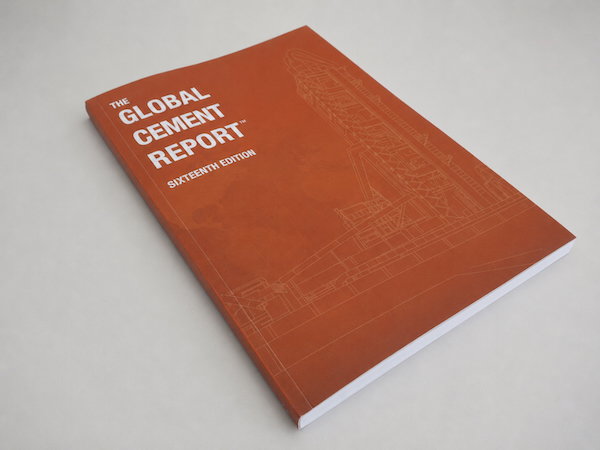
The Global Cement Report™, 16th Edition, reveals the global cement market will bottom out this year. Having fallen by 12 per cent from the 2021 peak, cement demand will slip a further 1.5 per cent YoY in 2026. However, even with China’s continued downward trend overall global cement demand should turn positive in 2027.
Chinese cement consumption is forecast to decline a further 6.2 per cent this year, adding to the 30 per cent decline already recorded. Property market problems remain endemic, with demographic change, low affordability, high inventories and defaults weighing on the residential market. Despite such difficulties, China remains the largest consumer of cement globally, accounting for 44 per cent of total world demand in 2025, though this is down from 57 per cent at the start of the decade.
At the same time, there has been a notable uptick in the share of world consumption accounted for by the Indian subcontinent, having almost doubled in the last 10 years to account for 16 per cent of demand, driven largely by the world’s second largest consumer, India. The Global Cement Report, 16th Edition, looks in detail at India’s rapid capacity expansions, revealing that the country now accounts for 10 per cent of global cement capacity and that UltraTech Cement is the now the fourth-largest cement producer by capacity globally, having overtaken both BBMG (China) and Heidelberg Materials (Germany).
Analysis of the USA shows that despite cement demand falling by eight per cent since 2022, the country reports the highest capacity utilisation rate out of the world’s largest cement markets, coming in at 71 per cent in 2025, well above the 53 per cent reported globally. The outlook for US cement demand in 2026 has improved on strong first quarter data. Nevertheless, it will take several years to reverse recent losses. In the meantime, the share of blended cement is expected to continue to trend steadily northwards, having risen sharply since 2022 to account for 65 per cent of all cement consumed in 2025.
The Global Cement Report, 16th Edition, assessment of trade dynamics shows Vietnam remains the leading exporter of cement and clinker, while Türkiye overtook Egypt to become the second largest exporter in 2025. Notably, China too has ramped up its exporting activity jumping into fifth position. While such exports represent less than one per cent of Chinese cement production, they are substantial competition for other key exporting countries.
Analysis of smaller markets around the global is no less revealing: with Georgia having the highest capacity utilisation rate in the world, Cuba the lowest. The closure of Bahrain’s main quarry threatening the future of cement production in the country. The dominance of Chinese and Singaporean producers in Tajikistan. A government mandate in Ireland requiring a 30 per cent clinker substitution in concrete for all public works projects. Plant remodelling in North Korea. Significant capacity investments in Libya. And price dumping in Mozambique.
The Global Cement Report, 16th Edition, also looks in detail at decarbonisation investments around the globe. From large-scale CCUS investments in Norway and Japan, to co-processing in Mexico and numerous solar investments across Africa. As well as the rise of supplementary cementitious material production, such as calcined-clay cement facilities in Ecuador and Ghana, and the introduction of carbon taxes and emissions trading systems in the EU and Brazil.
To order your copy of The Global Cement Report™, 16th Edition, please visit: www.CemNet.com/GCR16
Handpicked stories, in your inbox
Our editors pick the top news delivered to your inbox. Sign-up today!