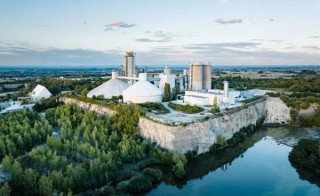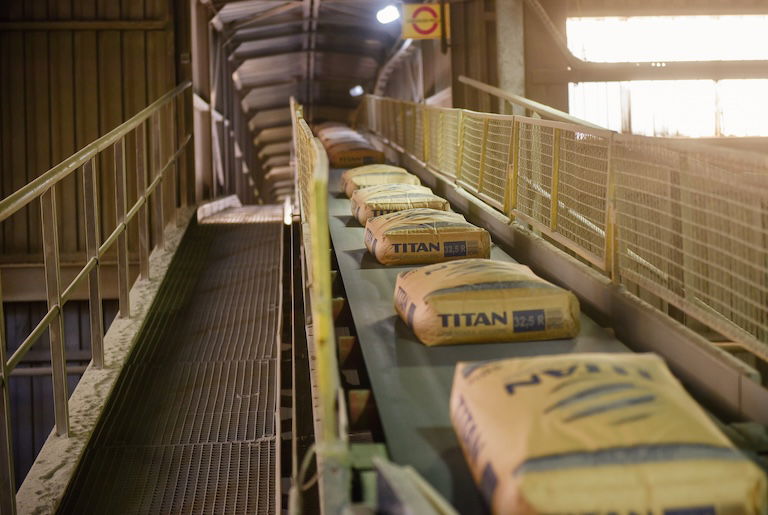
Despite its name – TITAN Group operates on a smaller scale than the cement industry giants – the Greece-headquartered company has seen a steady flow of announcements in recent months.
Since unveiling its "Forward 2029" strategic plan in November 2025, TITAN has set forth on a series of acquisitions and supply agreements that reinforce logistics, material access and emissions performance. With up to EUR3bn earmarked for deployment through to the end of the decade, the group’s activity reflects a pragmatic balance of portfolio optimisation and emissions management at a time when CBAM has made decarbonisation and competitiveness synonymous.
The most significant move so far came last week with the US$310m acquisition of Keystone Cement Co, which operates a 0.9Mta integrated cement plant in Pennsylvania. The deal increases TITAN’s footprint in the northeastern USA and supports its stated objective under Forward 2029 of consolidating operations in America’s rejuvenating Rust Belt states. TITAN estimates the regional market at around 5.6Mta, with Keystone providing both additional capacity and strategic positioning close to demand centres.
Keystone complements TITAN’s existing US assets, including the 1.31Mta Roanoke plant in Virginia and the 2.2Mta Pennsuco plant in Florida. These facilities give the group a diversified presence along the eastern seaboard, where bolt-on additions help optimise clinker production, cement grinding and distribution within an established network rather than through greenfield investment.
The group’s logistics and material strategy already leans heavily towards supplementary cementitious materials (SCMs). Earlier this week it announced a 10-year agreement with Serbian state-owned utility Electric Power. The agreement secures access to approximately 5Mt of fresh fly ash from the TENT B “Obrenovac B” power plant, reinforcing TITAN’s long-term strategic resource base in alternative cementitious materials.
By locking in high-quality SCM supply at scale, the group aims to enhance supply-chain resilience and competitiveness in Southeastern Europe and support growing demand for lower-carbon building materials and solutions. TITAN has said the fly ash will help it deliver "high-performance, low-carbon products" and could form part of planned investments to upgrade infrastructure at its Serbian operations, potentially boosting the use of low-clinker cement formulations in the region.
It follows last year’s agreement with Peel NRE to develop a fly ash processing facility at the former Fiddler’s Ferry power station in northwest England exemplified TITAN's keen eye for an opportunity, with an estimated 15Mt of fly ash stored away in lagoons during the station’s operational lifetime.
In the USA, TITAN America said it plans to leverage existing infrastructure and assets such as the fly ash processing capability of its wholly-owned subsidiary Separation Technologies. Last year, it ventured into the south Asian via a partnership with Indian SCM producer Jaycee. Similar deals include securing pozzolan in Turkey at Vezirhan and its strategic investment into Aegean Perlites in 2023. By securing predictable access to alternative cementitious materials and investing in processing assets and logistics, TITAN is positioning itself to maintain flexibility in cement formulations while reducing reliance on high-clinker mixes.
Parallel to material and capacity strategy, emissions reduction and decarbonisation have been increasingly prominent in TITAN’s reporting. According to its most recent Annual Report (2024), the group reduced its specific Scope 1 net CO2 emissions to around 598.4kg per tonne of cementitious product, marking roughly an 11 per cent reduction compared with 2020. This outcome was driven by the record use of alternative fuels and historically low clinker ratios in cement products, according to reporting tied to the group’s integrated annual results.
TITAN’s decarbonisation agenda is anchored in science-based targets validated by the Science Based Targets initiative (SBTi), which commit the group to a 35 per cent reduction in carbon emissions by 2030 compared with 1990 levels, as part of a wider push toward carbon neutrality by 2050. Through this framework, the company is pursuing multiple levers to reduce its emissions footprint, including increased alternative fuel use, improved energy efficiency, lower clinker-to-cement ratios, and technology deployment.
One of the most visible projects aligned with this roadmap is IFESTOS, a large-scale carbon capture project at the Kamari plant near Athens. A front-end engineering design (FEED) contract has been signed for IFESTOS, which aims to reduce that plant’s CO2 emissions to net zero while enabling the annual production of up to 3Mt of zero-carbon cement. Implemented at scale, the project is expected to contribute to an annual 20 per cent reduction in TITAN’s total Scope 1 net CO2 emissions, underscoring the company’s investment in breakthrough technologies.
TITAN’s emissions efforts also extend into the products it sells. Nearly 30 per cent of the group’s cement production in 2024 comprised lower-carbon products and solutions, reflecting growing market take-up of cement types with reduced clinker content or blended SCM formulations.
Financial performance provides further context for the group’s momentum. In 2024, TITAN reported record EBITDA of EUR592m and has set a target of EUR1bn by 2029, with sales up 3.8 per cent across all regions. All major markets contributed to growth, with the US and Europe leading performance.
In capacity terms, TITAN remains a mid-tier global producer, with cement capacity of around 27Mta, sitting just outside the top 30 global groups. However, the delivery of its previous "Building for Green Growth 2026" plan demonstrated an ability to identify targeted opportunities without overextending geographically. That plan delivered on both financial and sustainability fronts, laying groundwork for the more capital-intensive executions now under Forward 2029.
Handpicked stories, in your inbox
Our editors pick the top news delivered to your inbox. Sign-up today!