
2 September 2026
This transcript was generated automatically and may contain errors.
Ladies and gentlemen, good morning, [THAI]. I'm very honored to be here with you today. Today, I am going to talk about three topics. First is Thailand demand and supply situation. Second, Thailand construction sector and driving force. And the third one, growth and sustainabilities for Thai cement market. I will also use SCG as an example in the third topic. Now I would like to start the first one. This is the situation for demand supply now. There are eight manufacturers in Thailand. Total capacity about 56 million tons per year. By the end of this year, TPI Polene plans to commercialize about four million tons per year capacity.
This is the supply cap-- this is the first four largest manufacturer, SCG-- Siam CT Cement-- TPI Polene, and Asia Cement and Jalaprathan Cement. The same owner. And the second half, we will have another four million tons. Actually, the demand and supply situation since 1997, the crisis here, [INAUDIBLE] crisis here in Thailand. Thai cement market has been pressured by over-supply situation until now. We still have the over-supply situation, but getting a little bit better. This is the driving force for the cement industry in Thailand. We have three sectors-- residential, infrastructure, and commercial. Last year, for residential, it's 53% of the total cement consumption.
Infrastructure, about 30%. And commercial is about 17%. But this year, this is our forecast. This year, the growth will be only a few percentage, 2% to 4% for this year. And residential will be only 50%. Infrastructure, 34%. And commercial, 16%. In Thailand, the demand will be mainly in metro area, east and north east. This account for about 60% of the total Thailand market. As you know, the first half of this year, Thailand economy decline from household income, lower household income, lower investment in cement. So the good growth sector is only infrastructure from the government projects. This is for the residential, household income. The red letters are like a minus factor.
The green letters are plus factor. For the residential, household income drop. But we have MRT lines, lines in plant. Some already under construction. Urbanization. For the private and non-residential, we have slowed down our new project. Now the private sector, they don't have much new projects. Decline on export. But they have confidence from the infrastructure projects. For the infrastructure in short term, now we have local infrastructure project like a small road in the up countries. And in long term, in the next seven to eight years, we will have mega project which already start and we will start more the end of this year. This is the detail of the mega projects.
For mega project construction, additional demand that we forecast from the project will come from road, train, MRT, and also including high speed train or medium speed train. The total will be 10 to 12 million tons. Infrastructure project consumption, this is the percentage. Mainly will come from high speed train and road. But some private institutes have forecast that the cement consumption will be induced by this infrastructure project from the private sector and from the residential sector three times of this 10 to 12 million tons. But gradually come after the infrastructure project finish.
It's like if we finish one MRT line, there will house, condominiums, and commercials will be building after that. This is the detail of the budget of the infrastructure project, mega project. Thai government expect to have forecast on the mega project by this year about 1.75 trillion baht. Come from motorway, about 150 billion baht. From railway transport, about 1.1 trillion. And from MRT, about 280 million baht. And also some from others. So middle of this year, they were approved this one 1.75 trillion baht more on the existing project.
For the outlook, we see that in short term, we still have over-supply situation by some capacity increase and also still big gap between capacity and demand. But in long term, we see the good opportunities, good growth opportunity, good prospect for the cement consumption that will become from mega project. Private investment that will follow the mega project. ASEAN and related investment will come 5 to 10 years later. And urbanization of the big city in Thailand. But there are still outside race from the world economic recession and also labor shortage in Thailand. This is the situation in the past three, four years. We have labor shortage, especially the construction labor.
And if we have a lot of mega projects, that will be the same situation, the labor shortage again. This is the third topic already from me. As the world give importance to environment more and more. So Thai cement industry also share the same view. Allow me to use SCG as an example of how Thai cement industry developed a move toward the green and sustainability trend. We have eight example that I will mention later about our practice in green and sustainability trend. This is like a semi open cut alternative [INAUDIBLE], environmental friendly operation.
Cement partnership-- not only SCG, we have partnership with Thai Cement Manufacturer Association, with other friends in the industry to do about community engagement and environmental for the community also. You have how we do about biodiversity. And we have green products. Also we join World Business Council for Sustainable Development for Cement Sustainability Institute also. I would like to go one by one. This is SCG Lampang in the north of Thailand. We have quarry. This is a cross-section model we call semi open cut mining. The north industry [INAUDIBLE] from the industry, and thus will be protected by this kind of quarry. This is the [INAUDIBLE] open pit mining and future mining pattern.
This is the view from outside. So this quarry will make the environmental impact very minimum. For the biodiversity, we believe that industry and nature can work together to create the green environment. We have wildlife that we still monitor, continuously monitor. We have local plant habitation. Also, immediately after we do the quarry or mining, we don't wait until we finish. We do it continuously for the habitation. For the alternative fuel usage, we invest about 250 million baht for the gas fire to use the low quality lignite in the calciner. And we also invest in 558 million baht for the [INAUDIBLE] quarry. Also, we have this [INAUDIBLE] municiple solid waste.
We burn it IDF a lot of [INAUDIBLE] to make it less risk for the community. For community engagement, the big project for us, we did many projects. But the big one for us is the new check damn for the community. Last year, we built about 52,000 dams during eight years. I think this year, it's about 65,000 dams already. This to prevent water shortage and polluted water. We also not doing by our own. We engage community to self-sustain community and build sense of ownership to the community also. We do it together with the communities, with our employees, all over Thailand. For the environmental friendly operation, we invest a few million bhat-- oh, no, no.
A few hundred million baht for the closed loop operation for sustainable co-import at Wat [INAUDIBLE] Temple. [INAUDIBLE] This is starting from the fully closed stem from port warehouse, this patching building. Also in the belt conveyor in the building and in the unloading process, and also stack [INAUDIBLE] with closed loop operation. This one we have very or no impact for the people in [INAUDIBLE] for our co-import and cement export, also. We have SCG ego products. What are these products? We have about 25% of total SCG product is the eco product, not only cement. I mean include chemical, packaging, paper, everything. But this is the example for the cement.
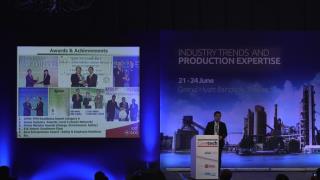
We have cement hybrid, Elephant hybrid cement, which is actually is a kind of part land [INAUDIBLE] cement. And we are the first in Thailand to achieve TIS standard for this new product. We use environmentally friendly raw materials and production process for this one. And this is like a resolve that we have done for more than 10 years about environmental. We have been award by Dow Jones Industry, Dow Jones Sustainability Index. As industry leader, a sector leader in constructor materials for four consecutive year starting from 2011 to 2014. Actually, we got gold class since 2008, 7 years in a row. And we have entered to be a member of the [INAUDIBLE] since 2004.
This is for our effort that we have done as an example in Thailand that we, in cement industry, we move toward the green and sustainability trend. And also, not only in Thailand. We already expand to other Asian countries, other friends in Asian members. We have second line in Cambodia. OK, sorry. Second line in Cambodia this year. And we'll into this year, the end of this year, Lao and Myanmar, also. And we strongly believe that soon we will potentially drive the world economy. We will become one factor. And SCG also, we believe that we will grow with ASEAN and all the sustainability practice that we have done in Thailand, we also will do the same in our expansion in ASEAN.
That's all my presentation today. Thank you very much for your kind attention.
Video library
Browse 410 conference presentations, webinars, interviews and technical films from the modern CemNet video archive.
410 videos
2 September 2026

1 July 2026

1 July 2026

30 June 2026

30 June 2026

30 June 2026

30 June 2026

30 June 2026

30 June 2026

30 June 2026

30 June 2026

3 June 2026

13 May 2026
9 April 2026

1 April 2026

4 March 2026

27 February 2026

27 February 2026

27 February 2026

27 February 2026

27 February 2026

27 February 2026

17 February 2026

11 February 2026

7 January 2026

3 December 2025

5 November 2025

16 October 2025

8 October 2025

3 September 2025

2 July 2025

4 June 2025

7 May 2025

2 April 2025

18 March 2025

18 March 2025

5 March 2025
3 March 2025

5 February 2025

8 January 2025

4 December 2024

13 November 2024

6 November 2024

9 October 2024

4 September 2024

3 July 2024
10 June 2024

5 June 2024

8 May 2024

23 April 2024

23 April 2024

23 April 2024

23 April 2024

23 April 2024

22 April 2024

22 April 2024

16 April 2024

16 April 2024
11 April 2024

3 April 2024

11 March 2024

6 March 2024

7 February 2024

10 January 2024

10 January 2024
10 January 2024

6 December 2023

1 November 2023

4 October 2023

15 July 2023

15 July 2023

15 July 2023

15 July 2023

13 July 2023

24 March 2023

14 July 2022
13 July 2022
12 July 2022
12 July 2022
12 July 2022
12 July 2022
12 July 2022
12 July 2022
12 July 2022
12 July 2022
12 July 2022
12 July 2022
12 July 2022
12 July 2022
12 July 2022
12 July 2022
12 July 2022
11 July 2022
11 July 2022
11 July 2022
11 July 2022
11 July 2022
11 July 2022
11 July 2022
11 July 2022
11 July 2022
11 July 2022
11 July 2022
11 July 2022
11 July 2022
11 July 2022
11 July 2022
11 July 2022
11 July 2022
11 July 2022
11 July 2022
11 July 2022
11 July 2022
11 July 2022
11 July 2022
11 July 2022

6 July 2022
1 July 2022
1 July 2022

8 June 2022

12 February 2021
12 February 2021
12 February 2021
12 February 2021
12 February 2021

12 February 2021
12 February 2021
12 February 2021
25 September 2020
25 September 2020
25 September 2020

25 September 2020
23 September 2020
22 September 2020
22 September 2020

21 September 2020
20 February 2020
10 February 2020
10 February 2020
10 February 2020
7 February 2020
27 January 2020
23 January 2020
23 January 2020
23 January 2020
23 January 2020
2 May 2019
30 April 2019
18 April 2019
18 April 2019
18 April 2019
12 April 2019
12 April 2019
11 April 2019
10 April 2019
10 April 2019
10 April 2019
9 April 2019
9 April 2019
4 February 2019
17 January 2019
31 July 2018
31 July 2018
31 July 2018
27 July 2018
27 July 2018
27 July 2018
27 July 2018
27 July 2018
27 July 2018
27 July 2018
27 July 2018
27 July 2018
27 July 2018
25 July 2018
25 July 2018
25 July 2018
24 July 2018
24 July 2018
24 July 2018
23 July 2018
23 July 2018
23 July 2018
20 July 2018
20 July 2018
20 July 2018
20 July 2018

20 July 2018
20 July 2018
20 July 2018
20 July 2018
20 July 2018
20 July 2018
20 July 2018
20 July 2018
20 July 2018
20 July 2018
20 July 2018
20 July 2018
20 July 2018
20 July 2018
20 July 2018
19 July 2018
19 July 2018
19 July 2018
19 July 2018
19 July 2018
23 March 2018
23 March 2018
23 March 2018
23 March 2018
23 March 2018
23 March 2018
23 March 2018
23 March 2018
23 March 2018
23 March 2018
23 March 2018
23 March 2018
23 March 2018
23 March 2018
23 March 2018
22 March 2018
26 October 2017
26 October 2017
26 October 2017
26 October 2017
14 August 2017
14 August 2017
14 August 2017
14 August 2017
14 August 2017
14 August 2017
14 August 2017
14 August 2017
14 August 2017
14 August 2017
14 August 2017
14 August 2017
14 August 2017
14 August 2017
18 July 2017
18 July 2017
18 July 2017
16 June 2017
16 June 2017
16 June 2017
16 June 2017
16 June 2017

14 February 2017
14 February 2017
14 February 2017
14 February 2017
14 February 2017
14 February 2017
14 February 2017
14 February 2017
14 February 2017
14 February 2017
13 February 2017
13 February 2017
13 February 2017
19 January 2017
19 January 2017
17 January 2017
17 January 2017
17 January 2017
6 January 2017
18 August 2016
18 August 2016
18 August 2016
18 August 2016
17 August 2016
17 August 2016
17 August 2016
16 August 2016
16 August 2016
16 August 2016
12 August 2016
12 August 2016
12 August 2016
11 August 2016
11 August 2016
11 August 2016
10 August 2016
10 August 2016
10 August 2016
8 August 2016
8 August 2016
8 August 2016
6 May 2016
6 May 2016
6 May 2016
6 May 2016
6 May 2016
6 May 2016
6 May 2016
6 May 2016
6 May 2016
6 May 2016
6 May 2016
6 May 2016
6 May 2016
6 May 2016
6 May 2016
6 May 2016
6 May 2016
6 May 2016
6 May 2016
6 May 2016
6 May 2016
25 April 2016
25 April 2016
11 March 2016
11 March 2016
11 March 2016
11 March 2016

11 March 2016
11 March 2016
11 March 2016
11 March 2016
11 March 2016
11 March 2016
11 March 2016
11 March 2016
11 March 2016
11 March 2016
11 March 2016
11 March 2016
11 March 2016
11 March 2016
11 March 2016
11 March 2016
21 December 2015
15 December 2015
15 December 2015
15 December 2015
15 December 2015
15 December 2015

15 December 2015
15 December 2015
15 December 2015
15 December 2015
15 December 2015
15 December 2015
15 December 2015
2 December 2015
2 December 2015

2 December 2015
2 December 2015
2 December 2015
2 December 2015
2 December 2015
2 December 2015
2 December 2015

2 December 2015
2 December 2015
2 December 2015
21 August 2015
21 August 2015
21 August 2015
21 August 2015
21 August 2015
21 August 2015
21 August 2015
21 August 2015
21 August 2015
21 August 2015
21 August 2015
21 August 2015
21 August 2015
21 August 2015
21 August 2015
21 August 2015
21 August 2015
21 August 2015
21 August 2015
21 August 2015
20 August 2015
20 August 2015
18 August 2015
18 August 2015
18 August 2015
18 August 2015

30 June 2015
29 June 2015
29 June 2015
29 June 2015
29 June 2015
29 June 2015
29 June 2015
29 June 2015
29 June 2015
29 June 2015
29 June 2015
4 June 2015
4 June 2015
2 June 2015
2 June 2015
2 June 2015
2 June 2015
29 May 2015
29 May 2015
28 May 2015
28 May 2015
28 May 2015
18 February 2015
17 February 2015
13 February 2015
13 February 2015
Try searching for another title.