
2 September 2026
This transcript was generated automatically and may contain errors.
Okay, we're gonna move swiftly on to our, our next presentation. and I'm delighted to welcome Fabian Appel, associate partner at McKinsey and Company. he's gonna speak about the cement industry business models through the net zero transition. Fabian specializes in shaping his clients strategic agendas and transforming their businesses, particularly in light of the net zero transition. His clients come mainly from the energy and materials industries across Europe and North America. Fabian has also previously held a role of senior advisor on policy and planning for the UK's International Rescue Committee. So this is gonna be a slightly broader presentation.
I think it will set the context for the next two days. Over to you, Fabian. Thank you. and it's good to be here. thanks for having me. the last two years I had the pleasure of coming to Turkey for holiday. and I was really worried that this year I wouldn't come to Turkey. and luckily Thomas and all of you put me, put me out of that that worry. as Thomas said, I will I come a little bit from the luxury of not having to worry about the next few quarters, and so I will talk to you about a lot of stuff that is probably most relevant in 2030 plus.
But I think a lot of you will want to think about business models in the future cement industry today, because they're very likely going to shape how and what your industry looks like in the late twenties and in the thirties, and therefore how you position yourself. so setting a little bit of the context that you all know but that I think illustrates why this transition is potentially gonna shape such a big shift in your value chain and in your business models, right?
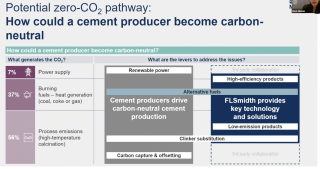
so you, you, you know, the numbers coming, coming from the top, let's ignore the, the overall greenhouse gas emissions of, of 56 gigatons and go straight to the CO2 emissions of those 41 gigatons from, from CO2, excluding land use. And then of those 37% are from industry. And of those, again, and this number, you'll know the roughly 7%. So roughly 20% of industrial emissions are cement. you can value these emissions however you like. If you valued them at an EU ETS price, you're looking at at hundreds of billions of dollars per year. So it's an enormous amount of value that we're trying to push out of this value chain over the next 30 years.
and as we do that, it's it's natural to ask what's gonna happen to business models that are traditionally local centered around the kiln and, and, and very much integrated in, in, in their sort of local 200, 250 kilometer radiuses. Now, why, why should you, even though I say this is maybe a 20, 30 plus issue, why should you care about this now? and there's a, there's, there's a bunch of reasons, right? One, I just showed you. This is a lot of value, right? If you can, if you can get a handle on, on that value, even in places where maybe today we, we don't value it or we un undervalue it you're likely to be potentially creating enormous value for you, enormous value for the planet.
second, addressing that will require a ton of capital deployment. We estimated, and I think you you've maybe seen this before, that as an industry we're gonna roughly double the CapEx required to get to net zero. So we think we're gonna roughly need $60 billion a year, 2 20 50. again, that's a lot of money. we better don't deploy it unwisely. and certainly some people will make a tremendous tremendous return of deploying it wisely. And then finally, the, the time to plan for this is, is really now, and I brought you three three facts with a few illustrations why we think that point is now. The first is strengthening regulation. I mean, we, we heard it just now.
We are in one of the places that will feel that strengthening regulation through the introduction of CBAM. But of course it's not just carbon pricing and carbon regulation, it's also some of the more indirect measures, right? So governments directly procuring green or lower carbon cement, yes, carbon pricing extending to more decarb levers. and then also in various countries, we're seeing the beginnings of embedded carbon or lifecycle based regulation. Those of you from France of course, we'll, we'll, we'll be thinking about the impact of re 2020 and, and how we're gonna respond to measures like that.
And as that gets wider, actually this pressure is gonna be felt not just by producers, but, but across the value chain. So one regulation, even after covid, even after Ukraine, doesn't seem to ease up and so remains as a driver. Secondly, we have a strong belief that there is willingness to pay for decarbonizing. And I would actually, if we've got a chance over, over the coming hours and days to, to chat about it, would love your your anecdotes around this. of course, there are public anecdotes, right? Some of, some of you who are either talking about what they've, what they've achieved being able to point to realizing higher price points for lower carbon products.
and it's also natural, right? A lot of the downstream construction sector has set fairly ambitious scope three decarbonization goals that as of today there, there, there's no natural roadmap to get to at least the end point of those decarbonization goals, goals. And whilst I think a lot of the measures we've, we've just talked about will get you down the beginning of that road, it, it won't get them to the very end point of that. And so they're really rethinking both upstream in the value chain around design and, and how they work differently. But then I think they're also very interested to hear what you, what you and we can bring to the table innovatively.
There is of course also recycling targets. So where we're gonna talk a bit about circularity in, in a second. a number of countries are moving on those. and just to give you a number we, we are seeing willingness to pay up to 20% more for a green building materials product like a, a green tric. Now, of course, that depends a lot on where you are in the world and where you're starting and, and what other properties you're looking for, but that's maybe the sort of range. And then finally, we've, we've just heard many of you are innovating are researching our developing projects that actually allow us to mature technologies that may be a while back.
we, we believed in a lot less we're seeing some CCS demonstration plans. so you are moving, you are moving on this. So when we say what do future business models look like? Some of these future business models are being built today. Now all of this is being helped also in various places by, by funding support. so of course, those of you who are looking at this within the eu might be considering innovation fund funding. Those of you perhaps eyeing to the US after IRA and saying, is this now a more interesting place to pursue such investments through 45 q or other measures?
I may find that a lot of the investments that may be be before that sort of arms race in in subsidies were not feasible, might now become feasible also in locations we might not have expected them. So we, we took a step back from this and and, and said, where, where does this get us? And I will, I will come to these, these are the sort of nine business models that we said we expect to see in the in the 2030s and kind of emerging over the coming over the coming years. Luckily, for those of you just taking a photo of, of this, there is actually an article outlining them. So you'll be able to find them after after this presentation.
but before I talk about the nine, let me talk about how we took probably the pathways that you all know to, to get us to this list because we, we, we kind of stepped back from the nearer term measures from some of the alternative fuel, some of the efficiency improvements that, that you're making today. And said, in the long run, what are really the big pathways that you are considering? And we said, really? There there are four and they are additive, right? And ultimately, and Thomas, you, you, you mentioned this earlier, ultimately there's gonna be a bit of a trade off of how much of them do we do, how quickly.
the first one we've, we've already touched on a few times is, is, of course lower carbon clinker through CCS and ultimately, or CCU and CCS ultimately. I think we all believe we'll see some extent of that. I think there's a real uncertainty about how much of that happens and at what pace. and, and why, why, why do we think that's interesting to think about now? Well, because actually lower carbon clinker through CCS might drive a real shift in the way the industry thinks about localization, and the industry thinks about structure of kilns and downstream operations attached to that.
and the example, and by the way, this is gonna bring us onto the lower carbon clinker and cement disruptor in, in the bottom left in a second. That the reason we started thinking about this is we, we actually, as many of you have done, built up the, the cost of of decarbonizing an existing kiln in a relatively high cost, perhaps not perfectly located location say in, say in Germany. And we said, how much does it cost to actually CCS, the emissions that come out of a plant located some, some somewhere not near the sea in Germany. and as you all know, it's, it's punitively expensive. You often don't have access to infrastructure.
so you end up shipping a lot of carbon a long way to, to store it in, in many European countries, of course, you can't do that underground in country, so you're actually taking the carbon offshore. We did the same calculation for what basically has happened in steel, right? So we sent in steel, what we saw is a bunch of players saying, let us just set up in locations that are just fundamentally advantaged at a scale that hasn't been seen before. And we said, what would happen if that, if, if that happened in cement, right? Is that, is it a viable model where you have a four to six megaton plant creating green or lower carbon clinker at an advantage location? What does advantage location mean?
It means a, you can sink the carbon somewhere, so you're probably near some former oil or gas field. You're probably in a place where infrastructure is relatively easily available. You're probably also in a place where green power is cheaper than it is in some of the locations where we're producing cement today. and actually that can give you a cost advantage of about 60% versus that retrofit brownfield location. So it can get a lot cheaper. Now, if you believe in that the entire downstream value chain looks quite different from what it looks like today, and the value creation mechanism looks quite different from what it looks like today.
So pathway one, lower carbon clinker with CCS we think is an important one. We think we'll take some time to mature, but if, if it does mature, we think we'll see a few business models that we haven't really seen in this form before, like the, like the mega plant business model, like the disruptor. Now, they don't have to be disruptors. They, they could be some incumbents. Just so far we haven't seen any incumbents, at least publicly talk about doing that sort of thing.
Now, of course, lower carbon clinker with CCS or CCU also gives rise to, to that second business model, the retrofitted low carbon cement producer, because as you all know, there are lots of plants that are either now doing demonstrations or preparing for scale up to actually try out CCS models often supported by innovation fund funding or other measures. because of course, I'm not saying we're gonna see a whole scale whole scaled shift from very localized production to, to mega plants. It's probably gonna be a bit of both.
And so where loc plants are located advantageously from a carbon sink perspective, well connected to infrastructure, ideally even have some regulatory support there, there, there will be some, some players that are successfully retrofitting. Now, both of these things obviously make sense in a world where in the long run, the consolidation and the structure of the industry in Europe does not look the way it looks today, right? This would have significant impact on existing assets and, and, and, and those of you with assets in markets where these sorts of things might happen we'll probably want to think about actually what does our asset strategy look like under different such business models.
So we've done two of them. There's actually then a third one, which is, I know some of you are here because you're actually very excited about CCS and CCU and a bunch of the activities around this of course look quite different from the activities that many cement producers or the downstream value chain deal with today. And so we believe there's gonna be a meaningful specialized industry around carbon ca carbon capture and, and utilization, but especially thinking about monetization, whether that's mineralization more likely frankly, than some of the fuel uses given regulation.
but there's gonna be a bunch of, a bunch of players specializing there and a bunch of players creating businesses in those spaces. And of course, there's a bunch of players, especially in the energy industry, doing what's on the very right hand side at the top here, which is just provide this as a service. It will often not make sense to take the risk of operating the whole decarbonized lower carbon clinker plus CCS plant yourselves. You will have specialized providers who do that. And those providers, of course, are already are already popping up and many of them are already here today. So that's, that's kind of pathway one.
We've done three or four business models that, that, that we might see evolve pathway two, of course at mixtures. So we've already seen a massive rise of some of the players playing in ex admixtures over the, over the last decade or so. and in principle, there is much, much further that could go. now here we see a bit of a, a trade off, right under updated standards. Admixtures could push CO2 emissions off concrete down another 50%. But the challenge here is decarbonization is not the only macro trend we're trying to respond to.
we of course need to remember, we are also trying to deal with an economy that is gonna have drastically less labor that will need to deal with in, in increasingly complex construction projects. and so one real challenge for mixtures is gonna be that they typically somewhat increase the complexity of projects where different types of concrete require different different mixes and different admixtures. So it's a bit of a question around how do we manage to go after the admixture possibility while also keeping the complexity and, and the labor need low.
Given that any, any change here that is gonna drastically increase complexity and that it's gonna drastically increase labor requirements is gonna be very, very hard to make work. What, what does that mean for existing business models? Well, it probably means two things. One is there'll be a bunch of players, frankly, that're already out there today, probably benefiting from the tailwinds in greater use of it mixtures. Secondly, of course, some existing players have, again, asset strategies and supply chains built typically around the cement or clinker supply.
And in any world where you reduce that and we'll see a similar a similar mechanism in, in a second those value creation mechanisms might not work in the future. So if you value chain is built around that today, again, one strategic questions we would take into the late twenties, early thirties is to say, actually, what does this look like in a world where we do manage to use drastically more at mixtures and, and might need fewer of our core products as of today? Then the, the third pathway which is around innovative cementitious materials of course, many, many of you already substitute clinker or substitute other forms of cementitious in in your processes.
we've seen, and and frankly, even on the list of companies here are a bunch of players that are of course fundamentally challenging which materials and in which quantities we can bring into either the cement mix or, or the, or the concrete mix to reduce our dependence on clinker or our dependence on cement. And this links directly to Thomas's question around how much CCS versus versus other path pathways.
And I think many of the many of the, the companies that have set quite ambitious and, and as we just heard SBTI aligned goals are realizing that actually we're gonna need a lot more alternative cementitious pathways compared to relatively costly CCS pathways once we, once we hit the limit on our traditional leaders. So I think we collectively will have quite a serious standards conversation and quite a serious, what actually does our value chain look like in a world where we're trying to enable that? And again, there's a few business models, and a few, a few of you are here today, right around where will innovative SEM players come from? Who, who will they be, right?
how will they integrate into an existing supply chain? And, and how do we frankly facilitate that transition in a value creative way for the industry? because it is gonna be so to, so, so central to hitting the decarbonization goals that we've that we've collectively set out. there's also, frankly then gonna be a bit of a question both on the innovative cementitious materials and on the mixtures of solution provision. So you will see that we, we think that yes, construction chemical solution providers will become even more important. so will RCM mix optimization platforms, right?
We need to get, get much more methodical and much more rigorous around making sure that in markets where we haven't yet managed to really push to the limit what is possible, we can do that with a high level of rigor and with a high level of confidence. And people who can help you do that at low cost, at low labor intensity and actually at a reliable carbon outcome could create value by shifting customer perception from a ton of product to a cubic meter of decarbonized built environment, right? And if you manage that shift, then a lot of the right hand site stuff becomes a lot more exciting.
And actually, you can also shift your value chain to a position where you're not just having a conversation around, well, you're selling me, you know, a few fewer tons of sem one cement, actually, why should I be paying you more money for that? And you're instead having a conversation around a holistic solution. So we think there's a, there's a ton of exciting ideas, and frankly, you see in some of the funding that has gone, particularly from venture capitalists into the innovative SEM space, that there's a lot more potential there.
Now, what I think is gonna be very interesting over the years to come is to see to what extent the industry's really, really able to embrace performance based standards, how standard setters are reacting to that, how long it's gonna take us, frankly, to take some of the technologies that some folks are very excited about to a meaningful scale.
and again, that's I think, one of the areas where there's a real trade off between CCS, which is probably the higher cost less change in standards outcome, and some of the alternative materials, which of course will take a lot more value chain rallying and, and working together to figure out how to make them work, but potentially at much lower aggregate cost.
Now, I don't have the kilo cost per kilo of CO2 reduction, but whenever we have plotted abatement, cost curves, it is of course true that most of the SCM pathways are drastically cheaper than the CCCS and CCU pathways to the extent where often in traditional s scms, and many of you know this, you can achieve a net negative cost from employing them. whereas the CCS cost is, is typically north of a hundred, a hundred dollars per ton, right? So you're really talking about something like a hundred, 120, $150 per ton to play for in the shift from CCS to alternative and innovative materials.
Now, again, this is very easy to say when, like me, you're standing here talking about 20, 30 plus on a global level, it is much harder to do when you're in a particular location needing to source the right materials and get them there at the right cost. but in principle, at the highest level, the reason there's gonna be an interesting business model trade off, it's just that massive delta in in cost. Then final pathway which I'll talk a lot, a lot less about today, but, but we've spoken at various fora about in the past is, is recycling and circularity. so you'll see the, the, they actually only we business model we haven't touched on here is that construction material recycler.
and what's what's interesting is I've actually, in the last six months or so, had conversations with a whole bunch of materials players that are getting really interested in recycling and that getting really interested to understand how business models in construction demolition waste recycling multi vol and who's frankly who's frankly gonna, gonna gonna make money here, right? 'cause we are gonna see a significant increase in the value of high quality construction demolition waste as one of the waste that we can reduce the carbon intensity of cementitious products. But we also know that getting your hands on high quality separated construction evolution waste is not easy.
and that often it's a very local game. It's a game that structurally works in a very similar way to to, to being a general contractor or local contractor. So how, how we figure out a model that allows you to be a specialized construction materials recycler that actually provides local production plants with high quality inputs reliable inputs at scale and at low cost will, will be a, will be a final and, and exciting model to build. Again, those who can crack that might actually not be the big cement producers of today. It might actually be that a few more specialized technology providers on sorting are, are better placed to do that.
It might be that some of the existing contractors and developers are better placed to do that, but it's an interface that I think will look much different from the way it looks today. Now, many of you might say that's all very interesting, but you know, is it actually happening? And and the answer of course is, well, at least a little bit. so we've mapped the number of cement challenges. 'cause interestingly, a lot of the folks that do, some of the models I've just outlined do not come from within incumbents.
and actually I think an interesting question for, for, for those of you here who, who have been building this industry for often decades and, and, and, and sometimes centuries, it's a good question to say, how, how do you innovate and how do you work with some of these disruptors in an effective way? Of course, for the disruptors, the, the flip side, and I've had this conversation a few times, is to say, how do you how do you manage to get access to a market where innovation has historically taken a while to take a foothold, but when it does you know, there's, there's a massive price in terms of carbon reduction here. So we've seen the number of challenges absolutely explode.
You can see here until probably the mid two thousands, this was well below 20, and then recently there's been an absolute explosion. And I've, I mean, I've personally felt the same way. I've think just in the last four weeks or so, had had three or four conversations with private equity players who, as they're shifting to more infrastructure style investments, are much, much more interested in saying, how do we get into this space? If this has to happen, how do we bet on the right horses to, to win here? So I think there's a lot more interested from a lot broader, a capital base than maybe five years ago in this, in this space. Now, what might that, what might that do to the numbers?
And because we're talking 20, 30 plus, even, even, even though McKinsey is good at coming up with very bold numbers, fines for the future, even we have enough sense not to put firm numbers onto a, a page of business models a long way out. so five areas that we've sort of touched on and, and what we think we might see, and again, this is at this stage, a sort of global, slightly European tainted picture. This picture will look regionally very differently.
And, and the thing to do, of course, with these nine business models is to actually take them and take them to your local markets and say, which of them are relevant where, but globally in the long run, we're expecting a decline in both demand of supply of traditional clinker. Now that needn't mean, depending on how demand and supply evolve, that anything happens to margins. It could well be that margins remain flat. And in fact, we probably broadly expect that this consolidation is relatively orderly over the cycle.
We also expect, and I already mentioned this, that people will actually build out the lower carbon clinker propositions both through retrofitting, but very likely also through mega plants. now the demand for that we know far exceeds the supply at least to the 2030s, early 2030s. therefore we do expect there to be some, some upward movement on margin of those businesses compared to compared to the traditional businesses. Then in the SCM space I think a familiar dynamic of massively increasing demand limited supply and declining supply, of course, on traditional s scms, given that other sectors are also decarbonizing.
I mean, I was on the other side of this sort of discussion with a steel client who was having an extensive and heated debate around the carbon accounting of their waste products and said, well, actually, you know, we feel we're not getting a good deal here. And then we're playing around with all kinds of prices they could put on. they, they could put on their products and with all sorts of carbon accountings, and realized very quickly that of course that is gonna make the granulate ba furnace slack a much less attractive product, but also we're helping those guys decarbonize that product just isn't gonna be there anymore.
at the same time a whole bunch of you are thinking about alternative and innovative sems in fillers, and those, we think we'll see both increased demand and increased supply and very, very healthy margins. So I think this is a very interesting space if you can unlock it, right? Of course, there is a limit on how much of that can be used. There is a limit on how innovative can you really be? but, but if you can, we think that's gonna be one of the really, really interesting spaces. And then similarly similarly on bins.
So the big question then is all of this is, is sort of sufficiently vague and, and high level and global that if you are sat in a particular country operating a particular set of assets, or you've developed a specific technology and you wanna take it into new markets, you're probably gonna be asking, well, what does that mean for my existing assets? Where, where do I take this product? What are the key enablers? I'm not gonna answer any of those questions now unsurprisingly. but hopefully the, the framework of the four pathways and then the nine business models can help apply this to micro markets where we've, where, where we've actually taken it and taken it to specific clients.
That's typically what we would do, right? We would say, which of these markets are impacted by these shifts at which pace, and therefore which of the business models are, are suitable, right? You're not gonna build well, men, men, some of you may say you will not build a mega clinker plant ever, but you're certainly not gonna build it in some markets compared to others. So this really becomes a micro-market conversation to help you with that. as I promised if you didn't catch a photo of the business models, we have actually published a summary of the article last Friday. So you are able to look at it, have a read through. both me and my colleagues are very happy to, to talk more about it.
we also, and, and this article kind of exists in that context have of course set up and been a founding member of the Net Zero Built Environment Council. Some of you may know it, some of you may even be members. 'cause everything I talked about today is, is rightly for this forum, a cement based conversation. Of course, we can also solve this problem much broader across value chain, right? We might just need less cement than concrete. If we design different ways, we might see totally different materials. All of that takes us far beyond today's discussion. but there's a bunch of materials from the Net zero build environment Council also on that stuff.
And again, happy to talk about that If you do want to talk about it. I'm still here for a bit of a bit of today. and otherwise you can reach me by email. thank you so much for having me. good to be here. Thank you Favi.
Video library
Browse 410 conference presentations, webinars, interviews and technical films from the modern CemNet video archive.
410 videos
2 September 2026

1 July 2026

1 July 2026

30 June 2026

30 June 2026

30 June 2026

30 June 2026

30 June 2026

30 June 2026

30 June 2026

30 June 2026

3 June 2026

13 May 2026
9 April 2026

1 April 2026

4 March 2026

27 February 2026

27 February 2026

27 February 2026

27 February 2026

27 February 2026

27 February 2026

17 February 2026

11 February 2026

7 January 2026

3 December 2025

5 November 2025

16 October 2025

8 October 2025

3 September 2025

2 July 2025

4 June 2025

7 May 2025

2 April 2025

18 March 2025

18 March 2025

5 March 2025
3 March 2025

5 February 2025

8 January 2025

4 December 2024

13 November 2024

6 November 2024

9 October 2024

4 September 2024

3 July 2024
10 June 2024

5 June 2024

8 May 2024

23 April 2024

23 April 2024

23 April 2024

23 April 2024

23 April 2024

22 April 2024

22 April 2024

16 April 2024

16 April 2024
11 April 2024

3 April 2024

11 March 2024

6 March 2024

7 February 2024

10 January 2024

10 January 2024
10 January 2024

6 December 2023

1 November 2023

4 October 2023
15 July 2023

15 July 2023

15 July 2023

15 July 2023

13 July 2023

24 March 2023
14 July 2022
13 July 2022
12 July 2022
12 July 2022
12 July 2022
12 July 2022
12 July 2022
12 July 2022
12 July 2022
12 July 2022
12 July 2022
12 July 2022
12 July 2022
12 July 2022
12 July 2022
12 July 2022
12 July 2022
11 July 2022
11 July 2022
11 July 2022
11 July 2022
11 July 2022
11 July 2022
11 July 2022
11 July 2022
11 July 2022
11 July 2022
11 July 2022
11 July 2022
11 July 2022
11 July 2022
11 July 2022
11 July 2022
11 July 2022
11 July 2022
11 July 2022
11 July 2022
11 July 2022
11 July 2022
11 July 2022
11 July 2022

6 July 2022
1 July 2022
1 July 2022

8 June 2022

12 February 2021
12 February 2021
12 February 2021
12 February 2021
12 February 2021

12 February 2021
12 February 2021
12 February 2021
25 September 2020
25 September 2020
25 September 2020
25 September 2020
23 September 2020
22 September 2020
22 September 2020
21 September 2020
20 February 2020
10 February 2020
10 February 2020
10 February 2020
7 February 2020
27 January 2020
23 January 2020
23 January 2020
23 January 2020
23 January 2020
2 May 2019
30 April 2019
18 April 2019
18 April 2019
18 April 2019
12 April 2019
12 April 2019
11 April 2019
10 April 2019
10 April 2019

10 April 2019
9 April 2019
9 April 2019
4 February 2019
17 January 2019
31 July 2018
31 July 2018
31 July 2018
27 July 2018
27 July 2018
27 July 2018
27 July 2018
27 July 2018
27 July 2018
27 July 2018
27 July 2018
27 July 2018
27 July 2018
25 July 2018
25 July 2018
25 July 2018
24 July 2018
24 July 2018
24 July 2018
23 July 2018
23 July 2018
23 July 2018
20 July 2018
20 July 2018
20 July 2018
20 July 2018
20 July 2018
20 July 2018
20 July 2018
20 July 2018
20 July 2018
20 July 2018
20 July 2018
20 July 2018
20 July 2018
20 July 2018
20 July 2018
20 July 2018
20 July 2018
20 July 2018
20 July 2018
19 July 2018
19 July 2018
19 July 2018
19 July 2018
19 July 2018
23 March 2018
23 March 2018
23 March 2018
23 March 2018
23 March 2018
23 March 2018
23 March 2018
23 March 2018
23 March 2018
23 March 2018
23 March 2018
23 March 2018
23 March 2018
23 March 2018
23 March 2018
22 March 2018
26 October 2017
26 October 2017
26 October 2017
26 October 2017
14 August 2017
14 August 2017
14 August 2017
14 August 2017
14 August 2017
14 August 2017
14 August 2017
14 August 2017
14 August 2017
14 August 2017
14 August 2017
14 August 2017
14 August 2017
14 August 2017
18 July 2017
18 July 2017
18 July 2017
16 June 2017
16 June 2017
16 June 2017
16 June 2017
16 June 2017
14 February 2017
14 February 2017
14 February 2017
14 February 2017
14 February 2017
14 February 2017
14 February 2017
14 February 2017
14 February 2017
14 February 2017
13 February 2017
13 February 2017
13 February 2017
19 January 2017
19 January 2017
17 January 2017
17 January 2017
17 January 2017
6 January 2017
18 August 2016
18 August 2016
18 August 2016
18 August 2016
17 August 2016
17 August 2016
17 August 2016
16 August 2016
16 August 2016
16 August 2016
12 August 2016
12 August 2016
12 August 2016
11 August 2016
11 August 2016
11 August 2016
10 August 2016
10 August 2016
10 August 2016
8 August 2016
8 August 2016
8 August 2016
6 May 2016
6 May 2016
6 May 2016
6 May 2016
6 May 2016
6 May 2016
6 May 2016
6 May 2016
6 May 2016
6 May 2016
6 May 2016
6 May 2016
6 May 2016
6 May 2016
6 May 2016
6 May 2016
6 May 2016
6 May 2016
6 May 2016
6 May 2016
6 May 2016
25 April 2016
25 April 2016
11 March 2016
11 March 2016
11 March 2016
11 March 2016
11 March 2016
11 March 2016
11 March 2016
11 March 2016
11 March 2016
11 March 2016
11 March 2016
11 March 2016
11 March 2016
11 March 2016
11 March 2016
11 March 2016
11 March 2016
11 March 2016
11 March 2016
11 March 2016
21 December 2015
15 December 2015
15 December 2015
15 December 2015
15 December 2015
15 December 2015
15 December 2015
15 December 2015
15 December 2015
15 December 2015
15 December 2015
15 December 2015
15 December 2015
2 December 2015
2 December 2015
2 December 2015
2 December 2015
2 December 2015
2 December 2015
2 December 2015
2 December 2015
2 December 2015
2 December 2015
2 December 2015
2 December 2015
21 August 2015
21 August 2015
21 August 2015
21 August 2015
21 August 2015
21 August 2015
21 August 2015
21 August 2015
21 August 2015
21 August 2015
21 August 2015
21 August 2015
21 August 2015
21 August 2015
21 August 2015
21 August 2015
21 August 2015
21 August 2015
21 August 2015
21 August 2015
20 August 2015
20 August 2015
18 August 2015
18 August 2015
18 August 2015
18 August 2015

30 June 2015
29 June 2015
29 June 2015
29 June 2015
29 June 2015
29 June 2015
29 June 2015
29 June 2015
29 June 2015
29 June 2015
29 June 2015
4 June 2015
4 June 2015
2 June 2015
2 June 2015
2 June 2015
2 June 2015

29 May 2015
29 May 2015
28 May 2015
28 May 2015
28 May 2015
18 February 2015
17 February 2015
13 February 2015
13 February 2015
Try searching for another title.