
2 September 2026
This transcript was generated automatically and may contain errors.
Hello, and welcome to the CemTech webinar. It's June 2026, and today we are going to be looking at advanced milling solutions. Here we are. This is the halfway point in our series for the year. We had a great series of presentations last month, looking at carbon capture and hearing from Holcim and their extensive plans worldwide. Today, as I said, advanced milling, and we've got a great series, four presentations, and some exciting technologies to look at. My name's Thomas Armstrong. I'm a managing editor of International Cement Review, published every month.
The magazine is well known to many of you, but if you don't know it and you're here attending this webinar, then it's definitely something that you should check out. Please do visit cemnet.com and have a look at our offering. As well as the 12 magazines each year, you have access to our archive online, and you receive a copy of the "Cement Plant Operations Handbook," one of the most popular references for cement plant engineers. So please take a look at Cemnet for more information. And many of you will be familiar with our data and analytical information. Here's our market outlook, and also forthcoming is the Global Cement Report. We'll be with you in a month or so.
We're putting the finishing touches to that and are very excited to bring that to you in the near future. So do take a look online and find more about what we do. A brief word about CemTech Asia coming up in just a week or so. We're really pleased to be returning to Bangkok with our sponsors, SCG Cement. We'll be there for our three-day session, large exhibition, plant tour, lots of exciting things. If you are in the region and can make it, do come to Bangkok for CemTech Asia. And for anyone missing out and in the European region, do think about Paris. We'll be there in October. It's very exciting to be going to France.
Our first time for CemTech in France and, well, it's a nation with a rich heritage in cement manufacturing, as many of you will know, since the advent of modern cements. And still so many technology players, engineering companies based in France, a large domestic industry. So we really are looking forward to that as well in October. Take a look. We're putting that program together now, and then we'll have more information for you soon.
And on today, we have, as you can see, four presentations, all looking at milling, grinding from different perspectives, and bringing in, obviously, AI, as is so popular at the moment in relation to quality control, but also looking at the technology, the classification, and all the other different techniques that can be used to reduce clinker factor, reduce energy consumption, improve quality, and take on the task of integrating SCMs into our products as we now, in this industry, expand into new low-carbon materials, which are becoming more and more important. So to kick us off today, I'm really happy to introduce our first speaker, Loic Potier of Fives, based out of France.
Loic has more than 30 years of experience in engineering and project delivery and has built his career across the automotive, oil and gas, and cement sectors. From launching assembly lines to managing production and driving sales, he's developed strong operational and commercial expertise. At Fives SCB since 2006, he's led sales across the Middle East and sub-Saharan Africa, supporting major capacity expansion projects in the cement industry. Since 2020, he's been leading the European market, promoting advanced decarbonization solutions, including energy efficient grinding systems, innovative calcination technologies, and construction materials recycling processes. So over to you, Loic.
If you'd like to share your slides, we'll be ready to hear from you. Welcome to CemTech. I can't quite... Yes, they're loading now. There we are. And while- Thank you, Thomas... that's going, I'll just bring it to your attention, we are very eager for your participation. Do use the Q&A button on your browser. You'll be able to see it. If you can't see it immediately, just press the three dots with More written underneath it, and you'll give the option for Q&A, and then you can go in and type questions while we listen to the different presentations. Okay, over to you, Loic. Thank you very much. All yours. Thank you, Thomas.
Thank you for the introduction and for organizing this opportunity for us to present ourselves and what we do. So today, I'm going to talk about grinding efficiency. I think two years back on the similar webinar, I have presented more available solutions. And this year, I'm going to talk more about results of what we have done in this field. So as Fives FCB, we are part of the Fives group. I will give you a few words on that and globally, what we do as Fives FCB.
What we understand by advanced milling, the topic of your webinar today, and then go more deeper in the industrial cases and give a few metrics also to help our customer to, let's say, make their mind of what increasing the SCM or reducing the clean care factor in the cement can bring to them. So we are part of Fives group, which is, let's say, big group, because we are, let's say, a strong group than more than 9,000 people, about 2 billion turnover or order intake last year. And we have more than 200 years of history, and we design machines, installations, complete plant. And we innovate a lot.
You see in these few figures, we have a lot of patent active in different families all over the group, which is active not only worldwide, but also in many sectors, from cement, steel, glass industry, but also logistic machining. So it's a very broad activity, always based on the engineering and delivering of processes and technologies. Innovation take a huge part in the group activity, and so we do. And you see here the amount of expense in the R&D, which allows us to be at least together with our customer or ahead of their needs to develop new technologies and concept, and propose it to the market.
As FCB, we are dedicated to the cement and mineral market and the sugar division, which was the historical activity of the group, but 200 years back, I mean. And for mineral and cement industries, we are firstly part of many major association, ICRA in Europe and ACA in the US, but also on the Recycling Federation, as well as the Fly Ash Associations, in particular in the United States, where it is the important topic. And we have, secondly, a worldwide presence through the group offices, through subsidiaries or through representative, but so that we can be present in almost all the markets worldwide. The concept at the moment is to reduce the emissions of a cement plant.
That will be the main topic of the milling progress today. And this chart to show that through our different technologies, compared to, let's say, medium or average cement plant in Europe, that would emit a bit less than 700 kilogram of CO2 per ton of cement. Applying our different technologies, we can reduce by half these emissions, acting on the efficiency of the grinding process, acting on the substitution of the classic fuel, acting on the production of clay calcination, which is a low CO2 emissive material, and also in the recycling of the concrete demolition waste, which bring different benefits, including the carbon capture. But this is another topic.
Today, we shall concentrate more on the classifier, which is according to the four main levels to reduce the CO2 emission of a cement plant. The TSV classifier is a tool developed to reduce the energy consumption of the cement manufacturing process and to allow the matter substitution in the cement. So as I said, two years back, we talked more about the available solution. This year, we are going to speak a bit more about what we have done. So if we speak about advanced milling, the goal being to reduce the clean care factor and also to reduce cost because you can grind fine, but at high cost. The goal is to reduce the cost of grinding as well by a good efficiency.
Headwinds ahead of that are new material, which sometimes are not well known, and there is a lack of experience from our customer. Low reactivity, which means that you need to increase something to maintain the performance. The long-term availability is not guaranteed, so you have to get prepared to change your SCM. And the increase of fineness, which is the response to the lower reactivity, means higher specific energy consumption, so you need to keep high efficiency in your grinding process. You have different behavior from the usual material, in particular regarding cloaking of very fine materials.
And also the end user effect, which is sometimes that is also not in our case, but our customer case, something that refrain or is an obstacle to introduce more SCM in the cement. Basically, and that's what we will see in this presentation, you have different ways, different approach to increase the SCM amount in the cement. You have core grinding or separate grinding. So we should have this presentation later. And you have, and that will be the case hereOld mill upgrades versus new mills that are both ways to modify your cement portfolio.
So to speak more in detail about the TSV classifier, within our range of TSV classifier, we go from rather coarse material, which is the low fineness or BF, to the UHF. So you have here in this slide the different cutting diameter or the cutting range of the classifiers. And for our topic today, we will focus in particular to the THM, which allows to produce powders and then cement in the range of 10 to 60 micron as a cutting diameter. So it's the cutting diameter of the classifier.
And, sorry, one phenomenon that we can measure is that this machine, which was developed a few years back for the mineral grinding industry, is now, you see from the last five to 10 years maximum, mainly sold to the cement market to produce fine cement. As an example, here, this is different application of this TSV, of the THM family for the different application and the different criterions that the customer have selected to evaluate the performance of the classifier or to evaluate their performance as a KPI for the production follow-up and so on. In cement, we are frequently used to talk about Blaine, which is an average measure of a specific surface.
And more generally, we speak about residue or, let's say cutting mesh or D50, D90, which was very usual in the mineral industry, Blain. But then we have to give the response in both criterion for the customer who wish to use one or the other. The figure here then are reflecting the capability of this classifier that can go in the very high value of Blaine. You see, we went above 7,000 or 8,000 Blaine. But also in term of D50, we can go below 10 micron, means that you have less than 10 micron of the particles below this size of 10 micron. So I will develop today three industrial cases.
Some are dealing with co-grinding, some are dealing with separate grinding, which are approach that differs depending on our customer and the way they want to proceed with reducing the clean care factor. The first one is in France. It is a cement plant in Emag. They were having an existing ball mill of 5,800 kilowatts, so it's a pretty big baby, equipped with a massive second generation classifier. And they wanted to replace this classifier, with the intention at the end of the day to reduce at least by 2%, the clean care ratio in their cement in average. So they have different recipes. So the goal was to reduce by 2%.
And then the performance for the performance test was made on limestone cement, CEM II A-42.5. And the criterion in that case were the performance of the classifier, meaning the bypass, the imperfection, and the overall efficiency. By the way, the project was also the opportunity to replace all pocket filters, which were a maintenance headache on a daily life. And this project was made on EPC basis. So one word to say that doing more, let's say, precise or more fine, is also possibly a way to simplify the workshop. You see in that case with this second generation classifier, in fact, we have conserved a lot of motors and reduced the installed power by 40%.
And by minimizing the amount of equipment and also minimizing the size of the equipment because second generation classifier are really massive, they saved a lot of space in the workshop and a lot of consumers in the electrical cabinets. These are some of the results of the performance test and the execution. So you see from the, let's say KPI, from the performance test themself, bypass, imperfection, and overall efficiency, there was a drastic reduction of bypass. So from the existing 52%, we dropped to 1% only. Imperfection remained below 0.3%. And global efficiency has dropped up from 41 to 78.
Okay, it was not exactly 80%, but we went above the 4,800 Blaine, which was the target of the customer, to almost 5,000. So the customer was very happy with this result. By the way, producing this limestone cement at 4,800 Blaine, we annual managed to increase the capacity compared to second generation, which is quite normal, and also reduce the power consumption. So we have no result from the, let's say, new recipe from the customer because it's something that they want to do on the long run, so that the change is not, let's say, felt by the customer.
So it's a long run process, and we hope that in the coming months, we shall have the feedback with the new recipe and the, let's say, the way the customer is effectively using the classifier. The second example here is in Mexico. It was a Holcim plant in Macuspana. We had also a pretty big ball mill of almost 5,000 kilowatts. It was a closed circuit, already fitted with a third generation classifier and cyclones.And then the customer was willing to produce OPC cement at 6,000 blaine. Then in that perspective, to do separate grinding and to make the mix afterwards, so that they could increase the amount of SCM while keeping the same reactivity.
So it is a different approach from two different customers. So you have here some picture of the erection works and where we have installed the classifier in the existing building, installed the new filter outside, and we have also added a new fan, and the customer took care of the existing circulating fan, which was blowing through the cyclone and the classifier. In term of results, so we have achieved the 6,000 blaine and even far above, because we, as an average, went to 6,500 blaine. The bypass, which was guaranteed to be below 20, we had an average below at 11. And the overall efficiency was a bit less than expected. But, once again, it was at a higher blaine.
It was 6,000, almost 500 compared to 6,000. So here again, the customer was extremely happy with the performance of the classifier. This being said, even the performance itself was quite difficult to appraise because the circuit was a circuit with cyclones. And then they could collect either fines from the cyclone, but without the ultra-fine, which were escaping from the top of the cyclone, or if collecting the product from the filter, it was mixed with the mill de-dusting dust, which was then coarse and with an uncontrolled particle size. So with this mix of two product, anyhow, the performance is excellent.
And as an average for the different months, the several months of operation after the startup of the TSV, the customer had globally almost four ton per hour increase of the production, which basically is 5% to 6%, compared to the previous third generation classifier. 5.6 kilowatt hour per ton power consumption decrease as well, and they could measure while they stopped the addition of a clinker dust, they kept an increased performance of the cement.
So from that perspective, it was also a very good benefit for them because before any change or, let's say, use of this possibility to go to more than 6,000 blaine for their daily life and the present product, they had also some significant improvement in production and power consumption. The third project is still on the blended cement, and then in that case, it's for Vicat in Soyeux plant in France. The project was dealing with the upgrade of 4,600 kilowatt ball mill to replace a first generation classifier.
So at that stage, and we have a lot of workshop like this, they have two classifier in parallel, which was helpful for the works to work with only one while changing the-- stopping the second one and installing the classifier instead. It represent a good saving also in the, let's say, busyness of the workshop. And the project goal was to produce calcined clay cement, so-called also IC3, but calcined clay cement at a different fineness. So here again, we have replaced a big number of consumers, two motors per classifier, multiplied by two classifier, plus the mill filter, which was concerned as well.
So globally, the power consumption is quite similar, a bit lower, but we have far less consumers in the workshop. Here on the picture, you can see that the bag filter has been installed outside, which was also interesting for the shutdown period. And from the, let's say, performance themself, so at the time we commissioned the TSV, the calcined clay production line in Soyeux was not already in operation. So we have made a test on limestone cement, and we achieved with our TSV a D50 between nine and 10 micron, which was completely in line with the expectation of the customer.
And then the TSV was ready to produce calcined clay cement with, let's say, different class from 32.5 to 50.5, with only 50% of clinker. So it's a good example of the, let's say, potential of the TSV classifier for different applications. So we also hope to have the feedback from the customer running with calcined clay once they have set their, let's say, balance and align with the performance of the cement. But this is three example of different approach and implementation of the TSV. I think one figure that can be from interest, so I call it a few metrics, to make your mind about the way such kind of project is paid.
So here it was for the project in France with a 2% clinker substitution, and the calculation made on only 2% clinker substitution was giving, in fact, savings which were at more than the half covered by the CO2 savings with 90 kilowatt hour-- with a 90 euro per ton of CO2.Only a quarter of energy savings and 20% from the difference of cost between CleanAir and the additive that were to be put. So definitely, while in, let's say, more than 10 years back, project were paid with the capacity increase, there is no doubt that today the concept has changed drastically and the return on investment is largely based on the CO2 savings of the CleanAir.
And this project was having a payback period of two years and a half, using the full capacity of the mill, which made it alive. Here we are. So Thomas, I have, I think, within the 20 minutes. That's perfect. That's a really neat summary of some excellent case studies. Thank you very much, Loic. Really interesting and compelling as well when you put it in the context of how things are moving with carbon prices. And I guess that will only get stronger and stronger as we move further into the next phase of the ETS. From your side, do you expect more and more companies to be looking at the efficiency of their mills driven by the carbon price? Is that something that's definitely picking up?
Yeah, definitely. We feel it as a driver because of the main, let's say, cost impact is on the CO2 price. From the previous years, selling classifiers, we were scarcely selling TSV to replace second generation classifier, which were operating, I would say, not too bad and not bad enough to be paid by just an increase of capacity. Mm-hmm. But now the game has changed drastically with the CO2 price, with the need to go finer. We even replaced third generation classifier, which were, let's say, pretty well-known on the market, but cannot compete with the today requirement of the market to go very fine and then to keep sufficient efficiency of the mill by reducing the bypass and so on.
So yes, it's really a trend, and the CO2 price plays a major role in the decision. And what is the technical challenge in getting finer and finer with the grinding? Is there a limit? There is a question someone's asking about efficiency levels with a fineness of around 12,000 blaine. Is that even possible? I know you mentioned up to 800, I think. So- What are the upper limits and what are the technical challenges when you go further and further? When you go further and further, the limit is to avoid mainly the bypass, because the bypass is something that is a waste of energy and meaning that you are fine product going back to the mill. So your mill is working for nothing.
12,000 blaine, till now, it's not a request from our customer. We know you have some enhancer. If you take silica fume, it's extremely fine material with fineness of this range, but used rather as an enhancer than the product itself. And yes, definitely, you have seen in the charts of the range of our classifier, we go to the UHF. UHF is designed, yes, to go to produce extremely fine material, but rather for the mineral industry for their particular application or in the cement industry. I think rather as an enhancer because you will go very fine. But TSV, UHF, we are talking about, I don't know, about 10 ton per hour. So 10 ton per hour is a rate for an additive, not for cement. Yeah. Okay.
There are some practical questions around determining the classifier efficiency with PSA. So what are you using to fuel your calculations? Are you following the Tromp curve? Can you talk a little bit around that? Yes. Definitely the efficiency are figure that derives from the Tromp curve itself. The bypass is something that you identify on the Tromp curve, either the maximum or global bypass, but this is a result from the Tromp curve, which is a standardized way to measure the performance of the classifier. The imperfection is also something that derives from the Tromp curve, and the overall efficiency is also calculated by this method.
So that's the entry point, and that's common indicators and KPI to evaluate the performance of the classifier. And you talked about classifier upgrades in terms of ball mills. Is the classifier exclusively for ball mills? Obviously, the configuration of a vertical roller mill is completely different, or do you have products for vertical roller mills? Can you repeat the question because yeah, wrong question. So do you offer the classifier for vertical roller mills? It's more complicated because the interface is more tricky, and I think then the classifier has to take into account two factors. One is the classification, and the other one is the operation of the vertical mill. Okay.
And we don't sell vertical mills, so we did it a few times on ball track mills, that also known as email or backup mill because we sold it in the past. So we have, let's say, the keys to make it. For vertical mill, for us, it will be something that we have reasonably no sufficient knowledge to put it on the vertical mill. Mm-hmm. Okay. Well, there are a few more questions there you might like to look at. But otherwise, for now, Loic, thank you very much for your presentation. You're welcome, Thomas. Jolly good. Okay. We'll move on to our next presenter now. And we're going to go towards AI, I'm very delighted to welcome Alex Garcia from Alcemy.
Alex is a sales and management professional with over 20 years of international experience. He specializes in the digital transformation of the cement and concrete industries. Alex is the head of sales for Cement at Alcemy, a technology company that develops machine learning solutions to optimize production and minimize CO2 emissions in the cement to concrete industries. In his role, he leads the sales team and oversees the entire sales cycle from initial discovery to customer onboarding. And he's going to speak to us about AI-assisted quality control. Over to you. Thank you very much, Thomas, for the great introduction, and good morning, good afternoon, everybody.
It's a pleasure to be here in this Cemtech Live webinar today. As Thomas mentioned, my name is Alejandro or Alex Espinel. I'm the head of sales of Alcemy for Cement, and it's a pleasure to be here with you today. So the title of our presentation is From AI-Assisted Quality Control to Autonomous Mill Operations, and basically reflects the trajectory that our company and we in Alcemy have been working with cement plants and concrete producers for the past eight years, and also what we are envisioning for the years to come. So let's get into it. We have structured today's session around three chapters that tell the story of Alcemy. Where do we come from?
Where are we today, and where are we going? So by the end of my presentation, hopefully you will have a clear picture of how artificial intelligence that we started building in Berlin in 2018 is now being deployed at industrial scale worldwide, and what the next chapter looks like. So let's go back to the beginning. The year was early 2018, Berlin. Two people met, our two founders, Leo Spener. He's a fourth-generation cement industrialist who grew up inside the world of cement production, understood its challenges, and met Rob Meyer, which is a data scientist that was working for a company called FlixBus, who was looking for a harder problem to solve.
So Leo brought Rob this problem, far bigger than any cement plant, and it is the challenge that the construction industry has by committing themselves to become carbon neutral by 2050. Where cement and concrete sit at the heart of that pledge, and where most of you will know, cement alone accounts for about six to eight percent of global CO2 emissions. Now, there is no credible path that can enable net zero in construction without dramatically reducing the clinker content in cement, and consequentially, the cement content in concrete. But those reductions cannot really happen blindly.
As you know, every percentage point of clinker that you remove from the recipe pushes us closer to the edge of the specifications or the local norms. And when we produce a batch, basically, we need to wait 28 days for the strength results to become available. And by then, most likely the cement that we produced has already left the plant. So the industry has essentially been flying blind since inception, precisely on the variable that is most important to optimize, which is compressive strength. So Leo and Rob joined their heads together and created an insight or a hypothesis, if you will.
And that was that fundamentally, decarbonization was not necessarily a process or materials engineering problem. It was a forecasting problem. And forecasting problems is exactly what machine learning is built for. So what we do in Alcemy is that we predict the strength of our customer's production accurately enough for it to enable a decarbonization lever that allows our customers to lower the clinker content progressively and the cement concrete in concrete, and effectively reducing the CO2 footprint of their products. And this allows them to have a controllable engineering parameter rather than leaving it up to chance or fate.
So by the end of the year, Alcemy was incorporated, and then they put together that thesis in practice by running live in production at Spener Cement, our first customer, where operators started receiving, via our machine learning algorithms, hourly strength predictions for the first time. They could see how the cements would perform before the production left the plant, and they were able to adjust the operational parameters in real time. That first deployment was the seed of everything that followed, and as I will show you in the next slides. So one of the first products that we enabled was a product that nobody thought it would be possible back then. It's called NatureCem 65.
It was developed by Spener Cement that wanted to develop a cement with a clinker factor below anything that was near possible in the market by then, which is typically type 1, type 2 cement products. They actually chose a code name for this project called CemX or Cem10, which was basically implying that it was a category for cement that didn't really exist in commercial production back then.And again, the barrier was not necessarily the material engineering as such, but it was to create confidence that this product would work in the market. So what Alcemy did was to make predictions possible.
We mapped every material used in the recipe, clinker, s**g, limestone, and took all the chemistry properties, the fineness, to create models that would forecast the early and late strength predictions on an hourly basis. And then we modeled how the product would perform all the way into the ready-mix plant and the application in concrete. And this allowed Spenner to find the right formulation, but also to determine the optimal individual fineness for each of the materials.
The result of this development is a product that is commercially certified today, produced in two different cement plants, and that has a footprint that is 65% less than a conventional cement on a cement basis, and 50% the CO2 footprint if we compare versus a standard C30-37 mix concrete class. So very efficient. Now, from that development, essentially our two solutions were born, sharing a single platform or backbone. We have first Alcemy for Cement that is built for cement producers, whether we're talking integrated cement plants or grinding units.
And our solution for cement takes as input signals everything that is available historically and in real time around chemistry, fineness, mineralogy, and produces outputs in real time for compressive strength predictions, but also optimal set points for fineness and recipe. The outcomes of these, utilizing and following the recommendations from our software, is less quality variation, lower clinker factor over time, improved productivity of the mill, and faster recipe optimization. Then we also have Alcemy for Concrete, which is our second solution, that does the same principle of machine learning-based optimization, but for the ready-mix operations.
And our product in this case takes all the information available from batch recipes, slump tests, signals from IoT sensors that we install on the mixing trucks from our customers, and we predict slump during the journey to the construction site. So this is the blind spot that today most ready-mix operators face. But also we can monitor how much water is being added in the journey and of course, give recommendations to the operator about the optimal water addition set point. The outcome here is full traceability for every dispatch and also a better quality mix over time.
So to build some perspective of what would come next, here you can see the evolution of the cement industry in Germany for the past 25 years, where you see that basically they have been able to reduce at a national level, the clinker factor by 18 percentage points to 67, where it sits today. And that is indeed a remarkable achievement. But the hard truth is that the easy points are gone. Every additional percentage point that the customers want to pursue are more difficult to find and moreover, to maintain. So producers are working with more variable raw materials, with tighter quality windows, with more complex grinding processes, and with thinner safety margins.
And even with all these challenges, the German industry has committed to achieve net zero by 2045, which is five years ahead of the global net zero ambition by 2050. And this technology like ours, that for the last eight years and moving forward, is enabling our customers to do so. Here you can see the logos and the names of the companies that we work with in Germany. We work with eight out of the 17 cement producers, which is basically half of them. And our technology is deployed in 16 out of 46 cement plants, whether they're integrated or grinding units, which is basically one third of the production base.
And these numbers are important because as we continue to increase the number of plants that we support on a worldwide basis, we create economies of scale, but more importantly, economies of learning that allows us to deploy smarter models faster to all of our customers and transfer our knowledge of what works and what doesn't to our newer customers. Now, this gave you a picture of where we come from. Now I would like to speak about where we are today. And over the past three years, we have been experiencing a very aggressive growth pace on an international scale. Today, our customers are based in 17 countries around the world, as you can see here in the map.
And you can also read some of the most visible names that we work with. The list is not exhaustive, by the way. These are companies that are operating across multiple continents with diverse raw material bases, following different national quality standards, and we are able to adapt our technology to each of these different circumstances. So the fact that this platform work across all of them is proof that the underlying approach, which is essentially model the plant's own data, predict strength, and then provide steering set points, is genuinely transferable and works across many different scenarios.
Each of our deployments is built on a common technological backbone, but there is always complete data separation and modeling that is unique to each of our customers' plants. So we never blend data from different customers. Now, let me explain to you how Alcemy for Cement works in very basic principles. We follow three steps, which we call predict, steer, and optimize.The first thing we do, as I mentioned, is to predict.
We use machine learning to train models that feed from all the historical quality data that is available at the plant, and we combine it with the data that continues to be produced on an hourly and daily basis to generate compressive strength predictions in real time on an hourly basis. And these will cover both early and late strength predictions. The accuracy of our predictions typically hovers between one and one and a half megapascal, so it is precise enough to make them trustworthy. So our customers no longer have to wait 28 days to know how their products will perform. That is the point of departure. Secondly, we steer.
What this means is our system generates a couple of set point recommendations, which is basically the optimal fineness to grind at and the optimal recipe mix to blend the materials at so that the quality can be as close as possible to the target and not over-engineer it, but also to avoid under-specification productions. And finally, we optimize, which means that over time, as our customers maintain the adherence to the recommended set points of our software, different value levers or drivers are enabled and start to become visible.
More often than not, our customers want to focus on clinker factor reduction, and we do this by identifying all the periods where our software predicts that the quality will be above target. And our software guides the customer to basically reduce the clinker content during that period of time. But when this is not possible or when the priorities are different, we can use the same technology to effectively grind coarser and, in the process, save electrical energy and increase the mill's output when this is the desired objective.
So moreover, we can also transfer our experience, now supporting more than 40 cement plants around the world, to help our customers introduce new SCMs, new cement recipes to their markets faster. And also, as you can see here in the illustration, our technology can work in manual mode, meaning that the control room engineers make the adjustments manually, or we can connect our system to a given advanced process control system that might exist in the plant, so that all the optimization is done automatically and dynamically without the need of human intervention. Now, I would like to highlight some of the key features of our software, just to mention three of them in the interest of time.
First of all, we have something that is called dual steering. That is giving the operators optimal set points for both fineness and recipe simultaneously, so that they do not necessarily, or they can choose basically what lever they want to apply. And this gives them additional flexibility that typically leads to faster optimization. Then we also have steering adherence dashboards that allows our customers to track day by day and for each cement type, how well are the control room operators following the recommendations of the software and what that means for the average quality that is being delivered at the plant.
And finally, we have other modules that allows our customers to do recipe management on their own, which basically means that they can configure the software themselves, not only to define the CS targets and the priorities that they want to optimize, but also to add additional boundaries and constraints related to other fineness, chemistry, or mineralogy parameters that our algorithms should take into account to calculate the best recommendation possible to make the product compliant, not only from a strength point of view, but also from other angles that are important by norm or by local market requirements. Now, let me speak a little bit about our broader platform capabilities.
I would like to highlight four elements. The first one is that it's self-learning. This basically means that our models retrain continuously and automatically on the plant's own data. Every campaign, every recipe change, every raw material switch makes them smarter. The more data we feed into our models, the smarter they become. This is part of the essence of data science. And this is not a one-time calibration, but it's a continued process that gets executed on a weekly basis. We also have a scalable platform across plants.
This basically means that deploying our software for a new mill or for a new plant is a configuration task and not really a development project as you would probably have with other software vendors. So what this translates to is that we can onboard a new mill or a new plant within a matter of weeks. And again, where we leverage the fact that we have preexisting or pre-built models. Third, we are stable and secure by design. The data that gets transferred to our cloud servers is encrypted for the export. Alcemy doesn't have access to the customer's network, and we also comply with cybersecurity best practices.
And finally, our solution is delivered as software as a service, which basically means that there's an annual subscription that our customers sign on to. This also means that the solution is kept evergreen, meaning that all the updates are included, there's no version lock-in, and also that there's a customer success team that is included as part of the investment that our customers make with us. I think the metrics speak for themselves. In eight years, we have not lost a single customer. And as I just mentioned, part of that success traces directly to our customer success team, where basically they sit at the intersection of cement expertise and data science.
They handle the onboardings and commissioning, but they also stay with the customer in operational phase. Meaning that it's not about deploying software and leaving. We stay permanently tethered to our customers and proactively monitor the performance of our models. We support our customers in the day-to-day operation, advising them on the different process and recipe changes that they should make, and acting as a genuine knowledge partner.So, this was the explanation of where we are today, and now let me tell you a little bit about where we're going and where the future is heading for us, which is where the journey gets genuinely exciting.
First, I'm very happy to communicate that early this year, we announced a new partnership with ABB, one of the world's leading industrial automation, electrification, digitalization companies around the world. And the thesis behind this partnership is very straightforward. We, in Alcemy, have built the deepest AI layer for cement and concrete quality optimization in the industry. And ABB, of course, has the broadest process automation and control infrastructure across the cement value chain. So together, we can cover the full stack and flow sheet, and we can also combine our solutions and capabilities to create more value for our customers and faster.
This vision is also reflected here in this map. This slide is a little bit busy, but you will receive it with the material that comes after the webinar. But in essence, our ambition is to seamlessly connect ABB's digital products, and in particular, their knowledge manager solution for process historian and for laboratory information management system, among other features, together with our AI-infused software, and then connected to their expert optimizer, which is also their advanced process control solution for automatic process optimization, so that we can deliver these deployments to our customers in tandem and to make our customers' life easier and better.
So, to conclude my presentation, I would just like to spend now one or two minutes showing you the developments that we in Alcemy are working on as we speak. Several of these are already in beta trial mode with some of our customers. And we're basically sequencing three waves of innovation that we will progressively deploy to the market. Wave one is around process variables, and we are expanding the model inputs beyond chemistry and fineness to include the full operating context of the mill, feeder rates, separator settings, grinding aid dosage, so that our AI begins to see the whole machine and not just only the quality variables. Wave two will bring grinding aid steering.
And for the first time, this means that Alcemy Setpoints will, aside from existing fineness and recipe recommendations, also advise on the optimal grinding aid dosage, which means that now we will be optimizing not only quality and production, but also the production cost itself. And wave three is the enterprise cockpit that will provide customers with multiple plants covered by our software with the possibility to benchmark the quality and production efficiency across their different plants, including dynamic tracking of savings. This will expand the user view from individual plants to a whole enterprise.
So taken together, these three waves complete our move from AI-assisted quality management at a single mill or plant operation to a platform that delivers and steers quality, cost, and carbon reduction across an entire fleet of plants autonomously. Basically, this concludes my presentation. And again, just to summarize it, we, in the last eight years, have gone from a conversation between a cement industrialist and a data scientist in Berlin eight years ago to a platform that today is running in more than 40 cement plants around the world, where we're partnering with giants like ABB and where we are on an ongoing journey towards enterprise-wide automation of milling operations.
I really appreciate your attention today. I'm very happy to take your questions now and also equally happy to follow up via email or the number that you see there, it's my WhatsApp or by LinkedIn. So thank you for your time today. Thank you very much, Alex. That's a really impressive presentation of those two products. Looking at the grinding and also concrete, but very relevant. And a few questions that have come up around, first of all, installation of the product. Really asking the setup and what kind of interaction is required, and also the plant's technological base. Yeah. I guess, what does the plant need to have as a basic technology base so that you can apply the Alcemy software?
Yeah, very good questions. Thank you, Thomas. Well, to address the first part, basically, our technology can work on any type of grinding installation or circuit. So we work with ball mills, vertical mills, ora mills, co-grinding circuits, as well as separate grinding circuits. We have experience with all of these variations. And from a laboratory point of view, of course, the more analytical devices, the more parameters we can ingest into our models, the better, because that makes them smarter from the get-go. But the reality is that many customers work only with hourly analysis of X-rays and sieves, and this is actually good enough for us to deploy our models.
And basically, what we do is that we adjust on the frequency of the predictions so that we can compound a couple of trends before we provide a recommendation to the cement producer. So we can work with a minimal amount of data. Of course, again, the more history, the better, the more parameters, the better. But this is actually a study that we do with all of our customers to provide them certainty before we sign a contract, before we roll out, so that they know that the technology will work. And just to add one thing, as I mentioned, it's software as a service, and that basically means that on the cement side, there's no need for any type of hardware installation.
So we can deploy it and have it up and running within a couple of months. Okay. Is there a long learning process when you get started? What's the time taken from saying, "Yes, we'll go with Alcemy," to actually being able to use and profit from the results? Yeah. So because we build the models with historical data, our models and predictions are pretty accurate from the get-go. Right? Again, we run a couple of simulations, we run a couple of fine-tunings before we give access to our customers to the actual software. Now, when the software is live, typically they will spend the first month, month and a half validating the predictions.
Of course, as a cement producer, you will not trust blindly a software that is suddenly predicting compressive strength. So typically, our customers observe during the first month or two the predictions, validate that they're accurate, and then they progressively start following the recommendations of the software. Here is where change management comes a lot into the picture because, of course, they need to be confident enough to follow the recommendations. Some customers are a little bit more aggressive than others.
But, for example, one of our latest case studies from a cement producer in Turkey allowed them to, or actually they delivered 2% clinker factor points reduction within five months. Right? So that's a pretty impressive improvement. Very good. Okay, well, there are some more questions in the Q&A for you. But for now, that's all we have time for. Thank you very much. And slides coming via email for anyone who's interested in following up- Thank you, Thomas... on that presentation. Thank you. Okay. We'll go on to our next presentation right away with Tim Nowack from Christian Pfeiffer. Tim's a mechanical engineer with more than 25 years' experience in cement grinding technology.
He joined Christian Pfeiffer in 2000 as a design and project engineer and has since held various leadership roles in process technology service, cement division management, and R&D. A respected trainer and conference speaker, he's led the company's customer training program since 2005 and currently serves as senior technology expert. Tim, over to you if you'd like to load up your slides. Thank you, Thomas, for the introduction. I hope you can hear me. We can. That's perfect. Okay, then. Let me see. There. If I get this running. Good. You can see it? Okay, yeah. First slide is up. Okay.
So welcome to everybody for this 20 minutes training or presentation about advantages and disadvantages in the field of co-grinding or separate grinding when it comes to cement grinding in general. I think the Global Cement and Concrete Association formed nicely the path or the general overview until getting net zero to 2050, and all the stages which we have to do until reaching the target. I think this decade now, 2020 to 2030, is the decade to deliver. So it's not time anymore to play. We have to move on, let's say, to get a chance to reach the targets.
I believe that this period now is accelerating the reduction of clinker by using substitution materials like fly ash or s**g, but also limestone, and nowadays also calcined clays coming more and more into the focus. And, yeah, these are, let's say now, the targets which we have to do, how to prepare the circuits which we have, ideally, to get a better cement with lower emissions on carbon footprint. So as we all know that the clinker is the bad stuff, I would say, in our calculation. Up to 850 kilogram of CO2 is produced or emitted per ton of clinker production. And if we compare this to substitution materials like s**g, it's much lower. Limestone, much lower.
Calcined clay, it's lower, but of course, due to the calcination, it also has some CO2 emissions inside. But by far, the clinker is the worst in all our balances, and therefore avoiding the clinker is the key point of getting better. And unfortunately, when we talk about reducing the clinker quantity in our mix, we normally lose strength because the clinker is the main source of strength development, and this is going down, which is, of course, partially, let's say, compensated by grinding it finer as a general rule. But then we also have workability problems like higher water demand, setting time, and so on, on the cement. So these are our challenges now.
When just adding alternatives, we lose some of our quality of our cement. When we look here to hydration of pure alite, we have different particle size ranges which we want to look at. If we have a wide field from two to 38 micron, we see thatThe hydration, heat is fairly slow and low in peak. And when we have a very narrow particle size distribution on the fine range, then it's a very fast and high heat emitting. That means when we grind finer, it also makes a difference in the cement. So looking now into grinding two things, clinker and limestone.
And when we go into a co-grinding solution, which means we grind clinker and limestone together in one circuit, the soft limestone tends to be more dominant in the fine fraction. So we see here an increase of the particle size distribution in the fines related to the soft and easy to grind limestone while the clinker is staying in the coarse fraction. And therefore, an idea is to go for separate grinding. And when we see here this table, we see the clinker factor on the x-axis and the strengths, normally we can say reduction of clinker has a more or less linear behavior.
And when you increase additives like limestone, you reduce your clinker content and your strengths development on the mix will go down. Practically, we can say, if we co-grind limestone at a small percentage of 5 up to 10%, we don't see the effect. We see that even the strengths is slightly rising, or up to 8 or 10%, the strengths development is keeping constant. But after that, adding more and more limestone powder to it, the reduction is getting faster. And at a certain point, we worsening the condition by adding added limestone to it. This is under the concept of co-grinding, so limestone is predominantly in the fine fraction.
And when we look into a limestone powder, which is more on the coarse side in the mix, then we can extend the limits without losing too much of strengths. This is, I would say, a major outcome why nowadays separate grinding for limestone and mixing it with clinker is a good alternative to increase the limestone factor without having so much difficulties in losing strengths. Of course, grinding only limestone or a cold material with some humidity, you need a different solution, because now we have to deal hot, high humidities, and also we try to get a more compact fineness range. Therefore, we cannot run with a very long mill. We should go for maybe an air swept mill and so on.
So we have a separate grinding solution for the additives, and then we grind clinker and gypsum in a conventional grinding circuit, and then we mix it together. Here you see the difference between when you co-grind the material and you have a soft limestone, then this one is predominantly in the fine fraction. But when the limestone is harder to grind, then you will see it also in the coarser fraction. So it's not only the material itself, it's the grindability of the material which plays a role. I think this with a allied content we have already talked to. When we say the soft materials are getting too fine, we create more water demand, and we have a worse workability.
We compromise the strengths development due to the less space for the reactive clinker in the part. And therefore, it's important that we, let's say, fine-tune each of the components to the right PSD ranges. So here again, the change. So when we inter-grind or co-grind the material, the soft materials are dominantly in the fine fractions. The clinker or the harder fractions are in the coarse side. And when you make intermediate separate grinding, you can balance both, and then you create something like clinker, which is harder to grind, but you grind it finer, and you have the softer limestone, which is easy to grind, but you grind it only less.
And then you create this two different PSDs, and you mix them together, and you have a very good property of the cement. More reactivity, increased early strengths, less water demand, and improved power consumption. When we look now for clinker and s**g, here we had some tests done where we see, okay, we inter-grind a cement with s**g at 3,000 plain. And when we say when we-Have a pure s**g, it's on the left. Pure clinker is, gypsum is on the left, and then adding a s**g to the recipe, we see at the same Blaine value, we reduce the clinker content, and the s**g is not coping the strength, so we are losing strength development on early, midterm, and long-term reactions.
So maybe in 200 days the strength will recover, but not in 28 days. Now, adding this 50% s**g to the mix, but grinding the s**g a different fineness and then mixing it to the 3,000 Blaine clinker, we can see, okay, at a higher fineness of the s**g powder, adding it, we can keep the strength development or we can even increase the strength development on early strength. So this is what we see here. Again, so seven days we reduced it, but when you grind finer then it goes up again. And on 28 days, we can increase the fineness of the additive, the s**g, and we go up with our strength development.
Another case where we see clinker limestone, the soft material, and s**g as a hard fraction together, and in this case, we were splitting the s**g into a fraction which is coarse and a fraction which is fine. So we made different charges and then we mix everything together in a range of 30% fine and 70% coarse. And fine and coarse, the difference here is 2,850 Blaine versus 6,000 Blaine, so more than 3,000 difference in fineness.
And then we mix it and we can say, okay, when comparing it to the reference cement with 70% coarse and 30% fine, we can keep the same strength development on two, seven, and 28 days, but having energy savings of up to 33% due to the tailor, or let's say customized fineness range of each of the components. And when we look into 20% coarse s**g and 80% fine s**g, then we are at the same energy value than before, but we improved our strength development on that mix. When we even increase the s**g content from 30% in the mix to 45% in the mix, we still see this happening. Even stronger, the strength development increase at the same power consumption and, yeah, so it's fine and it's possible.
So in general, the co-grinding says, okay, we can keep everything as it is, but you are then also limited in what you can achieve. So doing something with 50% of additives, the mill is maybe not suitable for it to handle it. Or you need additional modifications on existing plants, and you also struggle because you cannot tailor-make the PSDs on the recipes. So you cannot achieve the coarse limestone with a fine clinker content, which is needed if you want to extend the quantities of additives. A disadvantage of co-grinding is then also that you have product changes. Every time you change the product, you need to rebalance the system. And you have something like material which you cannot use.
While when you have separate grinding, you are more or less from the beginning grinding in each mill the material you want without that time. But of course, the disadvantage is also that you need a mixer and post silos to get this mixing job done. Overall, it's a higher investment. But you get a lot of advantages because you get flexibility in terms of adding more additives, different quantities of different fineness to the mix, and then making a tailor-made high-strength cement. So why we do this all? Okay, one thing is we have a political pressure. The CO2 reduction is something which we all want, and it's controlled also or, let's say, forced by the government.
But it also makes sense from economical point of view, if we have a saving on CO2 emissions, which is a value nowadays, or we have a saving in specific power consumption, then of course it makes sense to do the projects. And the third thing is, okay, we believe that it's the right thing to do, and so we have to do it and there's no excuse for anything else. So we have to accept the challenge, I would say.Good. Okay. Thank you, Tim. A really nice summary there of the pros and cons of co-grinding. And yeah, I think you've set it all out very clearly.
I guess as we get more sophisticated in the materials that are being used, new types of clays coming in, it's going to be more and more important to know the benefits of these different approaches. Does that favor one over the other and in what you see in the industry around you, what is the most common approach and how is it changing? Now what we saw in the past, I would say, is this lower-hanging fruits, increasing the limestone content from 5% to 10%, I would say. Some years ago, it was a very strong trend in the US with this IP cement which they entered. So this was easy to achieve because the, let's say the environment is already prepared.
The plant has a silo for limestone, and they just add a little bit more limestone content to it, and looking that the separator can handle the higher fineness, and then they could achieve 5% more limestone in the cement without problems. But now, when you look into something like 50% of SCM materials and still looking for a good quality of the cement, which is needed. And in Europe, I would say everybody's focusing to it because we have a very strong competition in the market. If a customer can select where he buys the cement, he can tell what he wants.
And luckily now with the changes in the rules that we have the CEM two CM and we have this CEM six cement types, it allows us to be more flexible in that regard. And we have a lot of requests from customers analyzing SCM materials, different nature, different properties, and whatever, and to see what we can do with it. And we see a clear trend that when they use SCMs as a separate material, so grinding it in a separate grinding plant, the tendency is to look for very fine materials. So slack, hard, but very fine, and limestone fine, but also coarse, and then they mix it what they want. These are trends which we see at the moment. Yeah. I can see. It'll just get more and more common.
And in terms of the mixing technology, is that fairly straightforward, or are there other issues to be careful with there? I think we see two options. One is batch mixing or continuous mixes, which are then requiring silo capacities for the intermediate materials. And we also see plants which starts at the beginning with adding the additives after the separator just in front of the silos so that they try to mix it to the recipe in the silo. Very good. Well, thank you very much for that master class. Very interesting and probably worth looking back on later. There'll be a replay available for this webinar. But for now, Tim, thank you very much. Pleasure. Okay. That's great.
And learning lots of good things here. We're going to take us now to the final presentation from Fuller. I'm very pleased to welcome Ahmed Seif, a process specialist at Fuller with over 17 years experience in the cement and minerals industry. He's worked internationally across diverse cultures supporting commissioning optimization and aftermarket services for cement plants, consistently delivering high productivity results through strong technical expertise and teamwork. Ahmed, welcome. If you'd like to share your slides with us, and get started with this- Yeah. Thanks... last presentation. Okay, they're just coming up now. I'll let you know when they're visible. And that's it.
Okay, over to you, Ahmed. Yeah. Thanks, Thomas, for the introduction, and good morning, good afternoon, or good evening to everyone, depending on where you are joining from. First I would like to thank Cimtec for organizing this webinar and for bringing the industry together. My presentation will be around one of the most important questions in cement industry today. The question is how to reduce clinker while keeping production stable and commercially reliable. My name is Ahmed Seif. I work with Fuller Technologies for the last 12 years, with more than 18 years of experience in the cement industry.
Fuller Technologies has a long history in the cement industry from supplying complete pyro system and grinding circuits to plant optimization, digital control, and service support. The main message today is simple. Higher SCM substitution is not only a chemistry challenge. At industrial scale, it becomes an engineering challenge. The real question is not only whether we can make it low clinker cement, the real question is whether we can make it sustainable, profitable, and at scale.In the next 15 to 20 minutes, I will walk you through a practical engineering view for higher SCCM substitution.
We will start with the main question: why are 50% clinker cements still not common in a stable, large-scale production? From there, we will look at the SCCM landscape, then we will compare grinding strategies, as well I will discuss where ball mills or VRM system fits. The focus then will shift to variability, because at high SCCM levels, stability depends on how quickly the system can react to material change. Then we will discuss together what can be improved using the existing assets before moving to major capital investment. Finally, I will close with a practical pathway to reach 40 to 50% clinker in a controlled, validated, and scalable way. Let's start with the question why?
The answer is not long chemistry alone. The industry has already moved beyond several traditional barriers. Standards such as the EN 197-5 and the ASTMC 595 are opening more space for blended and multi-component cement. The market demand is also moving. Customers are asking for low carbon products. The SCCM options also exist in many regions, such as the fly ash, the s**g, the calcined clay, limestone, and natural pozzolans. Digital tools also are becoming more stronger, from process control to real-time optimization. So the question now becomes very clear.
If the standards and the market are moving, the material are available, and the tools are improving, why still 50% clinker cements is rare in a stable, large-scale production? The answer is the engineering. So for many producers, the question is no longer: can we make low clinker cement? In many cases, the answer simply is yes. The harder question is: can we make it consistently, profitably, and in industrial scale? That is where most plants face the same three walls. The first wall is the grinding system. Many circuits were designed around clinker-rich cement, not high SCCM variability. The second wall is the process control.
When moisture, loss of ignition, and fineness or reactivity changes, the plant often reacts too slowly. The third wall is the flow sheet logic. Many plants still operate with layout and storage concepts, and the quality loops inherited from a high clinker world. So the barrier is not only whether the material works, the barrier is whether the full plant system can keep quality stable while the material stream is changing. So before we talk about the grinding technology itself, we need to look at the material themselves. Higher SCCM substitution doesn't create one material problem, it creates a moving material system problem. So there is no single SCCM future for the whole industry.
Fly ash, s**g, calcined clay, limestone, and natural pozzolans can all support clinker reduction. But each one brings a different engineering challenge. For example, fly ash can vary in loss of ignition, carbon content, moisture on fineness, and also the source consistency. For the s**g performance, it depends on reactivity, on the glass content of the s**g and the chemistry, and the supplier ability. Calcined clay has a strong potential, but it depends on the kaolinite content, calcination quality, moisture, and water demand. Limestone is widely available, but purity, hardness, moisture, and opacity can strongly affect the final cement performance.
Finally, natural pozzolans can be very valuable locally, but they are highly source specific. So the mill is no longer processing a fixed recipe. At high SCCM substitution, it is managing a moving material stream. So the next issue is what actually reached the mill. One, on the material certificate, the material may meet the specification. The loss of ignition, moisture, reactivity, fineness, all within limits. But in operation, in reality, the mill doesn't grind the certificate. It grinds material arriving at the feeder. So between dispatches and dosing, the material can change.
Loss of ignition can shift with a source blending or with unburned carbon content, and the moisture can increase during the transport or storage. The reactivity can change with the s**g, clay calcination, or pozzolan mineralogy. The opacity also is very important as it can affect the strength of the separator loading or water and sulfate demand. Even handling and storage matters. Two SCCM deliveries can meet the same specification, but behave completely differently in the silo or in the dosing system or in the mill. So the real question is whether the plant can detect and absorb and correct that variability during continuous production. Now let's turn this into a practical stress test.
Imagine your plant is being asked to produce cement at 50% clinker starting tomorrow. No new permits, no new mills, no new customer, just the existing plant and the existing operating team. What breaks first? In most plants, the pressure appears first in the grinding system. So the SCCMs must be fine enough to contribute to the strength and reactivity. At the same time, the clinker should be not overground.Because that can waste energy and increase water demand. The sulfate balance also become more sensitive, and the whole system must stay inside a tight quality envelope.
So 50% clinker is not just a formulation target, it's a full system capability test, and it tests the grinding, drying, classification, blending, sulfate control, quality control speed, and process response. With the material challenge in mind, the grinding question becomes more focused. The issue is not simply a ball mill or VRM or hybrid circuit. The issue is what the cement needs from the grinding system. The key point here is that the clinker and the SCCMs don't need the same BSD target. Clinker needs an optimized BSD to protect strength without unnecessary over-grinding. SCCMs often need finer or more controlled grinding to unlock reactivity and improve particle packing.
When everything is ground together, the plant may compromise pore size. Softer material can be over-grind and increase water demand while harder clinker may remain under ground. That's why separate grinding, or at least better controlled grinding, becomes important at 40 or 50% clinker. The objective is not just to chase one plain number. The objective is to control the right BSD for each component. Once we understand the BSD principle, the next question is how to grind the material. Co-grinding is simpler route. It usually means lower CAPEX, fewer equipment, and simple process flow. For moderate substitution with a stable material, it can be a practical solution.
But the limitation is that all material are forced into one grinding target. Softer SCCMs may overground, at the same time, harder clinker may remain underground. Separate grinding gives more control. Each component can reach its own BSD target, so SCCMs can be activated without unnecessary clinker over-grinding. So that can improve water demand, early strength, and higher substitution ceiling. So the decision is not simple versus complex. The decision is how much control is required to reach the clinker target and the clinker factor in stable production. At this stage, the investment question is not simply ball mill versus VRM.
A ball mill is a proven and familiar, and often has a lower initial capital requirement. But at higher SCCM, the limits can appear in drying capacity, BSD control, and the separator response. A VRM, including the OK mills, can offer lower specific power consumption, stronger drying capacity and better separator response, and better BSD control. But the real point is not energy saving alone. The investment case should be built on a stable clinker reduction. So before committing capital, the first step is to audit the real constraints and understand what the system actually needs. Once the grinding strategy is clear, the next challenge is speed.
At high SCCM substitution, the plant must respond in minutes, not in hours. Here is a practical reality. Imagine at Tuesday normal production morning, an SCCM delivery arrives from a different source than last week. The loss of ignition is higher than expected. Moisture is also higher because of the transport and the weather. But the mill still running on yesterday settings. And because of the delay in the quality response, the first lab report only comes back at three hour later. By the time operator adjust manually and change the production and the production supplies, the plant may have already have many hours of exposure.
During that time, the plant may be producing cement with shifted blend, changed water demand, changed sulfate response, or a changed stress development. That's why variability is very dangerous at high SCCM substitution. It is not an exceptional event. It's a normal production day. The same Tuesday morning would look very different when response loop is faster. Without advanced process control, the plant depends mainly on the lab feedback and manual correction, very long exposure window. With ECS or process expert and advanced process control, the target is to reduce that exposure window from hours to minutes.
The system can detect the shift earlier and adjust the blend, change the operating target, recalculate quality related setting, and increase the quality control response. The value of control is not only automation for its own sake, the value is the response time. At high SCCM substitution, faster response can turn a bad production day into a manageable one. Before assuming the answer is a new mill, the existing circuit should be tested first. Many plants still have clinker reduction potential inside the current system. Clinker reduction is usually not one big move. It's a cumulative pathway where several smaller improvements can work together.
For example, limestone fill-up combined with better PSD control may allow around to two to four percentage point of clinker reduction. A separator or classifier upgrade can add another three to five percentage point if the classification is the real bottleneck.Sulfate tuning and faster quality control may each support 1 to 2 percentage point. Moisture handling may unlock 1 to 3 percentage point, especially with wet SCCMs. Finally, SCCM plant optimization may add another 2 to 4 percentage point of clinker reduction. The point here is not to add this number blindly. The real value depends on the plant constraints, material quality, and market requirement.
So in the market example here, moving a two-million-ton per annum plant from 72% clinker factor to 60% means about 240,000 tons per year less clinker, and roughly 200,000 tons of CO2 avoided per year. The key message here is that the existing assets should be audited before a major CapEx is justified. At this point, the question becomes risk reduction. The plant need a structured way to move from ambition to evidence and from evidence to action. A process audit should not be a report that sits on a shelf. It should deliver a prioritized capital decision list.
The audit should identify the real constraints in the plant, the possible intervention, the clinker reduction potential, and the decision needed. If separator efficiency is below the design curve, the output may be a retrofit case. If moisture handling is limiting stability, the output may be storage, drying, or feed condition improvement. If the quality control cycle is too slow, the output may be faster lab automation or online signals. If advanced process control is underutilized, the output may be process expert system retuned. And if the product approval pathway is the barrier, the output should be a standard review, concrete validation, and customer acceptance plan.
The value of the audit is clarity. It tells the plant what to fix first, what to postpone, and what business case to take forward. The implementation sequence matters. The safest pathway is evidence first, one constraint at a time, then validation before scaling. This is the practical sequence I would recommend. Phase one is understand. Before spending capital, the plant need to audit the grinding circuit, characterize the SCCM source, and complete material testing where needed. Phase two is fix the binding constraints. Don't try to fix everything at once.
Select one target, such as a separator performance or the advanced process control, or maybe the moisture control, and build the capital case with evidence. Phase three is scale. Once the system is stable, the blend strategy is valid, and advanced process control is tuned, then the plant can move step-by-step forward to the target clinker factor. The most common failure is skipping phase one and going directly to capital spend. The audit is not optional. So thank you for your attention, and I hope the main message is clear. The move toward 40 to 50% clinker is not only formulation or chemistry challenge, it's engineering challenge. Thank you again, and I'm happy to take your questions.
Ahmed, thank you very much for your presentation and a very clear route to SCCM use and clinker reduction. It's quite an ambitious target, the 50% clinker reduction. Yeah. But it's one that we can hopefully move towards. What are the best examples of clinker reduction that you've seen recently? Yeah. So recently we have the LC3, that's we have a clinker reduction up to 50% achieved by adding calcined clay. We have two projects, one of them in France and the other one in Ghana. And I think we achieved 50% clinker substitution by limestone and calcined clay. Also we are doing a couple of R&D projects on limestone.
We have done some tests achieving 30% substitution, limestone substitution, so it was a big number. And the result so far looks promising and hopefully maybe in the next webinar, we can share the results of this R&D project. Okay. And that's limestone and just with clinker or with other additives or combinations? Yeah. That's only limestone, clinker, and gypsum. Okay. And what kind of role are you seeing for additives in this? Obviously, the grinding is the focus, but additives can play quite a big role, I believe. Yeah. Additives can play a big role because fine grinding, and now is the development or the moving is going to separate grinding.
And in separate grinding, we need to grind finer to have the strengths, and one of the things that we have seen that the water demand is increased. So maybe the additives play a role to r****d little bit the water demand or maybe also the setting time. So that's also we now have an agreement with some concrete testing to do a concrete testing to see to test the water demand and see the additives impact on this. Yeah. Is that especially the case for calcined clay cements? Yeah. No, and we're doing that for the limestone R&D project, but also for the calcined clay, I believe the additives will play a vital role. Yeah.
In the US where you're now based, what are the kind of main trends that you're seeing? Sorry. Yeah, the main trends now, as mentioned earlier, that most of the companies now is increasing the limestone dosage from 5 to almost 10% limestone in the same existing. But also I have seen some customer, they're trying to do the separate grinding, but as also mentioned that the layout constraints, because separate grinding, you need to have two different units and also the storage layout constraints. So there is little bit slow in that regard, but I believe it's the future of the cement grinding is to do separate grinding.
And in the US, obviously for the cement producers, they want to control the products that they put out to the market, maybe reduce the clinker and take the benefits of reducing that clinker. But we see a lot of independent imports now. Importers are going into the grinding business, so that they can maintain their control on the products. So it seems that this shift is actually having quite a profound effect on the market in the US. Yes. That's correct. Yes. Yeah. So that suggests that actually people are wanting to really control their products more closely. Is that something that is going to be more prevalent going forward?
Yeah, I believe so because I can see also many manufacturer now is controlling the products by the Beastie control. So now there are big shift from controlling the plane only, and going to the Beastie and the seeds, and I think this is the new controlling of the products and the finest to have a better understanding of the performance with the high substitution of the SCCMs and the supplementary material. Very good. Well, Ahmed, thank you very much. Thank you. Thanks for your comments. Thank you so much. That's all we have time for today. Thank you to our four speakers, to Loic from Fives, Alessandro from Alsamec, Tim from Christian Pfeiffer, and Ahmed from Fuller Technologies.
I think we've seen a fantastic range of technology expertise, the grinding, the use of AI, the emphasis on audits and planning ahead and to really strategize, as grinding becomes more sophisticated and the materials that we use become more varied. So it's a very fascinating area, and we thank you for your contributions. We'll be sending the recording and the slides out by email, by tomorrow. Do check them out, if you want to follow up with any of the speakers. I'm sure they'll be more than delighted to respond to your queries. Thank you very much, and we'll see you at the next Cemtech webinar, next month. If not before in Bangkok for Cemtech Asia. Thank you very much. Thank you, Thomas.
Everyone. Thank you, everyone. Thank you. Bye. Thank you all. Thank you. Bye.
Video library
Browse 410 conference presentations, webinars, interviews and technical films from the modern CemNet video archive.
410 videos
2 September 2026

1 July 2026

1 July 2026

30 June 2026

30 June 2026

30 June 2026

30 June 2026

30 June 2026

30 June 2026

30 June 2026

30 June 2026

3 June 2026

13 May 2026
9 April 2026

1 April 2026

4 March 2026

27 February 2026

27 February 2026

27 February 2026

27 February 2026

27 February 2026

27 February 2026

17 February 2026

11 February 2026

7 January 2026

3 December 2025

5 November 2025

16 October 2025

8 October 2025

3 September 2025

2 July 2025

4 June 2025

7 May 2025

2 April 2025

18 March 2025

18 March 2025

5 March 2025
3 March 2025

5 February 2025

8 January 2025

4 December 2024

13 November 2024

6 November 2024

9 October 2024

4 September 2024

3 July 2024
10 June 2024

5 June 2024

8 May 2024

23 April 2024

23 April 2024

23 April 2024

23 April 2024

23 April 2024

22 April 2024

22 April 2024

16 April 2024

16 April 2024
11 April 2024

3 April 2024

11 March 2024

6 March 2024

7 February 2024

10 January 2024

10 January 2024
10 January 2024

6 December 2023

1 November 2023

4 October 2023
15 July 2023

15 July 2023

15 July 2023

15 July 2023

13 July 2023

24 March 2023
14 July 2022
13 July 2022
12 July 2022
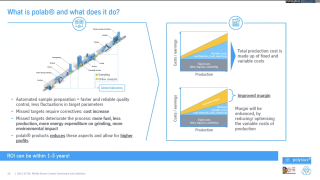
12 July 2022
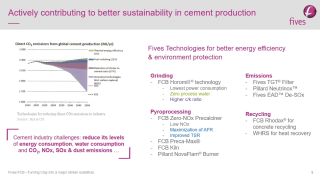
12 July 2022
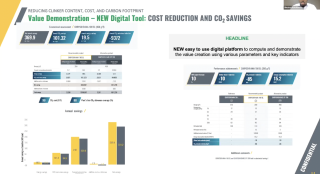
12 July 2022
12 July 2022
12 July 2022
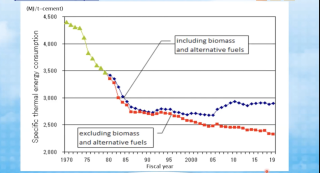
12 July 2022
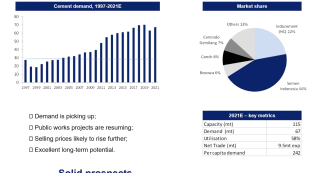
12 July 2022
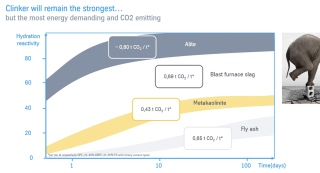
12 July 2022
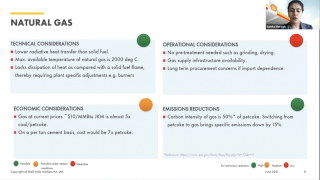
12 July 2022
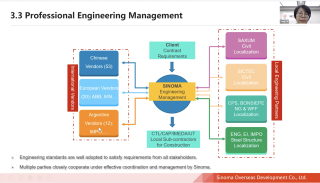
12 July 2022
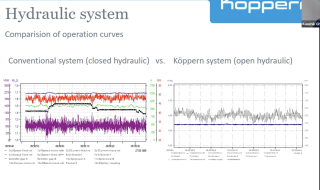
12 July 2022
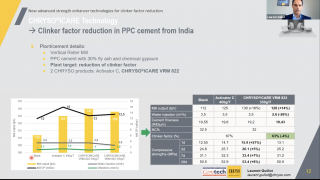
12 July 2022
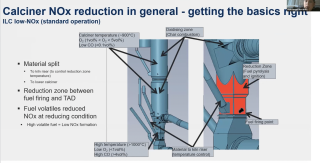
12 July 2022
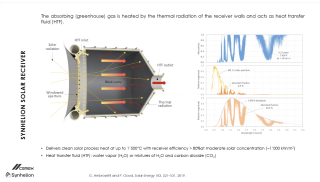
12 July 2022
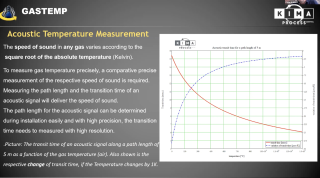
11 July 2022
11 July 2022
11 July 2022
11 July 2022
11 July 2022
11 July 2022
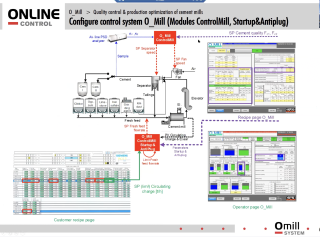
11 July 2022
11 July 2022
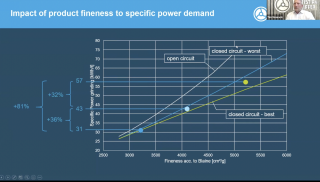
11 July 2022
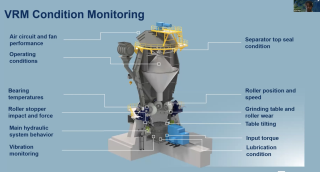
11 July 2022
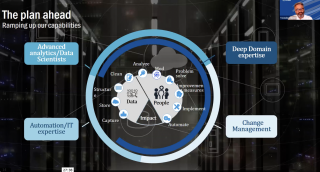
11 July 2022
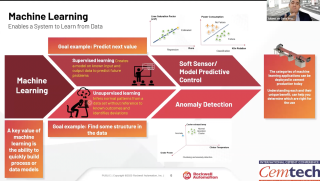
11 July 2022
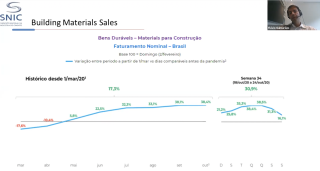
11 July 2022
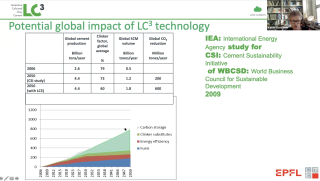
11 July 2022
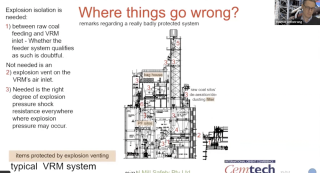
11 July 2022
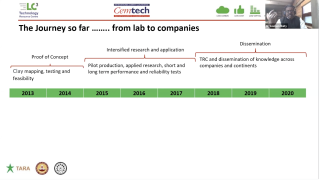
11 July 2022
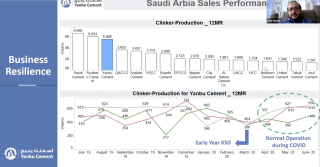
11 July 2022
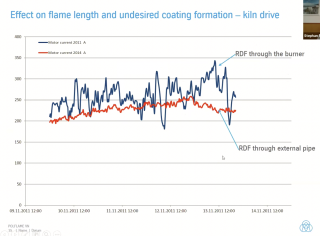
11 July 2022
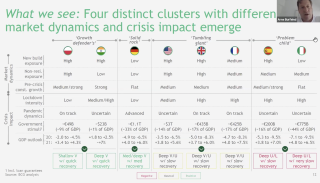
11 July 2022
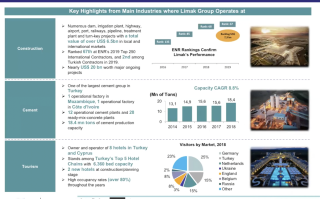
11 July 2022
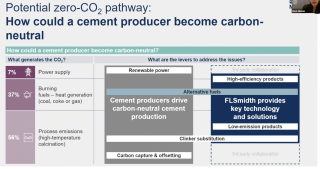
11 July 2022
11 July 2022
11 July 2022
11 July 2022

6 July 2022
1 July 2022
1 July 2022

8 June 2022

12 February 2021
12 February 2021
12 February 2021
12 February 2021
12 February 2021
12 February 2021
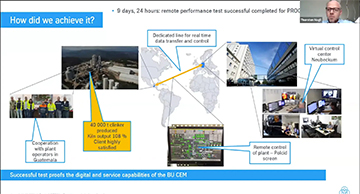
12 February 2021
12 February 2021
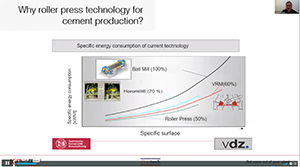
25 September 2020
25 September 2020
25 September 2020
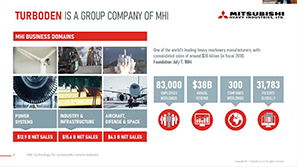
25 September 2020
23 September 2020
22 September 2020
22 September 2020
21 September 2020
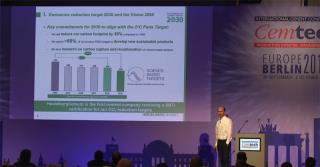
20 February 2020
10 February 2020
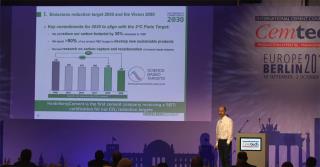
10 February 2020
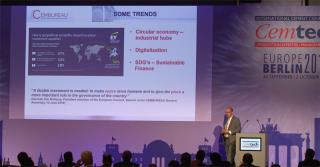
10 February 2020
7 February 2020
27 January 2020
23 January 2020
23 January 2020
23 January 2020
23 January 2020
2 May 2019
30 April 2019
18 April 2019
18 April 2019
18 April 2019
12 April 2019
12 April 2019
11 April 2019
10 April 2019
10 April 2019
10 April 2019
9 April 2019
9 April 2019
4 February 2019
17 January 2019
31 July 2018
31 July 2018
31 July 2018
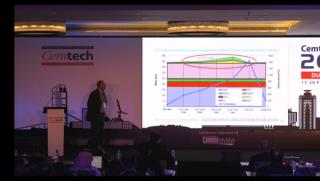
27 July 2018
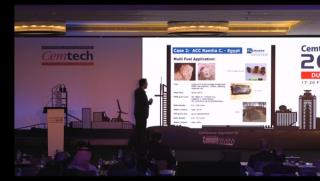
27 July 2018
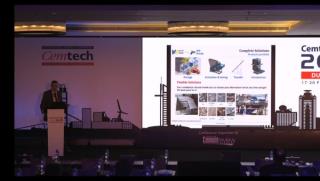
27 July 2018
27 July 2018
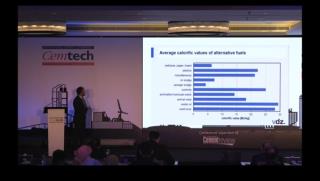
27 July 2018
27 July 2018
27 July 2018
27 July 2018
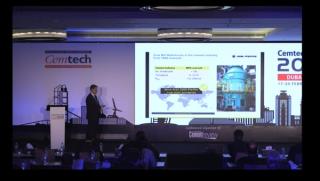
27 July 2018
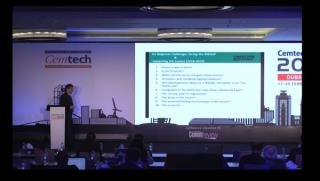
27 July 2018
25 July 2018
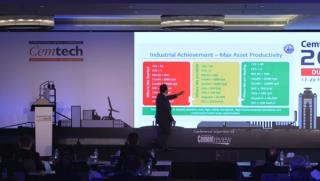
25 July 2018
25 July 2018
24 July 2018
24 July 2018
24 July 2018
23 July 2018
23 July 2018
23 July 2018
20 July 2018
20 July 2018
20 July 2018
20 July 2018
20 July 2018
20 July 2018
20 July 2018
20 July 2018
20 July 2018
20 July 2018
20 July 2018
20 July 2018
20 July 2018
20 July 2018
20 July 2018
20 July 2018
20 July 2018
20 July 2018
20 July 2018
19 July 2018
19 July 2018
19 July 2018
19 July 2018
19 July 2018
23 March 2018
23 March 2018
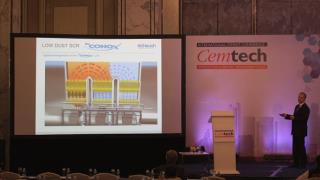
23 March 2018
23 March 2018
23 March 2018
23 March 2018
23 March 2018
23 March 2018
23 March 2018
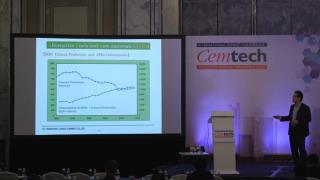
23 March 2018
23 March 2018
23 March 2018
23 March 2018
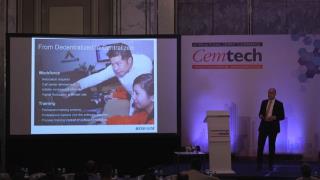
23 March 2018
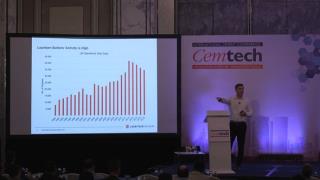
23 March 2018
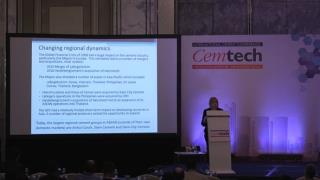
22 March 2018
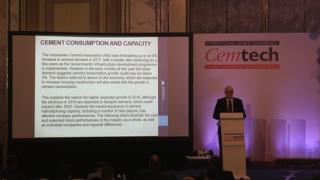
26 October 2017
26 October 2017
26 October 2017
26 October 2017
14 August 2017
14 August 2017
14 August 2017
14 August 2017
14 August 2017
14 August 2017
14 August 2017
14 August 2017
14 August 2017
14 August 2017
14 August 2017
14 August 2017
14 August 2017
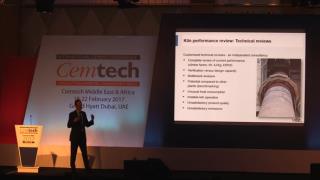
14 August 2017
18 July 2017
18 July 2017
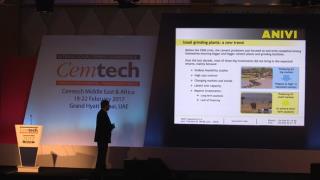
18 July 2017
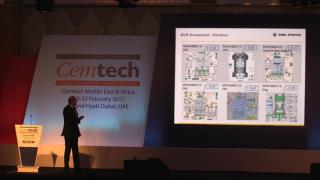
16 June 2017
16 June 2017
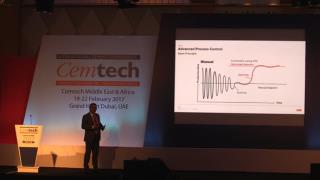
16 June 2017
16 June 2017
16 June 2017
14 February 2017
14 February 2017
14 February 2017
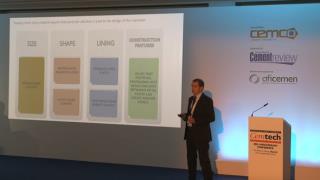
14 February 2017
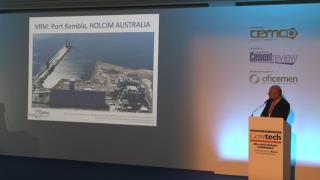
14 February 2017
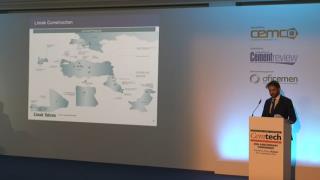
14 February 2017
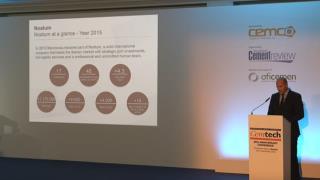
14 February 2017
14 February 2017
14 February 2017
14 February 2017
13 February 2017
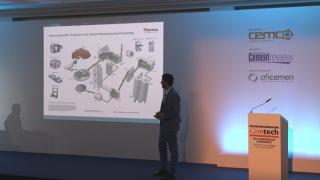
13 February 2017
13 February 2017
19 January 2017
19 January 2017
17 January 2017
17 January 2017
17 January 2017
6 January 2017
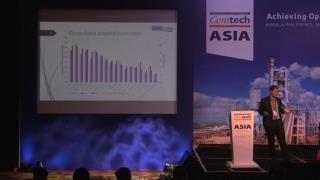
18 August 2016
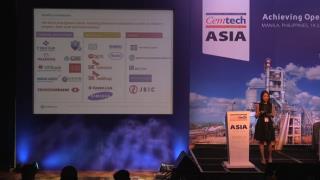
18 August 2016
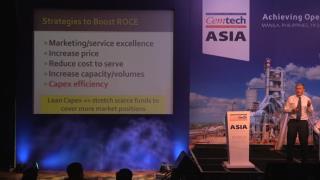
18 August 2016
18 August 2016
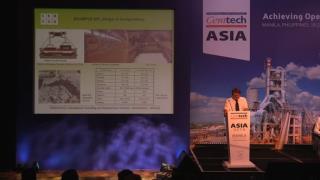
17 August 2016
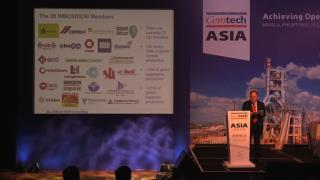
17 August 2016
17 August 2016
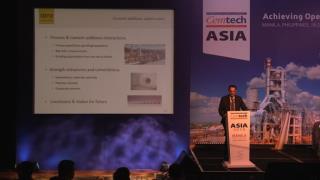
16 August 2016
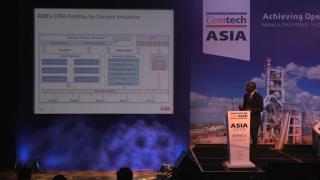
16 August 2016
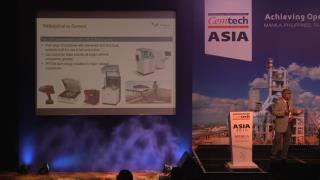
16 August 2016
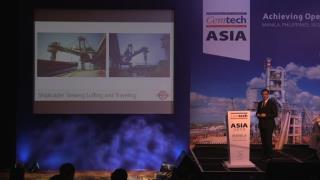
12 August 2016
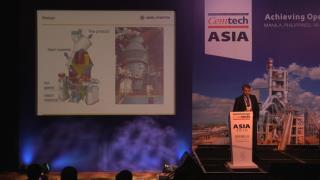
12 August 2016
12 August 2016
11 August 2016
11 August 2016
11 August 2016
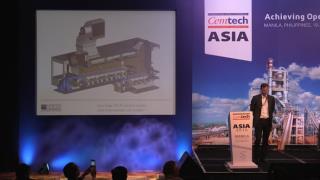
10 August 2016
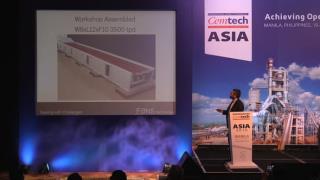
10 August 2016
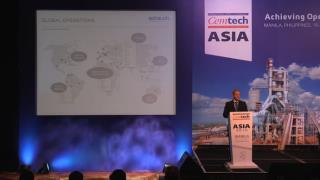
10 August 2016
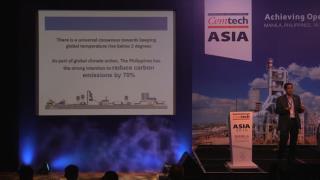
8 August 2016
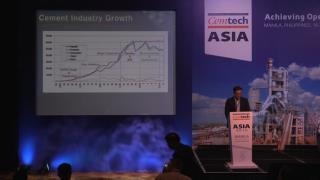
8 August 2016
8 August 2016
6 May 2016
6 May 2016
6 May 2016
6 May 2016
6 May 2016
6 May 2016
6 May 2016
6 May 2016
6 May 2016
6 May 2016
6 May 2016
6 May 2016
6 May 2016
6 May 2016
6 May 2016
6 May 2016
6 May 2016
6 May 2016
6 May 2016
6 May 2016
6 May 2016
25 April 2016
25 April 2016
11 March 2016
11 March 2016
11 March 2016
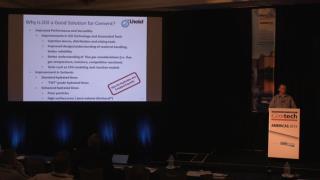
11 March 2016
11 March 2016
11 March 2016
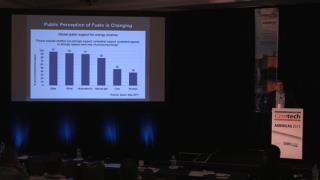
11 March 2016
11 March 2016
11 March 2016
11 March 2016
11 March 2016
11 March 2016
11 March 2016
11 March 2016
11 March 2016
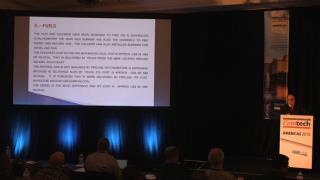
11 March 2016
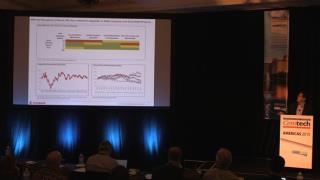
11 March 2016
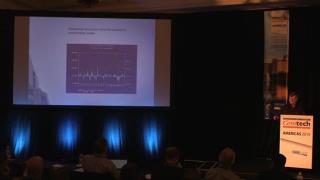
11 March 2016
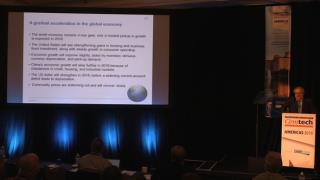
11 March 2016
11 March 2016
21 December 2015
15 December 2015
15 December 2015
15 December 2015
15 December 2015
15 December 2015
15 December 2015
15 December 2015
15 December 2015
15 December 2015
15 December 2015
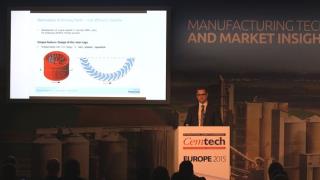
15 December 2015
15 December 2015
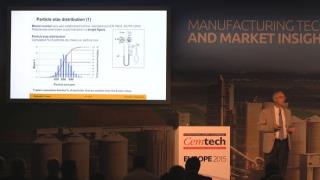
2 December 2015
2 December 2015
2 December 2015
2 December 2015
2 December 2015
2 December 2015
2 December 2015
2 December 2015
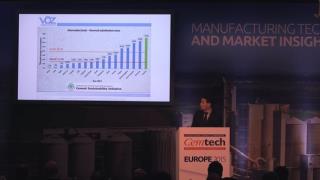
2 December 2015
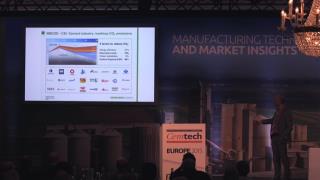
2 December 2015
2 December 2015
2 December 2015
21 August 2015
21 August 2015
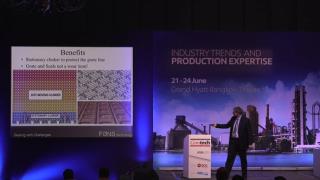
21 August 2015
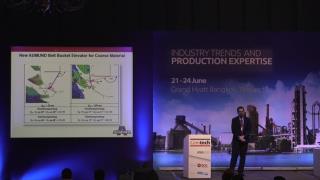
21 August 2015
21 August 2015
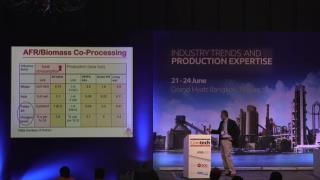
21 August 2015
21 August 2015
21 August 2015
21 August 2015
21 August 2015
21 August 2015
21 August 2015
21 August 2015
21 August 2015
21 August 2015
21 August 2015
21 August 2015
21 August 2015
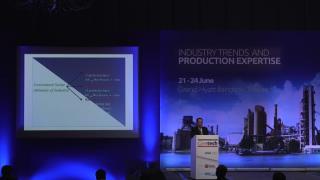
21 August 2015
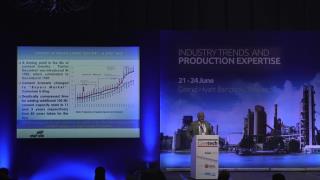
21 August 2015
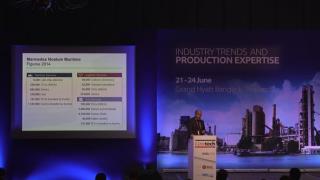
20 August 2015
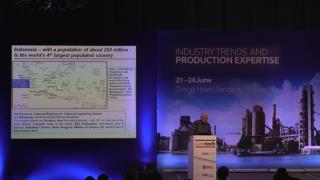
20 August 2015
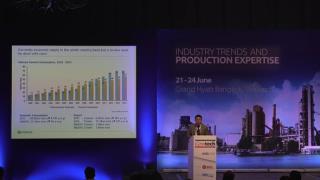
18 August 2015
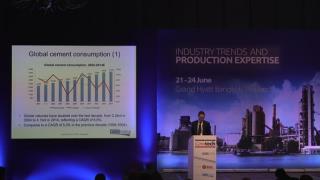
18 August 2015
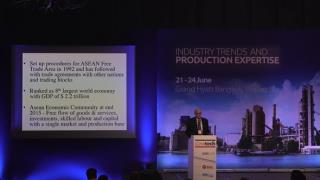
18 August 2015
18 August 2015

30 June 2015
29 June 2015
29 June 2015
29 June 2015
29 June 2015
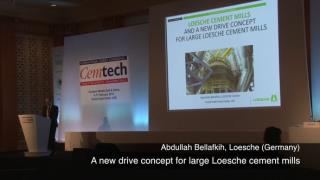
29 June 2015
29 June 2015
29 June 2015
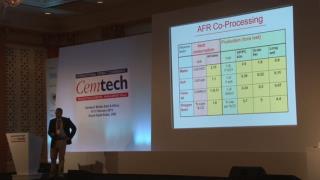
29 June 2015
29 June 2015
29 June 2015
4 June 2015
4 June 2015
2 June 2015
2 June 2015
2 June 2015
2 June 2015
29 May 2015
29 May 2015
28 May 2015
28 May 2015
28 May 2015
18 February 2015
17 February 2015
13 February 2015
13 February 2015
Try searching for another title.