
2 September 2026
This transcript was generated automatically and may contain errors.
To give time to our next speaker. I'm very pleased to welcome Frederick Abre who's come over from Ghana to present the, the Heim Clay Projects. Frederick is managing director of CBI Ghana and the graduate of the University of the Meran in Exxon promo and holds a bachelor's degree in economics. having started his working career in the family owned company, FSCO ag, he participated in the implementation of two grinding stations in Mae and Dki in France. And more recently, he's been pivotable in developing the comp, the company's cement winding facility in Tema, Ghana just outside Accra.
and since 2015, he's led the plant to full capacity while achieving signif significant revenue in EBITDA growth. Subsequently, he established the company's cow signed clay facility at the same location. Frederick is also the president of the Ghanaian Cement Association. and now I'm delighted to, to welcome him for this presentation. So good morning. Thank you everyone. so I will take you through the journey of our leading company, CBI Ghana, which is a grinding station in Ghana. So let's start where is this? Sorry, it's not working. No, it's okay. Yeah, sorry. So a brief story about ourselves. So we are a family owned company. We started the project in 2017.
We've been the grinding station of a capacity of 600,000 ton. The commercial activity started in 2019. we are located in Tema. we had a excess of, we exceeded the plant capacity in 2021, being in full capacity, if you choice, sorry, still having some, this one There, a Spare clicker. I Work. Here we are. So we had the choice to do with increasing capacity on a normal, let's say, trend and trying just to add another meal or be a bit more audacious and trying to have, let's say, a competitive advantage. This lead us to the journey we we're going through now. So having said that, we are in an environment where we are all players with grinding capacity.
We are not having any integrated plants due to lack of clean limestone locally. so we had to think ourself, what would we do? And we didn't. Also an increase in capacity, which we needed for our activity. We decided to try to find the various solutions. We've reduced our clinical ratio to the minimum through a mixture, same two products, and we realized that that was not enough. We could do even better. So what we did, we tried to find out solution through SCM cement issues, material importing them from forest or Europe through slag or fly was a solution, but not enough. What could we do better?
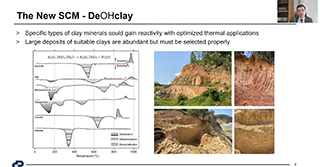
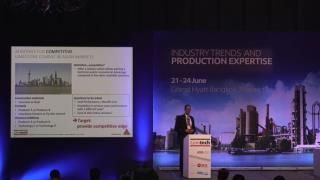
Cost of logistic is very expensive in Africa in general, even though we are located in this, in the seashore of Ghana, it was still a very expensive journey to import. So in order to change and to have a competitive advantage, we needed to think ourself what to do. This is where we decided to look over on raw material, what we could find locally. Of course, in Ghana, locally, you can find clay. That's why we started our generator towards Cal and Clay. To enhance our competitiveness and to cherry on the cake, reduce CO2 emission through a low carbon footprint, the opportunity for that develop a local reactive cement cementitious material to replace a significant portion of clinker.
Even if today we are at clinker ratio, which is around 65%, we could even go lower. That's what we wanted too, because clink air was very expensive. So we decided to go for an lc three project. That journey started in 2022. We saw the benefit potential so that NS competitiveness reduced forest exposure in a market where Forex is going down constantly lower CO2 emission, new revenue stream. So we decided to invest in a bigger capacity than our leads in order to create the path for sale to a third party. So our excess cal San Clay want, we are going to sell it to a third party. Local economic impacts, increasing local sourcing as well. Forex sustainability focus towards the reduction of CO2.
The project risk we identified was the technology challenge in back in 2022. LC three was not that let's say not that the same level technologically than today. Product family was as well, a risk unknown. There is very little datas around how and how it works. Regulatory hurdles, there was no LC three standards into the Ghana standards, regulations, and then project execution. Of course, undergoing a new technology in Africa is not the easiest journey as well. Market acceptance, what color will we get? What exactly will it work more demand all those and how our customer will accept it. This was also one of our question, limited cap, limited carbon market access.
Difficulty to fully benefit from carbon credit trading. Being in Africa, the geographical zone does not have and provide any framework for carbon credits. Then the lack of local incentives, lack of government supports on new technologies on sustainable technologies. Lack of funding as well from the government that does not have any, let's say, spare money to pay for any better pro project or better technology. So we decided to build the world's largest gas sampling to suit. So sub sub the substitute about 20% clinical. This has been our targets. Why in order to do a significant change in terms of profitability, we needed to, to go a bit further.
So we decided to build the world's largest LEA with FL Smiths, which has been working with us for the last three years now. that was supporting the local economy, increased local sourcing and reduction of CO 2 380 kilogram of CO2 instead of the 570 we are currently at. So this was also a good, and let's say a sustainable future for our company. So as well, we are producing two times the cal San Clay we need. So we had to find another partner to buy the remaining cal San Clay that we produce. So it's as well opening let's say a new line of business, opening a new product on our own.
So we will, we have decided then to discuss with Heidelberg Mateo, which is as well one of the biggest, the biggest player in Ghana. And immediately we were able to, to find a way to work together and even to work and let's say be together as a partnership. So we de first through our journey, we decided to secure the clear reserves. That was the key. So for that we commissioned it, the study around we find a, a suitable location, 70 kilometer from our plants. The difference with clean care is that calcine clay, let's say a clinker, you need about two tons of raw material to produce one ton of clinker.
In the case of calcine clay, it's only the moisture which will be which will go out of the raw material. So it's about one to 1.2. In order to produce calcine clay, we did an extensive exploration, more than 3000 sample raw material being key at end. Whether what you put inside will depends on what you will get afterwards. So we did an extensive exploration, about 3000 samples tested on 200 acre and hundred and 73 drill holes. In order to do that, we had to upgrade our love, buy the necessary equipments, train our team which has been working for three months, set 24 7. we did that also with the help of external like as a PFL and as well whole sim lab in Jna.
This was journey of training our team, getting them to be able to know a bit more about the process, what's the current DT contents, what was necessary to develop than this extraction plan. that journey was as well in the middle of covid, so we could not fly people around. We had to do it online. And I must say I'm very proud of our lab team that has been doing all that. Then went to the technology to be chosen for that. with the discussion with FLS and with Hydro Bear material, we opted for the flash cal signer. We did a, a 1,200 ton per day production facility with the focus on reactive material.
The more reactive the material is, the better we can substitute clinker and as well the color control to have the optimal color and cement performance, and then efficient efficiency on fuel. In Ghana, we have available some gas deposits, so we are able to source through gas, which reduce as well cost and emission on the strong partnership. As I mentioned we onboarded in order to finance all that finance being quite expensive in Africa.
We onboarded some partners through the journey, which was in Heba material, EFU and Nofo, the Dan State owned fund and nor fund Norwegian state owned fund for development, FL Smith as well, has a stake in our company and we secured that financing through export credit from Denmark. Then on the, I would say on the research side, we partnered with OPFL in Lausanne, Karen Rifer, which helped us and K-N-U-S-C, which is the Ghanaian technical university based in ku. Then that's where we are today. So after three years we are, let's say about few weeks before commissioning we identified the clay query. We have a new shareholding structure.
We invested additionally $80 million, and with this $80 million, the investment was on an additional mill of 1 million ton and a Cal San Clay plant of 400,000 ton. We have about 160 employees. So this has been our journey for the last three years. Now, coming back to regulatory barriers in Ghana, nothing was existing as such as calcine clay in Europe. Now we have a regulation allowing us to go to 50% calcine clay, where in Africa it was not existing.
So in order to change that and to change mentality, we had to build and leverage network through research and academia, KNU sst, OPFL as I mentioned earlier, being policy and research institution along the journey, Ghana Standard Authority and the CSIR, which is locally around building and then also a partnership with local manufacturer as Heidelberg material through Gasm. So out of that journey, we overcame the regulatory challenge, creating a new cement with C3 and the strategy to address direct regulatory challenges. We led with science first involve the policymaker and build also the partnership. And now we are proud to say that from May 24, we are a LC three standard for an LC 3 35.
So we are able to put 35% clinker and re the rest are being calcine clean for between 50 to to 35 to, sorry, 50 to 70%. So this enable us a CO2 saving of about 200 kilogram of CO2 ton of cement, but as well is allowing us to be much more competitive compared to our competitors, which are importing all their clean air and have an average of around 65 to 70% clean air. How the market acceptance, how do we see it and how will it arrive? So there is a low environmental consciousness in Vienna. People don't care really much around how much CO2 you have in the cement, what they cares about, the price of cement at the end, that's the most important for them.
So to, in order to have it accepted, we knew perfectly that we couldn't make it pay higher like you can have in Europe. We would have to be at the same price at the similar, but that will change over the next five years for sure. The mentalities will change and there will be a more environmental conscious net that will be built up and also we will push for it. Suddenly the skepticism and the converse conservatism, we're not an industry which is well known for being very, let's say innovative or so. People are looking, more consumers stick to what they know local, local products aren't trusted that much neither. It's a perception where what is important is better than what is locally produced.
So in order to do and promote environmental is sustainable pose, challenge, demonstrate local benefits. So create local jobs, more lower import, which when GAR went through the crisis in the last two years was a big topic. And then community partnership through CSR. And secondly, we emphasized on the product the quality and the affordability. We needed to be a very similar product than the one we are currently selling. If not, people are not going to buy it. They're not ready to pay a premium neither. So that's why we made it. And also being capable of, of selling it at a cheaper price. That's why also the journey of cost was very important.
Then promote lc three's environmental proposition, education and awareness campaign. This is one of what we are initiative we are doing promoting that is environmental friendly. Even if people do not care today, they will care tomorrow. And partnership with opinion leaders, government and other industry partners. So we went from a sourcing and importing clean care, which a true a simple grinding station to a, a new model which claim with clay mining, calcining the clay, and reducing the, the clinical content into our into our portfolio. Today, we expect to be below 50% by the end of 25 in our portfolio. So that has been our journey.
Now, one of the push that we could benefit and that could also enhance the technology of lc three within the benefit of CO2 gains. So today with the plants and the production of 400,000 ton of scratch and clay, we will avoid about 250,000 ton of CO2 emissions. And this with an investment of about 80 million, including a grinding station. So now what are the EU or the financial International financial Institution give us in order for that to, for the one there is no framework. We cannot, we are working on it still. After three years, we have not been able to identify. So this is going to be the next step for us, and we are pushing hard on that.
IFC we are discussing as well with them on that topic as it'll open up for based pipeline of projects. So this is what's our biggest opportunity, lies around regulatory bias, market acceptance, broader operational scope, and limited market access and invest in the long term. Thanks you, Man. Thank you. Thank you very much. Feder really fascinating project. And so many questions. where to start on the technical side, what what is the biggest challenge for, For the project? On the technical side, the biggest challenge was actually the, I wanna say the implementation of the project. We were in the middle of a crisis, so that has been one of the most difficult journey.
And as well I would say we got a lot of help from ha bear material and FLS we built a lot of knowledge in, in-house as well. In order to, to push the project, technically speaking, we also sent about 3000 tons, sorry, three tons of material to Denmark in order to get some room, let's say finished product in advance that got cal sign into the plant in their pilot plant. And that helped us a lot through the to get us through the, the regulatory framework and that was very important. So today we have a clear view on, on the 32.5 where we are doing NC three 40 with 40% clinker. This will be a product which is about 320 kilogram of CO2. And and we are ready and completely full.
we know exactly what, what will be the final product for 42.5. We still need about three months research, but for that we don't have finished product available. So we are waiting the plant to be commissioned to be able to have those material. We are fairly confident that we could reach for 42.5 m 50% clean care and corporation And, and entering the market with this new product. Ghana is mainly, it's a, an emerging market, so it's a bag cement market mainly. how, how do you see that evolving? So we decided to go to a patch, which is very simple, is not to mention very much a difference and try to be as similar as possible to the same tool.
We are currently manufacturing, so we didn't go through a saying or making a big fancy launch on a green product, which people don't care much. We decided to go and, and introduce it as a similar product. You and Harburg both at the same price? Yes, and as a lower price, Of course they're probably possible, but we definitely, we have to push 400,000 ton offs of calcine plate and we will push it. So we'll have to, to go to, we're not going to stand still and wait until piling up on the Calcine plate. any, any questions from the floor here and a couple of hands have gone up. If we could have a microphone, if you could say your name and company. good morning everybody. Dr. Hamdi Fer Egypt.
thank for your presentation. you said in your presentation that you are controlling the color. my question if how to control the color and in some countries the darkness of ity is big issue. They consider when darkness is increasing, the quality is increasing. Is this culture present in Ghana also or in Africa? Thank you. Yes, somehow colors matter and of course selling a reddish cement will not fly. So in order for that, I'm, I'm not that technician on, on on the color control system and how it applies.
But we have a color control with the FLS system and with that system, everybody depends on the various fuel you are putting inside in order to control it, whether it's from gas or from diesel. For example. For a diesel, you would have a much darker cal sign clay then if you use gas as a color control system. So in our system, we use the flexibility to us both. We are gas fired for the calcination, but for the control, the color control, we're able as well to introduce diesel in the, in the room where it is done or in the oxidation where, where it's done in order to have a darker cement and playing with the color.
Now we are being also clinker from various area, so we are sometimes having much lighter clinker. So we, we are having very variable clinkers. So that's, that's why color matters, but there is flexibility on the market as long as you're not trying to sell a reddish with cement. Thank you. next question. Yes mag de Mustafa Arabia cement company in Egypt. I have the several questions. The first one regarding the technology, I think this is the first or the second flash consigner in full operation.
I don't know if selecting this technology, it's a little bit challenging at this time because the normal one is, I don't know if you have discussed the different alternatives or you just went for the CLE flash car signer because it's fl is trying to promote this system. And second, the question regarding is equality. What we understand is that the Cal Clay having a little bit worse early strengths, I don't know if this is mentioned in the market or not, especially are selling most of your product as begged cement. And third one is the CapEx, if I will. You mentioned $80 million.
I don't know if this is the cost for the project or another investment because we, we think this is huge investment for this project. Thank you. Hello. First on the, on the earliest trends and on first on on the technology. So we went for, for Flash cal signer. Of course, after discussion with FLS, which has been trying to push the technology quite hard, we got convinced about it on, on also the, I would say the heat range. and really promoting the reactiveness of the product. We, we were clear we wanted the most reactive cement issues to be able to replace and be the most efficient possible. So that's why we went for that that technology.
on the two day strengths, exactly everything lies on the two day strength. Today what we realized is that using chemicals we're able to, and grinding a bit finer, we are able to compensate the early strength to a certain extent, but not too much as well. So definitely we will be losing on the two day trend unfortunately, but it'll be partially compensated by the, by the chemicals and that mixture. Now secondly as well is all that was made based on test and laboratory. On laboratory mill, we are not yet sure of how it'll behave with in normal situation, let's say large scale industrial situation.
This is something which we will observe in the coming weeks as we are about two to three weeks to start from now. So this is going to be the key. Now on the CapEx side, you are right, it's quite expensive, but inside you have a 1 million ton mill. So it's not only the cal signer. So it's, it's a full, it's 1 million ton mill additional. You have as well cement silos, which are inside plus a flash camp signer. So that's why the costs appear big, but it includes a 1 million ton additional mill as well. And that's a bull mill bone mill as well.
And we will be introducing the camp sign clear at two position as 60% of the cal san clay that should come out is going to be at the fines of a final product as a final cement, where 40% will have to be re-injected. So what we're going to, we have the possibility to inject in two points, either the separator or either the inlet or the mill. Okay. But we are still, it's still something which we're going to discover on how it'll behave. So we're able to tell you, you know, prayer, you, you, You are in the commissioning phase now. Yes. So this is a very, very exciting, very good. Okay, well that's all we have time for now. But thank you for answering the questions.
Fascinating project that we wish you the best for the commissioning. Thank you.
Video library
Browse 410 conference presentations, webinars, interviews and technical films from the modern CemNet video archive.
410 videos
2 September 2026

1 July 2026

1 July 2026

30 June 2026

30 June 2026

30 June 2026

30 June 2026

30 June 2026

30 June 2026

30 June 2026

30 June 2026

3 June 2026

13 May 2026
9 April 2026

1 April 2026

4 March 2026

27 February 2026

27 February 2026

27 February 2026

27 February 2026

27 February 2026

27 February 2026

17 February 2026

11 February 2026

7 January 2026

3 December 2025

5 November 2025

16 October 2025

8 October 2025

3 September 2025

2 July 2025

4 June 2025

7 May 2025

2 April 2025

18 March 2025

18 March 2025

5 March 2025
3 March 2025

5 February 2025

8 January 2025

4 December 2024

13 November 2024

6 November 2024

9 October 2024

4 September 2024

3 July 2024
10 June 2024

5 June 2024

8 May 2024

23 April 2024

23 April 2024

23 April 2024

23 April 2024

23 April 2024

22 April 2024

22 April 2024

16 April 2024

16 April 2024
11 April 2024

3 April 2024

11 March 2024

6 March 2024

7 February 2024

10 January 2024

10 January 2024
10 January 2024

6 December 2023

1 November 2023

4 October 2023
15 July 2023

15 July 2023

15 July 2023

15 July 2023

13 July 2023

24 March 2023
14 July 2022
13 July 2022
12 July 2022
12 July 2022
12 July 2022
12 July 2022
12 July 2022
12 July 2022
12 July 2022
12 July 2022
12 July 2022
12 July 2022
12 July 2022
12 July 2022
12 July 2022
12 July 2022
12 July 2022
11 July 2022
11 July 2022
11 July 2022
11 July 2022
11 July 2022
11 July 2022
11 July 2022
11 July 2022
11 July 2022
11 July 2022
11 July 2022
11 July 2022
11 July 2022
11 July 2022
11 July 2022
11 July 2022
11 July 2022
11 July 2022
11 July 2022
11 July 2022
11 July 2022
11 July 2022
11 July 2022
11 July 2022

6 July 2022
1 July 2022
1 July 2022

8 June 2022
12 February 2021
12 February 2021
12 February 2021
12 February 2021
12 February 2021
12 February 2021
12 February 2021
12 February 2021
25 September 2020
25 September 2020
25 September 2020
25 September 2020
23 September 2020
22 September 2020
22 September 2020
21 September 2020
20 February 2020
10 February 2020
10 February 2020
10 February 2020
7 February 2020
27 January 2020
23 January 2020
23 January 2020
23 January 2020
23 January 2020
2 May 2019
30 April 2019
18 April 2019
18 April 2019
18 April 2019
12 April 2019
12 April 2019
11 April 2019
10 April 2019
10 April 2019
10 April 2019
9 April 2019
9 April 2019
4 February 2019
17 January 2019
31 July 2018
31 July 2018
31 July 2018
27 July 2018
27 July 2018
27 July 2018
27 July 2018
27 July 2018
27 July 2018
27 July 2018
27 July 2018
27 July 2018
27 July 2018
25 July 2018
25 July 2018
25 July 2018
24 July 2018
24 July 2018
24 July 2018
23 July 2018
23 July 2018
23 July 2018
20 July 2018
20 July 2018
20 July 2018
20 July 2018
20 July 2018
20 July 2018
20 July 2018
20 July 2018
20 July 2018
20 July 2018
20 July 2018
20 July 2018
20 July 2018
20 July 2018
20 July 2018
20 July 2018
20 July 2018
20 July 2018
20 July 2018
19 July 2018
19 July 2018
19 July 2018
19 July 2018
19 July 2018
23 March 2018
23 March 2018
23 March 2018
23 March 2018
23 March 2018
23 March 2018
23 March 2018
23 March 2018
23 March 2018
23 March 2018
23 March 2018
23 March 2018
23 March 2018
23 March 2018
23 March 2018
22 March 2018
26 October 2017
26 October 2017
26 October 2017
26 October 2017
14 August 2017
14 August 2017
14 August 2017
14 August 2017
14 August 2017
14 August 2017
14 August 2017
14 August 2017
14 August 2017
14 August 2017
14 August 2017
14 August 2017
14 August 2017
14 August 2017
18 July 2017
18 July 2017
18 July 2017
16 June 2017
16 June 2017
16 June 2017
16 June 2017
16 June 2017
14 February 2017
14 February 2017
14 February 2017
14 February 2017
14 February 2017
14 February 2017
14 February 2017
14 February 2017
14 February 2017
14 February 2017
13 February 2017
13 February 2017
13 February 2017
19 January 2017
19 January 2017
17 January 2017
17 January 2017
17 January 2017
6 January 2017
18 August 2016
18 August 2016
18 August 2016
18 August 2016
17 August 2016
17 August 2016
17 August 2016
16 August 2016
16 August 2016
16 August 2016
12 August 2016
12 August 2016
12 August 2016
11 August 2016
11 August 2016
11 August 2016
10 August 2016
10 August 2016
10 August 2016
8 August 2016
8 August 2016
8 August 2016
6 May 2016
6 May 2016
6 May 2016
6 May 2016
6 May 2016
6 May 2016
6 May 2016
6 May 2016
6 May 2016
6 May 2016
6 May 2016
6 May 2016
6 May 2016
6 May 2016
6 May 2016
6 May 2016
6 May 2016
6 May 2016
6 May 2016
6 May 2016
6 May 2016
25 April 2016
25 April 2016
11 March 2016
11 March 2016
11 March 2016
11 March 2016
11 March 2016
11 March 2016
11 March 2016
11 March 2016
11 March 2016
11 March 2016
11 March 2016
11 March 2016
11 March 2016
11 March 2016
11 March 2016
11 March 2016
11 March 2016
11 March 2016
11 March 2016
11 March 2016
21 December 2015
15 December 2015
15 December 2015
15 December 2015
15 December 2015
15 December 2015
15 December 2015
15 December 2015
15 December 2015
15 December 2015
15 December 2015
15 December 2015
15 December 2015
2 December 2015
2 December 2015
2 December 2015
2 December 2015
2 December 2015
2 December 2015
2 December 2015
2 December 2015
2 December 2015
2 December 2015
2 December 2015
2 December 2015
21 August 2015
21 August 2015
21 August 2015
21 August 2015
21 August 2015
21 August 2015
21 August 2015
21 August 2015
21 August 2015
21 August 2015
21 August 2015
21 August 2015
21 August 2015
21 August 2015
21 August 2015
21 August 2015
21 August 2015
21 August 2015
21 August 2015
21 August 2015
20 August 2015
20 August 2015
18 August 2015
18 August 2015
18 August 2015
18 August 2015

30 June 2015
29 June 2015
29 June 2015
29 June 2015
29 June 2015
29 June 2015
29 June 2015
29 June 2015
29 June 2015
29 June 2015
29 June 2015
4 June 2015
4 June 2015
2 June 2015
2 June 2015
2 June 2015
2 June 2015
29 May 2015
29 May 2015
28 May 2015
28 May 2015
28 May 2015
18 February 2015
17 February 2015
13 February 2015
13 February 2015
Try searching for another title.