
2 September 2026
This transcript was generated automatically and may contain errors.
Hello, and welcome to the CemTech 2026 live webinar. We're in May 26, and I'm delighted to be with you today for our webinar on carbon capture. A big topic. As you can see from our calendar, we've been through a lot of different areas, looking at alternative fuels, digitalization, a lot of carbon-reducing technologies. But the final one, what to do with that end result, carbon dioxide coming out of cement plants, that will be the main focus, but not the exclusive focus of this webinar. As usual, a quick plug, and just to remind you all that our webinars are produced by International Cement Review, and we're published every month, hard copy, digital, however you like it.
But if you're watching this webinar, if you're listening in now, then all the topics covered today and in other webinars are dealt in detail in our magazine. If you're not a subscriber, take a look at the website. It's very easy to sign up. And you'll get a 10-year digital archive, as well as lots of other unique content. One other plug, just the last one, we'll be in Bangkok in about a month's time for our CemTech Asia conference. Very excited to be out there, with lots happening and a particularly interesting program. Have a look on our website. Again, you'll see the program and our exhibitors. A big list of exhibitors. One of our biggest conference exhibitions in Asia.
Hope to see you there if you're in the region. But just to get us started, I realize now there's quite a lot of text on this, but if you just focus on the chart, I just want to give the context for what we're going to talk about now. We're in Europe, we're focusing on Europe. It's where the decarbonization regimes are most mature. And we know that, especially since the Paris Agreement, things have accelerated in terms of decarbonization. And this year is an important year because we kick off with the emissions trading system tapering down its free allocations to the industry, and the carbon border adjustment mechanism entering its first definitive stage this year.
And as the allowances taper out, the CBAM will come in, imposing a border tax on imports of cement and carbon-heavy materials into Europe. And through this mechanism, we are seeing carbon capture projects are being incentivized. At the moment, looking at the data today, we're around €73, €74 a ton of CO2, and it's looking at around €82, €83 by 2029. So that's our financial context, what the cost of emitting carbon is in Europe, which has implications for the projects we're going to hear about. And the other point I'd like to raise is just that there are 18 cement and lime CCUS projects now with grants from the EU Innovation Fund.
That's the fund that disperses the revenues from the emissions trading system. There are 18 of those projects. That's 2.83 billion euros committed by the EU towards CCUS in our sector, and that's the equivalent of 173, 174 million tons of CO2 avoided over the first 10 years of these projects. So that's our context. We've got the regime pushing the industry towards decarbonization. We've got a carbon price. We've got a whole fleet of projects coming in into Europe. There are other facts on there that you might want to pick up on later. A very brief reminder that obviously many of you will know the scale of the challenge facing the industry.
Cement is obviously carbon heavy, and most of that carbon is being emitted as a result of the calcination, two-thirds of it, and can only be removed through carbon capture. So as per the GCCA projections, the roadmap, we're looking at around 36% of carbon emissions will require to be captured in order to reach net zero. So that's our broad context, and hopefully will lead us nicely on now to our presentations. We have three speakers, two from Holcim and one from Orcan Energy. Orcan Energy will be talking about waste heat recovery, so we're looking at generating electricity from the waste heat in the cement plant using the organic Rankine cycle.
And in a broader context, as we've seen, we have all these levers for reducing our CO2. And decarbonizing really actually starts in the cement plant as is, and we need to focus on that obviously as a priority. And everyone is doing that, for sure, but as we said, the remaining CO2 needs to be captured. And we're very lucky to have with us today-Two of the most senior representatives from Holcim who are working very heavily on this. From the carbon capture technology and business development side, Mirco Weber, head of carbon capture technology at Holcim, and Rose Westby, VP of CCUS, head of business development at Holcim.
And as we'll hear, there's a whole portfolio of projects, very exciting, that are being developed. It's quite an amazing thing to see. Anyone who's been following carbon capture will be aware of what a challenge this is. So, just so I can make a quick introduction now to both of our Holcim speakers. Rose Westby is the VP of CCUS, leading the company's global strategy to scale carbon capture, utilization, and storage solutions across its operations and managing a portfolio of over 20 CCUS projects. In this role, she drives the commercialization and deployment of breakthrough technologies to accelerate decarbonization in the buildings material industry.
With a proven track record in digital transformation and industrial renovation, Rose has spent over a decade pioneering large-scale technology deployments in heavy industries. Prior to leading CCUS business development at Holcim, she spearheaded the Plants of Tomorrow program, overseeing the largest rollout of Industry 4.0 technologies in the sector. Under her leadership, Holcim implemented over 2,000 digital and process innovations, driving 100 million Swiss francs in annual business impact while cutting CO2 emissions by more than half a million tons.
Before joining Holcim, Rose held global leadership roles in ABB across the process industries, mining, and transportation sectors, where she developed digital solutions that transformed industrial operations worldwide. She's advised national governments, European policymakers on energy and infrastructure innovation, and she holds a Master of Engineering in Mechanical Engineering from the University of Exeter in the UK. Joining Rose, we have Mirco Weber, head of carbon capture technology at Holcim, based in Switzerland, where he's head of the global carbon capture technology team.
In this role, he's responsible for identifying, evaluating, and piloting cost-effective carbon capture solutions, co-developing breakthrough technologies with partners to support Holcim's commitment to the net zero future. Mirco also represents Holcim in international R&D collaborations with academia and research institutes to advance the readiness of industrial carbon capture utilization and storage. A veteran of the group with over two decades of experience, Mirco has held various global leadership and consulting roles since joining Holcim in 2003. Prior to his current focus on CCUS, he served as the head of process innovation.
Earlier in his tenure, he served as a lead consulting engineer, where he drove global initiatives in emissions abatement and thermal energy efficiency, developing the technical frameworks that underpin the group's operational excellence. An expert in chemical engineering, Mirco holds a master diploma from the Swiss Federal Institute of Technology. So two amazing CVs there. And we're going to now move over to the presentation. If you'd like to upload your slides, Rose, and we're ready. Over to you. We can see the slides really well. So welcome. Super. Welcome. Thank you very much, Thomas. Thanks very much for having us.
So before we sort of kick in and start a Q&A, and there'll be a Q&A open to the audience, we wanted to give a little bit of a view of our strategy at Holcim, how some of the elements that Thomas has set the scene with reflect in Holcim's strategy, both in our decarbonization strategy, but in our overall group strategy, and how that then translates into our growing portfolio of CCUS projects as well. So I've got a couple of slides here to help us talk through the strategy, and then we'll go into a couple of key questions also from yourselves in the audience.
So first and foremost, we have an industry shaping sustainability roadmap, independently validated by the Science-Based Targets initiative. This looks at addressing sustainable development goals, not only in decarbonization, as you can see here, with the target to go below 400 kilograms of CO2 per ton of cementitious, but also to make sure that the product offering that we bring our customers is also reduced in its impact to the economy, to the environment, and to the emissions profile altogether, as well as elements like freshwater offtake, where we have the commitment as well to reduce the freshwater withdrawal from our operational sites.
But as part of this, the key topic today, decarbonization, is something that we are addressing with a number of different levers. So, earlier we saw the GCCA list of levers to decarbonize. This is what that looks like for Holcim over the course of the next 25 or so years. As you can see, we have many traditional levers, as will be familiar to you.
Everything from efficiency gains in the way that the product is used in concrete, in design and construction, decarbonization of electricity, decarbonization through formulation, less clinker in the cement, less CO2 in the clinkerAnd ultimately then you start to see, especially from 2030 onwards, this growing proportion attributed to CCUS and other advanced technologies to help decarbonize. Then finally, you see right at the bottom here a little bit of passive recarbonation, but we don't count that towards anything, let's say, out of proportion to the volume that we're producing. This is directly related to that.
So as you can see, CCUS and other advanced technologies become really imperative for us, not only to reduce our CO2 to 2030, as I said before, below 400 kilograms of CO2 per ton of cementitious, but right the way to 2050, where we have our net zero goals. Meaning that at 44% attributed to CCUS and other technologies, this becomes a topic not just for a small number of plants and a small number of operations, but one that is highly, highly considered for all of our portfolio. To decarbonize, we loosely group these into three levers. And for 2030, you can see here what outcome we expect to get from these three different levers.
Firstly, you see formulation there that by 2030, up to 35 kilograms per ton of cementitious will come from looking at the formulation of our product itself. That's when it looks at energy. We're talking about renewable fuels and renewable power. Again, up to 35 kilograms per ton reduction just from this power lever, from this energy lever. And then finally, carbon capture, where our first projects are due to bring more than eight million tons of near zero cement to our customers from 2030 onwards. Earlier, Thomas mentioned that there are 18 projects in cement and lime supported by the EU Innovation Fund. Now, Holcim leads with eight of that 18.
So that's how those numbers relate to one another. How do these business cases make sense? I thought it might be interesting to just give you a little bit of a view on how we plan to use CCUS to really drive margin expansion, and it's not just cost avoidance. On the left-hand side, you can see an illustrative chart which demonstrates what are the major components of our business cases. Of course, where we expect, broadly speaking, production cost to stand similarly between a non-CCUS site and a CCUS site. We do have this bucket of a CO2 cost. Earlier, Thomas mentioned the ETS. The CO2 cost is something that we're trying to avoid.
And so what will we instead have to pay instead of that CO2 cost, even if we are collecting? Well, we will need to pay for the cost of capture, transport, and storage. So that's what this darker blue looks like on the right-hand side. So that in itself is a cost avoidance or a cost savings part of the business case. But in addition to saving cost, we also see this as a margin growth opportunity where there are markets in Europe, not all, but there are markets in Europe where we seem to have an opportunity to secure a price premium for our products if they are net or near zero. So this is where we see an additional opportunity.
So a combination of a cost reduction as well as a growth through price premium, especially for the first few years as this mechanism is being kicked off. There is, of course, rising demand, and as I said, that's based on the countries. And so depending on the CCUS project we have, it will have a larger or smaller impact to that business case. We also have additional revenue opportunities that we're exploring, such as looking at the biogenic fraction of CO2 that we are storing and being able to generate high quality, independently verified carbon dioxide removal credits from these, and being able to generate additional revenue to bolster the business cases.
Then, of course, there is a cost advantage. We spoke about this, but most importantly, across these projects, by 2030, Holcim has made a commitment to invest €2 billion gross CapEx in these projects. We are not the only investor, of course. We come in with the support of the EU Innovation Fund on these first eight projects that we are pursuing, as well as local initiatives. When we talk about CCUS, what do we mean at Holcim? We talk about two broad value chains. One where we capture the CO2 on premise, we transport it through a variety of means, and we permanently sequester that CO2 in geological formations that can be onshore or offshore, depending on the location.
This is what we refer to when we talk about the value chain of CCS. And we also look at the utilization value chain. So this is where, again, we are capturing the CO2 from our cement manufacturing operations. We are then converting it or processing it into other usable goods. Examples of this could be sustainable aviation fuels or other plastics, chemical, or e-methanol products. So there are many, many use cases here. But important to state, based on current carbon accounting, especially in Europe, we need to make sure that this is a fair recognition of a permanent form of storage and not simply a passing one of emissions to other players.
So this is why we're very careful, but this is what we refer to fully under the scope of CCUS. And so when we're looking at the technologies to capture the CO2, it's so that it is eligible to participate in these value chains.First of all, on the storage value chain, when we look at the potential to develop these value chains, it's dependent really on who are the partners with whom we can work. Are they there? Are they available, and are they working to the same timeline as us? So this is where we have to work and collaborate with technology providers, energy providers in order to secure green power for the additional power demand that we might have with the capture unit.
We have to work with the shipping companies that might be onshore shipping or offshore shipping. And we need to also make sure that collectively, they are working together and can back to back with the same specifications of product to achieve the same outcome that we have. When we look at the usage value chain, we start to have even more players. So not only will we, of course, need to be transporting that product, but instead of a permanent sequestration location, we're instead also working with power companies, hydrogen producers, chemical companies, even airlines and airline associations are the partners with whom we are developing these solutions to bring this product into a second life.
So ultimately, we're talking about a rather complex, long value chain that requires careful coordination between us and all of these value chain players. Now to give you a little bit of a view on where we stand with our portfolio of projects. The eight projects supported by the EU Innovation Fund to date can be shown here. Working from left to right, we have many countries, Poland, Germany, France, Croatia, Greece, Belgium, France, and our latest that was awarded EU Innovation Fund, at the end of 2025, is Campulung in Romania. As you can see, collectively, the volume of cement produced across these sites far exceeds the eight million tonnes that we plan to bring on the market from 2030.
But these sites will not all be live by 2030. That's important to state. We are working closely based on local opportunities and local partnerships to bring the right ones online in time. But, broadly speaking, certainly these last two, the project in Macht, which was awarded the EU Innovation Fund one year ago, and then Campulung, these are projects due to be going live post-2030, certainly. As I mentioned earlier, alongside having the support of the EU Innovation Fund, we also are securing support at country level from different stakeholders. For example, our Croatia project in Koromacno has secured additional funding from the Just Transition Fund.
This is also something that we are securing in other project plants. And across Europe, we also have further projects, not yet awarded EU Innovation Fund, but that are also securing additional types of funding, such as our Saint-Pierre-la-Cour project in France, which was recently selected as part of the GPID in France, which is awarding additional opex funding towards CCUS projects. Ultimately, working in collaboration with government and value chain is absolutely necessary to bring these projects to life. Beyond the eight projects highlighted supported by the EU Innovation Fund, we also have a number of other projects in Europe that are in earlier stages of development.
These projects are across also additional countries that haven't been recognized previously. But as I said before, represent countries where not only do we see a strong business case for CCUS from a cost avoidance perspective, we see a great opportunity as well to promote a decarbonated product in those markets. Ultimately, to reach our 2050 net zero targets, CCUS is very much in consideration for all our cement manufacturing operations and is being carefully considered alongside the other decarbonization levers to reach our goals.
With that, I'll pause here in terms of introduction to our strategy, and maybe we can kick off a few questions from your side, Thomas, before we open up to the audience. Yeah, sure. And just to remind everyone, there's a Q&A button if you'd like to ask any questions. Just put your questions into the box, and we'll go from there. But, that's an amazing introduction. Eight projects, two billion investment. The first thing that comes to mind is the scale of the challenge and the cost. It's approximately €250 a tonne when you divide the CO2 captured by the funds already committed. So we're dealing with a scale that is similar to a cement palm.
What are the things that you need to have in place to make that work at a country level, at a project level? We've talked about the EU ETS, setting that price, and the protection from CBAM. Are those working the right way? And can you talk a little bit about the kind of CO2 infrastructure that will have to go with these hugeNew capture systems. Yeah. Thanks, Thomas. Absolutely. It's a complex project, let's be quite clear, and you're quite right in highlighting the scale of these investments, especially the CapEx investments. If you're doing it under EPC, if you're building this infrastructure, is as though you're building a very large piece of infrastructure as you are in a cement plant.
So we're really talking about a large capital investment of a large amount of equipment also, which is first of its kind in many regards, although Mirko will highlight how we're de-risking the technology development as well. So what do we need in order for these projects to be feasible? As you highlighted, the capital investment is key, so we need to look at what support is there for CapEx investment as well as the OpEx investment once you're up and running. That's where we really do rely and collaborate with the European Commission through the EU Innovation Fund, just transition funds that are available in certain markets in Europe, as well as local funding mechanisms that might be there.
We certainly need to look at making sure that the business case makes sense, both from a CapEx and an OpEx cash-out perspective. What is still being developed, and is certainly the role of government, you mentioned the ETS, okay, at the highest level. Ideally, we want more certainty around ETS. So what is the opportunity to do that? Well, we can look at CCFDs, carbon capture contracts for difference. This is a mechanism that we can establish at a country level, usually with the country government, to de-risk the ETS price or de-risk the business case from wide fluctuations in that ETS price.
Most importantly, if the ETS is lower than predicted, are we going to be able to make up for that reduction in the cost avoidance that the business case would be built upon? But that's not the only place where the government plays a role. The government also plays a role in many countries in terms of establishing regulated assets. So we're now talking about the transportation and the storage of the CO2. And in regulating these assets, there might be a tariff structure being put up. There might be a price cap or a cost cap for the emitters or the users of those transportation routes and networks.
And the government has a clear role to play here in regulating that tariff, making sure that it is offering accessibility to all forms of emitters or providers of the CO2, so that there's fair democratized access to this at the best price, at the right time. That's a very big role for the government to play as well. In addition to that, we're talking a lot on the cost side of this puzzle, but there's also that margin expansion opportunity with the price premium of product.
Now, while in certain markets we're already seeing an organic demand for decarbonized products, especially certain private companies that are building things like data centers who want to secure decarbonized product for their projects. Ultimately, a big difference is being made where the government is taking a stand to say that you must be specifying low-CO2 or no-CO2 products in the future. Now, that specification by public bodies will make a tremendous difference as well to the speed of deployment of these projects because it will add more certainty.
Finally, there's some elements of what we need around brand new forms of insurance products, things that help de-risk the peripherals around these business cases, the handover points between one entity and another where CO2 is changing hands. But altogether, what do we need? We need certainty. So that's where we need ETS certainty for the future, we need certainty if CCFDs are going to be coming, and we need certainty on the CBAM mechanism, and that there's not going to be any changes to the robust and watertight CBAM deployment that we're all expecting to be coming out. So quite a few elements on the, let's say, financial feasibility side to make these projects fly. Yeah.
You've highlighted many of the challenges in getting these projects to a financial investment decision. It seems that they're at different paces in different countries. I know that Germany's recently committed €5 billion for CCFDs. I think it was yesterday or a week ago, which shows things are moving in the right direction. They've also prepared legislation to manage the transportation of carbon. So it seems that there is kind of progress in that state. Is there a similar level of progress elsewhere, or are you going to be held up? Because I'm thinking there's four years till 2030, so we're talking like tomorrow in terms of big CapEx projects like this. Mm-hmm.
A lot of things have got to move into place by then- Absolutely... in order to allow that to happen. It's not all there, is it? No, it's not all there, but we are collaborating very well in countries where we have these projects recognized as well as strategic projects by the commission and by the government. Being highlighted as strategic projects in certain places, this actually speeds up things like permitting, speeds up discussions about access to different mechanisms, de-risking financial mechanisms, et cetera. So this helps us stay on track. There are the additional challenges that we have today around access to storage sites.
I mention this because it is usually the case that we're not staying entirely within one national jurisdiction, but we might be moving CO2 from one country through or to another, either in the EU or even outside of the EU. Now, these cross-border agreements then become really, really paramount to allow for this value chain to be up and running. This is where we still want to see more movement and support from the right legislators for the London Protocol, for the cross-border agreements to be put in place, so that we are not infringing upon the timelines of the original project.
So it isn't enough for one country within its borders to be making all the mechanisms available unless they also have the entirety of the value chain within that jurisdiction. And as I said, in the majority of cases, that's not so. So that means that we need to push ahead. Yes, four years is not a lot of time, but we at Holcim, we are very confident in the technologies that we have chosen for the initial projects that we, Holcim, are going to be ready for CCUS in time, and we will be up and running. Now, the question is simply whether there's going to be any risks associated with, as I said, the cross-border transport and the legislation associated.
We hope to see a confident execution of what was promised on the CBAM and ETS this year. Okay. That's great. So maybe now is the right point to bring in Mirko, and really just to ask more generally if you can give us a little picture of the journey you've been through over the last few years and to what point you've managed to get these projects to a state of relative maturity in having identified the technologies that are going to go into making this happen. I wonder if you could speak around that. Sure. Yes, good afternoon also from my side. Welcome everyone to the webinar.
Actually, when we started to consider carbon capture in Holcim, I think the first challenge what we realized is that yes, there are references outside of the cement industry, but the circumstances, the boundary conditions might be different. And one of these elements is the limited availability of waste heat. We optimized our assets quite a bit in the last decades, to not having waste heat, to use this heat for electricity production, as we will hear later, also for drying raw materials, et cetera. So we were clear that we need a customized solution, and that's where our focus was then also quite early on technologies that can be fully electrically driven.
And this was a starting point, and I think as I said, there are reference and I think we are working heavily on transferring these technologies and also new approaches into the cement industry and optimizing its integration into the cement environment. And our focus is really on looking at what is the remaining risks technologically, implementing these technologies and what are the mitigations that we can take even now, before we are going to implement. We are also thinking in scenario, what if there is something once we are running the plant in terms of mitigation.
But what we can do now is, for instance, having a close collaboration with the technology partners, studying all the elements that are important for us to get these plants running on a high availability and reliability. And then also testing. So piloting is one of the important paths that we are following. There have been piloting already before splitting, or the spinoff with Omrice in Canada. Now we were piloting in Germany, and we will continue also doing some pilots. We'll shortly also communicate about carbon capture platform, where it's a bit a plug-and-play approach that several technologies can be tested and de-risked in such a manner. Yeah.
And of all the technologies that you've evaluated, and can you talk a little bit about, I guess, the role that oxy-fuel will play, cryogenic capture, membrane? Which of them would you consider viable or are being considered now for your projects? Yes. Overall, the projects that are most advanced are basically considering three carbon capture technology families. So on the one hand side, we have the pressure swing absorption for a pre-concentration combined with a cryogenic step for the final purification of the CO2. We are looking into solvent-based absorption that can be amine-based and HPC, hot potassium carbonate-based.
Here we are looking at possibilities to electrify these approaches since we do not have sufficient energy in terms of thermal waste heat available. And the third category is in fact the oxy-fuel also with different conceptual setups. And then there are further technologies or technology optimizations that we are evaluating that are probably on a second wave, and that's, for instance, the membranes that we are currently testing in our Herbern cement plant in Holcim, Germany. Okay. So for the eight projects that you're driving forward now, are there technologies that are not yet decided that could change before you actually put a spade in the ground and start construction?
Well, on the eight, I think we are pretty much advanced in terms of defining the concept. Of course, you always have within the technologies a certain degree of freedom where optimization is still ongoing, but I think that mostly it's defined. There are some considerations here and there, but when you apply for an InnoFund, you basically come with a concept that includes also the technology part. So, yes. Looking at the kind of published material on the projects, there's a lot of cryogenic capture. Is that kind of the front runner at the moment? That's absolutely true. We do have a focus there because of the fact that we're focusing on electrical-based technologies very much.
We see now very interesting developments in the solvent-based technologies that are also going to be in this direction to be more, let's say, cement industry friendly in terms of heat availability. And then we have oxy-fuel. Oxy-fuel has a bit different setup because it requires quite a large investment into the existing assets, so probably not suitable for all the cases. However, where we have a new kiln line project or a new line project makes absolutely sense to look into such approaches where we can alreadyPre-concentrate the CO2 within our clinker manufacturing process, and that's why we also have oxy-fuel considerations in some of these projects, yeah. Okay.
And that's more for retrofit. Are you building any new lines that will incorporate oxy-fuel? Yes. The Belgium case is one of these examples, where a new kiln line is actually currently under construction, and it's a switchable concept. So the idea is once the full value chain is secured, we can go and change it to an oxy-fuel mode and capture the CO2. Yeah. Okay. And how important is the transportation consideration when you're thinking about the technology in the plant? Well, it's key. We need to know what we need to produce, and there are of course, the fundamental topic, what is the transportation mean? Is it dictating us what state of CO2 we have to deliver? Mm-hmm.
So is it the liquid CO2? Is it the gaseous, dense phase CO2? But probably more important, and that's one of our challenges we do have, is the specification of the CO2. So we are heavily working on this aspect in multiple senses. First of all, to see what is possible in terms of reducing all the minor trace elements we have in our flue gas to the PPM and PPBs level that are requested.
On the other hand, we also work with the off-takers of the CO2 in order to find reasonable and meaningful specifications for the full value chain, because it doesn't make sense that the cost is lying on us to reduce it, while there could be a compromise on the full value chain in terms of accepting slightly more of the one or the other impurity. And I think impurity management is a topic I think we have make quite good advancement there. I think it's a topic in terms of carbon capture integrity of the unit. It's a question of the emissions because taking away the CO2, we are concentrating up impurities. So all the emission limits for the vent gas concentrating base needs to be challenged.
And it's also mainly, as I said, a question of the CO2 quality, and this is what you asked. So it's really determining the technology setup as well. And the quality of the CO2 that you're capturing, the quality of it's going to go into, I don't know, CO2 as a product for food production or something, then there's obviously quality issues there. But also it's for the pipelines, right, and the vessels that are carrying the CO2. It can have quite an impact. Is that the reason? Absolutely. And depending on the transportation pathway, there'll be different specification requirements.
Just to give one example, if you're building vessels, if you're building ships to ship the CO2, at the moment, that does require a specially engineered vessel, and that specially engineered vessel will have its own specification requirements in order to ship the CO2, both so that it can be compatible with what we are producing at the site, but also so that it's compatible for the storage site, which would then tend to be an offshore storage site.
We're talking about a tremendous amount of engineering, not just happening on site where the capture unit is going, but engineering happening to align the specification requirements of that CO2 throughout these value chain because new products, new vessels are going to be required. And presumably there's a learning curve, and there's going to be a huge amount of learning in the next three or four years as all these new projects come online. Are you building in that expectation in everything you do, that things could change, that new optimizations are going to be very quickly available, for example? It seems like it's going to be equivalent to software, the learning process here. Yeah.
I think on the technology side, yes. That's why we are investigating a lot into looking into different options. And we are also convinced that there is not a one size fits all solution that is then staying forever. That's also what we experience in the cement industry per se, although probably it has the stereotype that it's quite conservative and not very innovative. There is a lot of innovation happening in cement as well. So that's also what we expect in carbon capture, and that's why we are investing also today into co-developing new solutions that serves us then for the second wave of projects, et cetera.
And in that respect, SaltX was a recent announcement that you've made, I guess is exactly that, pushing the boundaries in different directions and obviously away from normal carbon capture because of the electrified process. Yes, exactly. You can probably compare it a bit more with oxy-fuel because it's an integrated or a fundamental change how we would produce our clinker, our cement. And in this case, it's a plasma-based technology for production of near zero cement. And yes, this is one example of our collaborative developments that we are currently doing.
There are others, and ourVenture capital and open innovation unit has invested into SaltX, but also others like, for instance, Travertine, that is converting industrial byproducts to supplemental cementitious materials. There is Pebble and Neustark, where CO2 is turned into carbon negative materials. There is ETS, that's Electrified Thermal Solutions, which are now piloting to convert electricity into thermal heat. And all these elements we are looking at in order to optimize the decarbonization roadmap.
On SaltX, just to come back to your question, there is a two megawatt electric calciner research center in Sweden, and we were together with our process innovation team here in Switzerland evaluating these testings, where already for limestone and cement, raw meal calcination tests have been successfully done. And now we are really working on transferring this technology into the cement environment and scaling it up. Yeah. And what scale was the first-- You'll be doing a pilot first. It's had a pilot, but an industrial scale pilot. Yes.
That would not be full scale, but the idea is to have a unit that can be connected to an existing cement plant, where a part of the material is then passed through this electrical calcination, and then the product is going back to the rotary kiln. Very good. Can I just ask a little bit about energy? How you're approaching that from a technical point of view. Energy cost for carbon capture, can you kind of quantify that for us? It's a lot. And then how are you approaching green energy, using the energy in the system, waste heat recovery? What are your kind of levers? Maybe I can comment from a technology point of view. Mm-hmm. Yes.
When we look at the operational cost for a carbon capture, and I'm now talking about fully electrified carbon capture solution, it's the main driver. And I cannot throw a number in terms of cost because that's very depending on how much is your energy bill. But in terms of kilowatt hours, we are talking in the range of 400 kilowatt hours per ton of CO2 or something. That's also varying a lot with the circumstance. A lot of technologies are profiting from a high CO2 concentration that we typically have in the cement plant. But it's the main driver when it comes to operational cost of the carbon capture itself.
But we must not forget that the overall economic is also very much depending on the costs downstream the capture. Okay. In terms of green energy, is that a big component? Are you hoping to sort of put as much of that into the system as possible? There is announcement this week on large wind turbine fields being erected. It's obviously a key direction. Absolutely. Securing sustainable power is absolutely vital to the business case, right? We don't want to be having emissions associated with non-renewable fuel power sources.
That's why at Holcim, not only are we looking at a combination of securing long-term power agreements for sustainable power that's produced within the country, but also looking at power purchase agreements where we're helping facilitate the development of solar fields, wind turbines, and other infrastructure, power generating infrastructure, that's either on premise at our own facilities or very nearby so that we can make sure to secure it. Yes, we will not accept non-renewable fuels and non-renewable power in this future state. So, it's absolutely vital that we secure that as well.
That takes a tremendous amount of effort as well from the teams to make sure that we can integrate that power, that we have the right transformers on site. That's also a big commitment for the team as we increase the power consumption. And certainly, that means from a procurement perspective, we need to look at the timeline of this. Picking up on something that you mentioned earlier, Thomas, as well, which is around how we are building flexibility into the design of the plant, of the technology that we're selecting. And to Mirco's point, there's not a one size fits all, there's not a one solution fits all. There is a limitation to our ability to be entirely flexible at a single site.
And that's also to do with those purchase agreements that we put in place, both on the power side, although maybe that's a couple of years before we have some flexibility, but also certainly on the downstream value chain side. We're talking about contracts for transport and storage to secure that price, to secure a volume in a pipeline, to secure capacity in a storage well, that is 10 or 15 years in terms of a contract length. And so our ability to be flexible within that regard is to some extent limited.
So I think at the moment, at a portfolio level, as Mirco mentioned, it's much more about having access to as many possible variants of mature and dependable technology as possible so that we can find the right fit for the projects as we go. And certainly into the future, we'll be looking into how we can find more flexible contract terms to allow us to pull in and out new technologies as they mature. Very good. We've got a lot of questions on the Q&A, and I'll try and take some of them. Let's start with one. When do you think you will have your first net to zero cement and where? It's a great question. Well, we have eight projects supported by the EU Innovation Fund.
Our front runners, should I say, the ones that are going to be up and running first, will probably be projects like our Melaki project in Greece, our Korumac no project in Croatia, Obourg in Belgium, or our German or Polish plants. That's really where we're focused on getting at net zero product first. At the moment, I have to share with you, we are on track to be looking at taking a first FID within the next 12 months, and we might be taking multiple at the same time. So we're very much getting close to that FID point for us. Okay, great. Let's have a look. A question here on green premium. Is the 35% green premium an expectation for net zero cement?
And will it be quite universal or vary significantly by specific market? Great question. Vary specifically by specific market. Yeah. When we looked into this a couple of years ago, of course, we did see certain market sub-markets, especially in Northern Europe, that were already saying, "Yep, we're looking at a 35% price premium." We wanted to test that, so we went out and spoke to customers. We were able to get letters of intent even, above 20, 25% commitment. This is five years in advance of producing.
Those letters of support and commitment really helped us to validate the assumptions and see that there were clear demands for what we would deem a significant price premium across European markets, but not everywhere. And we dare say that it's really important to look at a very local level. There are two parts to this. There's what are the companies locally, what are the private players, and what are their strategies to decarbonize regardless of the legislation? Is there a push for that? Is there a cultural push, a public push? And second to that, is there a push from government?
As I said, is there something to support the specification of low or net zero CO2 products for the community, for infrastructure projects, publicly funded or otherwise? That is a helping hand to this process as well. So we'll be looking very carefully in the markets where we haven't seen as strong a push. We haven't got all of those letters of intent, or we haven't seen the 35% premium in the studies. We'll be looking to see whether the public demand, supported by government regulation, will help achieve that push for net zero in the coming years.
And we do expect that that price premium is going to be in existence for a couple of years, but we don't bet that it's going to last in perpetuity, that there will always be a significant premium on this type of product forward. We do expect there to be more CCUS projects, more decarbonated material available, and then over a long period of time, perhaps a dampening of what that price premium is going to be. In terms of pricing, the bottom line is that cement will cost more because the process will incur the expenses that we've been talking about. So, do you have any kind of estimates? People have said it's going to double the price of cement for the end user. Is that a realistic benchmark?
Obviously, it depends on a lot of things, but is that the kind of order of magnitude to expect? Listen, I can't speak to that explicitly. As I mentioned earlier, it's extremely locally dependent. The rate of local inflation is also affecting it, as well as the demand. We continue to look for efficiency gains. This is why we look at a parity in production cost, excluding the CCUS element. We look at parity because we do think that there is additional efficiency gains to be made in the cement manufacturing process itself.
We also see that there's opportunities to try to reduce the impact to customers and reduce the production costs through looking at increasing the thermal substitution rates, using other alternative fuels in the system. So we are also trying to make sure that it isn't going to have such a tremendous impact to the customers as is feared to be in certain places. I wouldn't be able to give a specific figure on that. It wouldn't be unheard of to me if it were to be doubled in certain specific markets. But as I said, we have a long journey even before CCUS to improve the production efficiency of the plant and try to minimize the cost impact.
And it's probably also worth to mention for the audience that the price of cement will increase with and without CO2. Just to make that clear for everyone, because ETS prices are assumed to raise the fade out of the free allocations, and costs to produce the product will increase in any case. So, as Rose was showing, how we are emphasizing or we are looking at the business cases, we are looking at adding value to the customer versus doing nothing. Mm-hmm. There's two things there, I guess. One of the questions is, do you think that companies should focus more on CCU than CCS due to the circular economy? And if yes, why are most carbon capture projects focused on storage at the moment?
So just looking at the alternatives, can you speak a little bit around them? Yep. Yeah. So yes, of course, we look at utilization pathways as well. We're very interested in finding the right utilization pathways for the CO2. In many cases, they can also be complementary to the value chain and aren't going to have a huge negative impact to us also being able to send partial volumes to storage and partial to utilization. But the limitation on us going down the utilization path is dependent on two things, really. The first and foremost one is, is there a realvaluable opportunity for us.
Can we be paid for that flue gas, for that CO2 concentrated, cleaned, if it's going down a utilization pathway in a way that's going to compensate us for the fact that ultimately we're still going to be liable for the CO2. Because today, under the RFNBO, and this is the second reason it's a challenge, today under the RFNBO standard, what this means is that it isn't seen as a permanent form of storage or a permanent form of avoiding the CO2 emission. It's more passing on the emissions to a later stage of a value chain that might be someone else's value chain. So I think there's two things that need to take place.
The first is we need to make sure that those value chains, the use case is robust, whether it's going to fertilizers, whether it's going to carbonate drinks, that that business line has a long term, as I mentioned before, 10, 15 years of contracts we're talking about, has a long time guarantee or predictability in the market being strong. And secondly, that from an emission standpoint, it is supportive to those companies trying to reduce the emissions. Because today, from a carbon accounting standpoint, it is not yet recognized in the way that we would like it to by the European Commission. So that's what we want to see change. We would hope for that.
We're working very closely with our counterparts in Brussels to be working on that and to highlight the opportunities to make things like sustainable aviation fuels, sustainable marine fuels also available and how beneficial that will be. But it's a work in progress, and that's probably why we haven't seen as many utilization pathways being unlocked in these first projects than we might have thought so before. Yeah. It's a complex area, but maybe that will be the next phase of development and will happen alongside storage. There's another question, a fundamental question, one from Marco. Can you capture all of the CO2 from the main stack?
And can you just talk about the practicalities of capturing and making a plant carbon capture ready in that respect? Yes. I think the first question on the capture rate, we are aiming with the projects that Rose was showing to full scale. So we are treating the full amount of flue gas, the full scale. Of course, there is some efficiency loss. We are talking maybe about 95%, et cetera, that we are capturing out of the CO2 in the flue gas. By the way, this might be compensated by the biogenic share of our CO2. So from this point of view, yes, we are aiming for a full capture in these cases.
And in terms of cement plant readiness, yes, that's a good question, because there are some of the elements we are following since years that are getting a different incentive, talking about stability of the process, for instance. I think we are running quite a lot of programs that are aiming to increase availability and reliability of our cement plants currently. And also another example is false air. I mentioned before how much the electricity consumption is depending on the partial pressure or the CO2 concentration in the flue gas that we give to the carbon capture unit. So optimizing on that is one of our key focus as well.
So let's say in other words, the false air is getting more expensive once carbon capture is implemented. So yes, it's an important task to make a carbon capture or a plant that is considering carbon capture ready for carbon capture. Nevertheless, we will always have within the cement some fluctuations, and we are of course also aiming to have flexible solutions in that sense and looking for the best solution for considering that aspect as well. Very good. Maybe just opening it up a little bit geographically, can you just touch upon developments of CCUS outside of Europe, and do you see the regulatory frameworks coming into place, the carbon pricing, the things that are required?
Do you see that evolving to a point where we will see carbon capture on the scale that we're seeing in Europe elsewhere? I think China's obviously an interesting and important market. US, Russia, the big markets like that. Yes, it's a great question. And yes, I think we very much see this as a global opportunity and not just one for the EU. First and foremost, yes, we have CBAM, and CBAM in a way will also promote those able to produce and ship into the EU market fully decarbonized, fully verified. It will actually promote those who can do so at a reasonable cost, and bring more volumes of decarbonated cement to those consumers willing to pay for the landed cost.
So that does mean that shippers or those with value chains set up to go into the European market also have a great opportunity for CCUS without any mechanisms within their own terrain. Now, on top of that, ETS is not unique. We have carbon prices appearing in countries all around the world, from Japan to Mexico and others. And that does mean that, yes, it's at a lower price point than what we're seeing for the EU ETS, but it is certainly going to stimulate an opportunity for similar projects to partially or fully decarbonize and reduce that burden on those companies. So yes, we do expect this to be a beyond EU, let's say, opportunity.
We're seeing this as a bit of the epicenter now, certainly with the public support of the EU through the innovation fund and the regulations they're putting in place. But I think in the short term, we'll see this near Europe in those who can produce, and in the medium to long term, we're going to see this all around the world. Great technology as well. You mentioned China. Great technology for carbon capture is being tested and deployed at scale in many locations there as well. So, I think we're going to be learning from one another to find the best technologies and best opportunities depending on where it is. But no, not just in the Europe area. Fantastic.
Well, maybe that's a good point to finish on. We really could carry on for another hour at least. There's so many questions. But I think we've done a good job of just scoping out the scale of the challenge, highlighting the projects that you're working on now, the technologies, and obviously the business case around that, which has an infinite amount of variables. So, I'm sure they'll be keeping you very busy over the coming years. But thank you both for a great presentation and Q&A session. Thank you everyone for the questions. It's all going to be available after. We'll send the slides around. But for now, thank you Rose and Mirko- Thank you... very much.
And we're going to move on now to our last presentation. Veronica, if you'd like to share your slides, and we'll make an introduction, if you could just put those up. Veronica's speaking from ORCan. She holds a master's degree in mechanical engineering from the Technical University of Munich and has been a part of ORCan Energy since 2018. Over the past several years, she's gained a broad experience across both technical and commercial roles, developing a deep understanding of energy efficiency solutions and industrial processes. In her current position as sales engineer, Veronica is responsible for key accounts in the European cement industry.
She works closely with clients to develop waste heat recovery projects that improve energy utilization, reduce emissions, and enhance long-term stability. Her focus is on turning industrial heat into value through innovative, practical ORC solutions. So building the bridge to carbon capture. So this is great. This is looking at what we can do inside cement plants now, to make them more efficient and use that waste heat. Over to you, Veronica. Thank you very much for the kind introduction, Thomas, and also thank you to Rose and Mirko for the very interesting presentation. I always find carbon capturing such an exciting topic and very impressive project, and also very important projects.
And I think as we've seen, those projects are also quite big and complex. So I'm very happy to see that there is a lot of projects that will be implemented quite soon. But I think for a big number of cement plants, it's going to take quite a few years until carbon capturing is actually going to become a reality. So we should see what we can actually do now in terms of reducing CO2 emissions at the cement plants and kind of look at the low-hanging fruits, as I like to say, and the easier steps that we can take really right now to improve emissions from the cement plants.
So one thing I want to share today is how we can do that with waste heat recovery, in particular by turning waste heat into electricity. And I want to explain a little bit, in particular, how it is possible to implement those waste heat recovery solutions today, regardless of where your carbon capturing journey is going to take you in the future. So currently, the waste heat potential itself is huge in the cement industry, and I really think that we have to switch the mindset from, oh, this is waste, to a mindset that we see this as a valuable resource that we should use in the cement plants, and that is already there.
Because today, if we would utilize the waste heat from all cement plants, we could produce over 67 terawatt hours of electricity each year. So that is pretty significant. And of course, that would also mean that we can reduce scope 2 emissions, we can lower electricity prices, because of course, the electricity that you produce yourself, you don't have to buy from the electricity provider.
And then something that is currently pretty relevant again, and I think we've seen a lot over the past couple of years, is that energy prices are more and more volatile, and this, of course, also helps to protect your business from that and to have, at least for the part of the electricity you can produce yourself, you can have stable electricity prices for a very long time. So waste heat recovery is important. It's a good thing. But what is going to be the impact of carbon capturing if you want to implement waste heat recovery into your cement plant today?
So one thing we just talked about is the increase of power demand when you implement carbon capturing in your cement plant, so especially the electricity demand. So it's going to vary a little bit from technology to technology, from case to case. These are just some general numbers I found online. I know I've heard even some bigger numbers, but as you can see, electricity demand is definitely going to increase regardless of which technology you're going to go with. So on-site generation, I think, will become key. Of courseOther green energy sources such as solar, wind power are going to play a very big role.
But the waste heat recovery has one big advantage, and that is that we don't depend on weather. But the energy source we need for the electricity production is the waste heat, and waste heat is available when the plant is in operation, so also when you actually need the electricity. So that goes together really well. But I'm going to be quite honest, of course, with the waste heat recovery, we're not going to be able to cover all of that additional electricity demand that you're going to have. It's going to be one piece of the puzzle, I would say, you need to cover actually this higher electricity demand from carbon capturing.
Another important point is that regardless of technology, in some point of the carbon capturing process, you are going to have to cool down your exhaust gases. So that's always part of the process, and of course, that's a built-in opportunity for waste heat recovery because if you have to cool that anyways, you have to get rid of the heat. It definitely makes sense to actually utilize that heat and again, to see it as a valuable resource that should be used. And then if you already have a waste heat recovery system implemented, you can, of course, use that for your carbon capturing as well.
Now, the biggest challenge I would see for implementing the waste heat recovery today and then later on going with the carbon capturing is that carbon capturing is going to have a significant impact on the amount of waste heat you actually have available. And that's not always going to be the same. Depending on what technology you go with, that's going to change quite significantly. So for example, with amine absorption, this is a process that has a very high heat demand itself, so most of the waste heat will most likely go to the process itself. So there is not going to be a lot of waste heat left. Then there's other technologies. We talked about cryogenic.
So that needs a lot of cooling in the process, so there is going to be even more waste heat available than you have today. For some other technologies, the temperatures are going to change, volume flows are going to change. So a lot of different factors that go in that will change your waste heat and that makes it really, really difficult to design a waste heat recovery system today that you can also use later on for the carbon capturing.
And I think that is especially the point why a lot of companies right now don't do anything, because it's very hard to decide because there are so many possibilities and you really want to make sure, of course, if you make an investment today, that this investment isn't lost. So I think that's where flexibility in a waste heat recovery system really becomes essential to enable you to even take a decision like that today.
So, we all know the saying, time is money, and I think that's also very valid if it comes to waste heat recovery because every year you don't do anything because you're uncertain about the decision, you're basically losing money because you're not saving on your electricity bill. But time is also CO2, so you also have a lot of scope 2 emissions that you're still emitting that you could avoid with a waste heat recovery system.
But to make that possible today, this investment must really remain viable even tomorrow for the carbon capturing systems if you change your process and our approach to actually bring you this flexibility and make it possible to take a decision today are modular ORC solutions. So ORC, for those of you who have not heard of that yet, I'm just going to explain very quickly. ORC stands for Organic Rankine Cycle. So, that is the technology behind our waste heat recovery solutions. That's how we turn the heat into electricity. And basically it works like any steam power plant. So for example, let's take a coal power plant. There you have coal, you burn the coal.
That heats up water, the water turns to steam. That then goes to a turbine. The turbine is connected to a generator and you produce electricity. Now we want to have a closed loop, so you have to bring the water back to its initial state so it's cooled down to condense. It's liquid again, goes through a pump to bring up the pressure, and then the loop is closed and starts all over again so you can continuously produce electricity. In the ORC system, we do exactly the same thing. The main difference is that instead of water in this closed loop system, we have an organic refrigerant. So that's why it's called Organic Rankine Cycle.
That organic refrigerant has a big advantage that it has a much lower boiling point than water, so we can utilize heat at much lower temperatures, and it also operates at much lower pressures, so we can build the machines a lot more compact. They're a lot easier to operate and maintain. Now, the ORC technology itself, it's really nothing new. It's been around for a long, long time. But what we have done new, what is a little bit special about our systems is thatWe have modularized and standardized our systems.
So that means usually you would build a big customized power plant that is designed for exactly one design point, and you have to do the whole engineering every time again for that specific application. So we wanted to make it as easy as possible for you and also minimize risk, maximize value. That's always been our goal, and we try to do that with those modular solutions. So those are the two products we offer. I'm not going to talk about the specifications today. I just want to explain the principles. If you're interested in that, you can contact me afterwards. I think what's just important to mention, it's the same technology, they're just different sizes.
So, this is the smaller one for smaller heat sources, lower temperatures, and this is the bigger one for bigger heat sources, higher temperatures. But the principle is exactly the same. And by making them modular, so we produce the same systems for all kinds of applications. We just have those two systems, and we use them everywhere. And then if you have more heat in your plant, we're just going to put multiple modules at one site. If you have less heat, there is going to be less modules. And that's also the thing that makes them very flexible and that is actually going to protect your investment, because you can scale the waste heat recovery system with your plant.
So, let's say now you have enough heat to operate three of the machines, then we're going to put three there. They're going to run, they're going to produce electricity. In a few years, something is going to change and you have less heat, so one of the modules isn't operating anymore. Then you can take that module and just put it in a different plant, or you can even sell it back to us. We sell it to a different customer. So that's the great thing by standardizing the system, because it's not just designed for this one application, but you can use them in all kinds of different applications.
Or also, if you have more heat available in the future, you can also just add modules, so you can also take advantage of that extra heat that you have available. So that way you can really stay flexible, and they're not going to lose their value because they can just be reused in all kinds of different other applications. And then, of course, also by standardizing the system, always building the same system so we don't have to do the engineering again. We always use the same components. That makes it very economical. And they are also very easy and quick to implement and to maintain, to operate at your site.
So if I say we're in lots of different applications, we do have quite a bit of experience already. We are a German company. We're based here in Munich, so we started out mostly in Europe. All of our cement applications so far are still in Europe, but we have lots of other applications also in North America and Asia. And that is really in all different industries, so metal production, oil and gas, geothermal applications, engine power plants. Basically everywhere where there is heat that is not utilized, you can use the ORC technology to use that heat and produce additional electricity.
Of course, with all of that experience, that also means by always using the same products, we have a lot of experience how to manufacture them, how to implement them, how to operate them, maintain them. So that makes the machines very reliable. But today, we want to talk about the cement industry. There we also have quite a track record. I'm going to show you a few applications. By now it's so many of those projects, I'm not going to be able to share all of them. But just to give you a first idea, we're always going to be looking at two heat sources. So the first one is the preheater.
Here we're looking at the kiln exhaust gases after the preheater, and that's also going to be the part that's mostly going to change if you implement carbon capturing in your system. And then the second heat source is at the clinker cooler, so the hot air after the clinker cooler before it goes to the filter and the stack. We can also utilize that for electricity production. Our first ever project in the cement industry was at Wittekind Cement in Germany, and that was a clinker cooler application. So here we have above 300 degrees of hot, very dusty air.
And before our system was implemented, that just went through an existing air-to-air heat exchanger to cool it down before it goes to the back filter fan and then to the stack. What we did is we installed a bypass to this existing cooler and put in our own heat exchanger. So this is an air-to-water heat exchanger that transfers the heat from the hot air to a closed water loop. So really important, it's a closed loop. We don't use any water. It's really just for transportation, so it circulates between our units and the heat exchanger. So it brings the heat from the heat exchanger to our units.
And here in this case, we have six of our smaller units producing about 1.1 megawatts of net electrical power. Just for clarification, I'm always going to talk about net electrical power because all the components needed for electricity production are already inside our system, so that's already deducted. That's the electricity that's going to come out of it and that you actually can use in your plant.And this is the whole system installed. So it's been in operation since 2022, and here you can see the six containers, all of the water piping, a little technical building where we have all the equipment for the water loop pumps, et cetera.
Then the pipes going here, and the heat exchanger is actually hidden, tucked away a little bit here, but you can at least see the beautiful, new, shiny pipes we installed. So we did everything here that is highlighted, was our scope. We did the whole turnkey project, and that is something that is very important for us, that we are not just a technology provider, but we really want to be your waste heat partner and help you for the whole project from the first rough evaluations, over the engineering, and then the project executions, really of the turnkey project, to operation of the plants. We really want to help you as much as we can.
Another example I think is always great to show, because a lot of our customers first when we talk say, "Oh, we don't have any waste heat," because they think in terms of steam turbines, where you need very big amounts of waste heat, very high temperatures. But here, so this is also at the clinker cooler, exactly the same principle as at Witakind, but we only have one of our small ORC units producing about 180 kilowatts of electrical power. So a very small system, but I think this shows that even for small heat sources, it really makes sense to pay attention and to see if that can be utilized to improve energy efficiency in your plant.
And here you can very nicely see we also did the turnkey project with the heat exchanger water piping, a technical container, and then our ORC unit. And because this was a rather small project and the cooperation with Butzi just worked really well, so we were able to execute the whole project in only six months. So we can be really quick. I'm going to be honest, with bigger, more complex projects, it will take a little bit longer, but we can still be comparably quick with the execution. Another thing that I think, especially when we're talking about carbon capturing, is really important, that we always want to be part of a bigger heat system.
So what we see a lot is that there is not just us as a heat user, but that there is multiple heat users. So what I think Cemex did really well in their project is that they really managed to look at heat as a valuable resources and ask themselves the questions, how can we make the most of our heat? So here, a little difference is they have an ESP filter, so the whole system was implemented after the filter because temperatures are still pretty high, and they already had some drying processes implemented in their heat stream.
But they didn't use all the heat, so we added one of our modules between those two drying processes because this one needs higher temperatures, this one lower temperatures, so this is the perfect spot for our system where we can simply use the heat that is not used by the drying processes. And also with our heat exchanger, we also implemented some connections already for district heating. So even that can be another heat user for this waste heat, and then the ORC units are really super flexible. They just turn on when there's heat. They turn off when there's no heat. One by one, all of the six units can be turned off, turned on individually.
So they really just use the heat that is not used by the other heat users to always make sure to make the most out of the heat and to get everything out of it, use this valuable resource. Then I have one more project that is actually a completely different application from the cement industry. It's a geothermal application, but there is a particular reason why I wanted to mention this in the context of the carbon capturing when we're talking a lot about flexibility, changing conditions, because here they did this geothermal well to provide heat for a heating grid. So for heating buildings, but also for a greenhouse. Those heating grids, they get built over time.
So when they finished their drilling, the heating grid wasn't finished yet. So they had a lot of heat still left over, and they knew it's going to be less heat in the future that is going to be left over because this heating grid is going to expand. So in the beginning, they put six of our units there to produce electricity. Here you can actually see what it looked like. So this was when the units arrived. A little side note, they all were delivered and put into place within one day, all six units. So we had six units here producing electricity for a few years.
Then after a few years, the heating grid got bigger, and they didn't have that much heat left over, so three of those units were sold back to us. So here you can see the three empty spaces where the units used to sit, and then the other three units are still there. So they sold three of the units back to us, and we sold them to different customers. Not at all in a geothermal application, completely different applicationsBut that's not a problem with the standardized approach that we have. So that was the first time that we did that, and it worked very well. At that point, nobody had ever sold a used ORC before, so we didn't really know how the market would react. Reaction was great.
Customers loved it. We sold them super, super quickly. So that is definitely something that you can also do. If heat is going to change, just sell it to somebody else, sell it back to us, or, of course, with a lot of cement companies, most cement companies have multiple plants, so you can also take those units and just put them at a different plant, and use them there for waste heat recovery. So I think these are the most important points I wanted to explain. Then just one little note, because Holcim was presenting before me, I just wanted to mention that we also have a joint project going on right now. So this is in implementation right now at Holcim in Dotternhausen.
We are doing a waste heat recovery project on the preheater. And this is a joint project together with E.ON, where they really offer a full energy system as an energy as a service package to Holcim. So there is some interesting news, and I'm just realizing, I think in the presentation I only had clinker cooler projects. So Holcim is a preheater project. We also have another preheater project at Budzi, so we're not just doing clinker cooler. I'm sorry, it just happened that I just presented the clinker cooler cases, but there's just too many projects than to share everything. So if you have any questions, really happy to answer that.
And also if in the future you're going to have any questions or want to talk about anything in detail, then just please feel free to contact me. Thank you, Veronika. That's a really compelling presentation. Really, a neat solution there and interesting to see it being sold through E.ON. Is that another channel that you have so that people can not get involved in any of the other business just to pay for their energy? Yes. So E.ON is actually one of our biggest investors in the company, and we've had a partnership with them for quite a long time. So also the geothermal project I introduced, that was also project we did together with E.ON.
And currently we can offer all of our projects as energy as a service. So, depending a little bit on the region in the world, we can do power purchase agreements, leasing options, a lot of flexibility options together with E.ON. Very good. All part of the flexible package. A few questions from the viewers. One of them about corrosion of dust in the gases. Is that something that can impact the lifetime of the heat exchanger? How does the equipment deal with that? Yeah. So very important question, and it's usually the first question that we get is on the heat exchangers we have in the exhaust gases.
So this is something, we ourselves, we only manufacture the ORC units, and we get the heat exchangers from sub-suppliers. But these are really partnerships we have built very intensely over the last few years because it's such an important part of the entire waste heat recovery system. So we have partners that have a lot of experience in those heat exchangers. Of course, they did the projects with us that we've done so far, but they have also done other projects before also with steam turbines and things like that in the cement industry. So they have lots of experience. It depends a little bit on the heat source, how we're going to deal with that.
So, for the preheater, the most important thing is that we never cool below the dew point of the exhaust gases, of the acid dew point in the exhaust gases. So we always have a bit of a safety margin above that, that we don't cool down too far, and then we always have a cleaning system in the preheater because the dust is quite sticky. On the clinker cooler side, it's a little bit of a different story because there we just have hot air, so there is no problem with an acid dew point. But the dust particles are quite big, so we have a lot of corrosion.
So, there what we do is that we basically have a system to get rid of most of the dust before it actually goes through the heat exchanger, and then we have extra thick plates, and tubes in the heat exchanger, that are arranged in a way that the dust doesn't have such a big impact on the tubes. So that is something my colleagues from the engineering department can talk about that for hours. But that's just like a first brief introduction, I would say. Yeah. Very good. And the size of the units, it's modular. It's sold in container size, and then there's obviously extra space for the heat exchanger- Yeah... and piping. Yes. And it's quite compact. Yes.
We always need the heat exchanger, of course, should be as close as possible to the heat source so we don't need a lot of exhaust gas ducting. Yeah. So that's always an important point. And then for the oversea units, they can be placed a little bit further away. Of course, not too far is always ideal, because piping also costs a little bit. But in terms of thermal losses, we don't really have significant thermal losses, so it's not going to impact the efficiency of the system because everything is insulated. So you can also place them further away. And if there is not a lot of space available, what we see, that's a challenge in a lot of cement plants.
If the city comes very close to the cement plant, then there is not a lot of space left. We always say we can also play Tetris with the modules so we can just arrange them to fit the space. They don't have to stand nice and neat next to each other. Of course, that's the ideal version, but we can arrange them to fit the space. So far we have always found a solution to fit them in. Very good. Well, Veronika, thank you very much. Really appreciate your presentation, and rounding off our session today. That's all we have time for. We've had a fascinating hour and a half, and a big thank you to our contributors, to Rose and Marco from Holcim, Veronika from Orcan. Thank you very much.
We'll be sending around the slides and a recording after this session. But we really appreciate all the questions, and the great engagement. It's obviously a topic that really is making everyone think, everyone wants to find out about. And we wish you a lot of luck with the eight carbon capture projects that are ongoing around Europe. Okay. So we'll be back with our webinar at the beginning of June, and in Bangkok mid-June. So hopefully see you somewhere about Asia or online in a few weeks. Thank you very much for your attendance, and enjoy the rest of your day. Bye-bye. Thank you. Goodbye. Thank you. Thank you, Thomas. Bye, everyone.
Video library
Browse 410 conference presentations, webinars, interviews and technical films from the modern CemNet video archive.
410 videos
2 September 2026

1 July 2026

1 July 2026

30 June 2026

30 June 2026

30 June 2026

30 June 2026

30 June 2026

30 June 2026

30 June 2026

30 June 2026

3 June 2026

13 May 2026
9 April 2026

1 April 2026

4 March 2026

27 February 2026

27 February 2026

27 February 2026

27 February 2026

27 February 2026

27 February 2026

17 February 2026

11 February 2026

7 January 2026

3 December 2025

5 November 2025

16 October 2025

8 October 2025

3 September 2025

2 July 2025

4 June 2025

7 May 2025

2 April 2025

18 March 2025

18 March 2025

5 March 2025
3 March 2025

5 February 2025

8 January 2025

4 December 2024

13 November 2024

6 November 2024

9 October 2024

4 September 2024

3 July 2024
10 June 2024

5 June 2024

8 May 2024

23 April 2024

23 April 2024

23 April 2024

23 April 2024

23 April 2024

22 April 2024

22 April 2024

16 April 2024

16 April 2024
11 April 2024

3 April 2024

11 March 2024

6 March 2024

7 February 2024

10 January 2024

10 January 2024
10 January 2024

6 December 2023

1 November 2023

4 October 2023
15 July 2023

15 July 2023

15 July 2023

15 July 2023

13 July 2023

24 March 2023
14 July 2022
13 July 2022
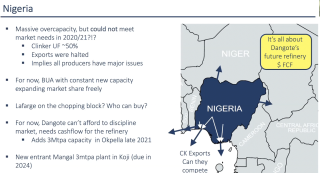
12 July 2022
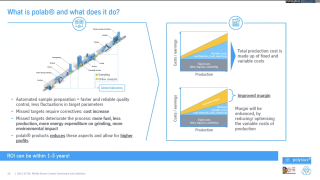
12 July 2022
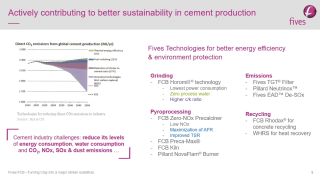
12 July 2022
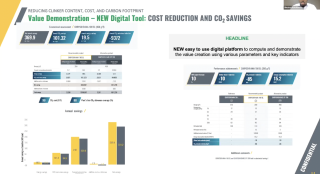
12 July 2022
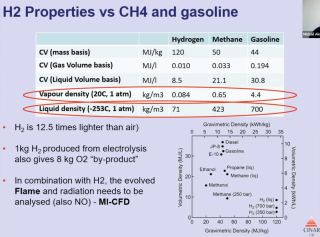
12 July 2022
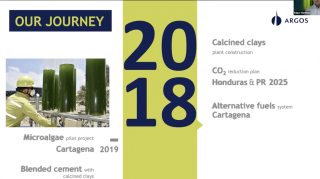
12 July 2022
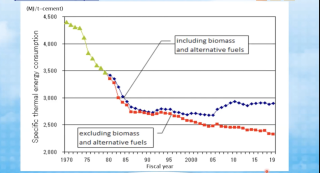
12 July 2022
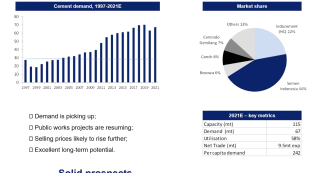
12 July 2022
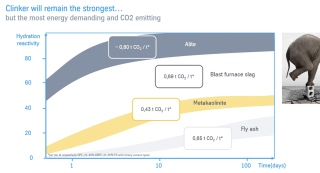
12 July 2022
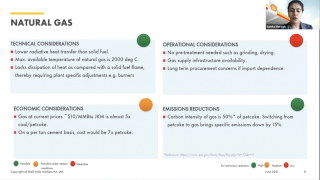
12 July 2022
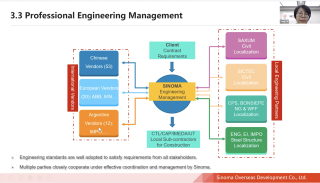
12 July 2022
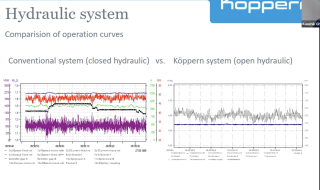
12 July 2022
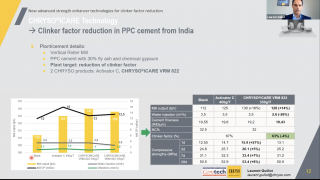
12 July 2022
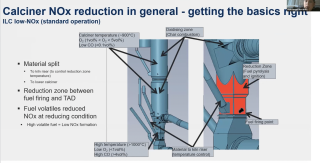
12 July 2022
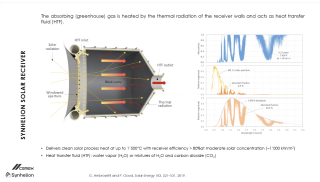
12 July 2022
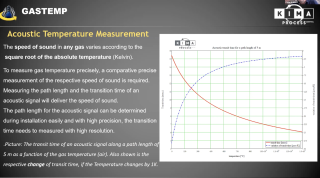
11 July 2022
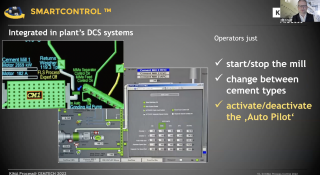
11 July 2022
11 July 2022
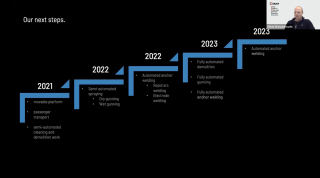
11 July 2022
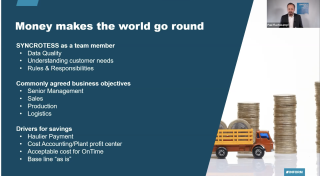
11 July 2022
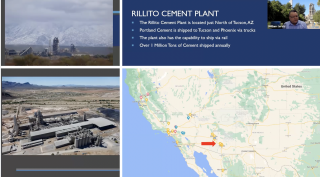
11 July 2022
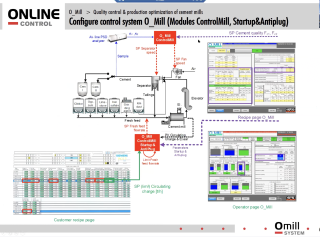
11 July 2022
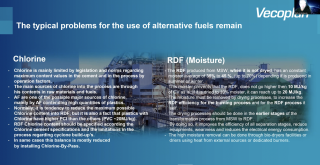
11 July 2022
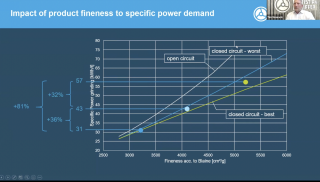
11 July 2022
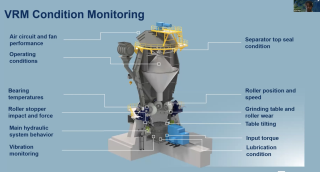
11 July 2022
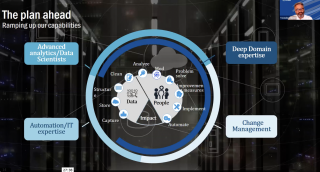
11 July 2022
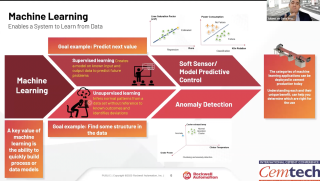
11 July 2022
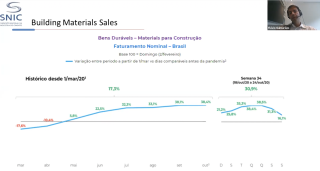
11 July 2022
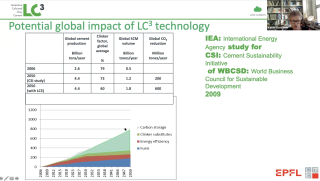
11 July 2022
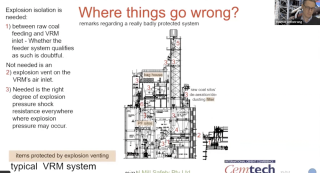
11 July 2022
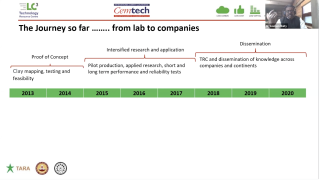
11 July 2022
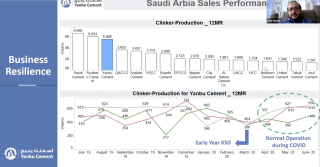
11 July 2022
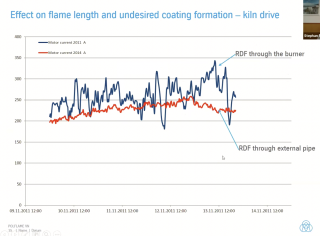
11 July 2022
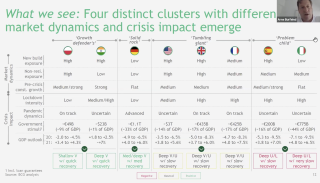
11 July 2022
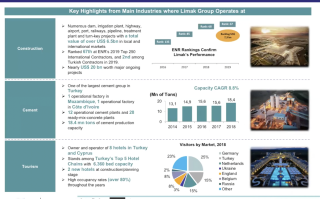
11 July 2022
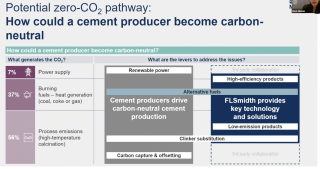
11 July 2022
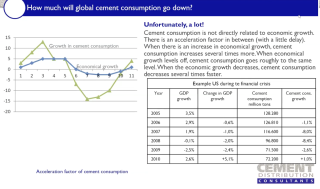
11 July 2022
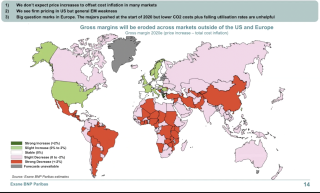
11 July 2022
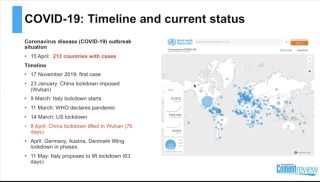
11 July 2022

6 July 2022
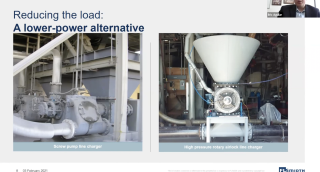
1 July 2022
1 July 2022

8 June 2022
12 February 2021
12 February 2021
12 February 2021
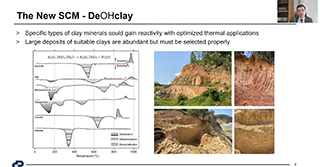
12 February 2021
12 February 2021
12 February 2021
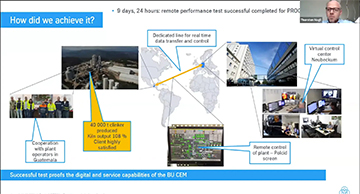
12 February 2021
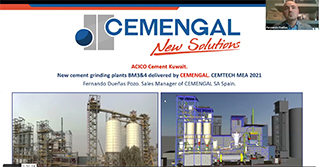
12 February 2021
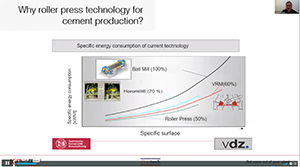
25 September 2020
25 September 2020
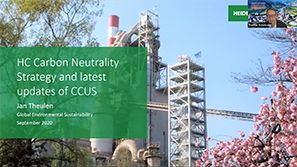
25 September 2020
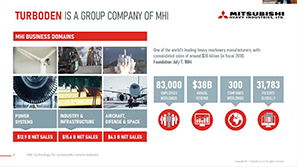
25 September 2020
23 September 2020
22 September 2020
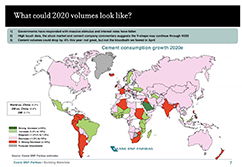
22 September 2020
21 September 2020
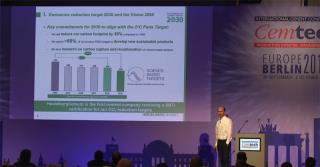
20 February 2020
10 February 2020
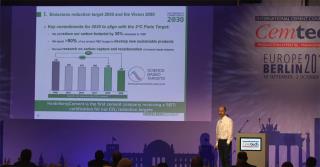
10 February 2020
10 February 2020
7 February 2020
27 January 2020
23 January 2020
23 January 2020
23 January 2020
23 January 2020
2 May 2019
30 April 2019
18 April 2019
18 April 2019
18 April 2019
12 April 2019
12 April 2019
11 April 2019
10 April 2019
10 April 2019
10 April 2019
9 April 2019
9 April 2019
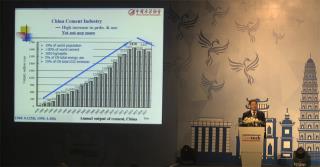
4 February 2019
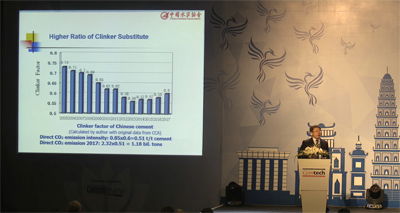
17 January 2019
31 July 2018
31 July 2018
31 July 2018
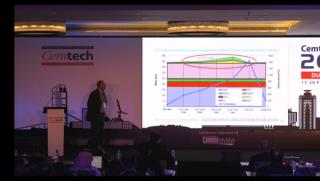
27 July 2018
27 July 2018
27 July 2018
27 July 2018
27 July 2018
27 July 2018
27 July 2018
27 July 2018
27 July 2018
27 July 2018
25 July 2018
25 July 2018
25 July 2018
24 July 2018
24 July 2018
24 July 2018
23 July 2018
23 July 2018
23 July 2018
20 July 2018
20 July 2018
20 July 2018
20 July 2018
20 July 2018
20 July 2018
20 July 2018
20 July 2018
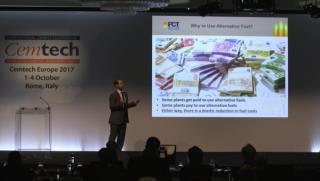
20 July 2018
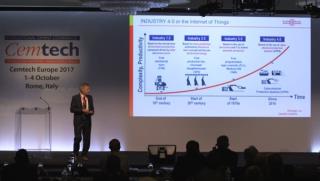
20 July 2018
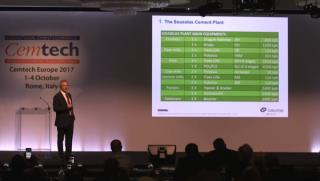
20 July 2018
20 July 2018
20 July 2018
20 July 2018
20 July 2018
20 July 2018
20 July 2018
20 July 2018
20 July 2018
19 July 2018
19 July 2018
19 July 2018
19 July 2018
19 July 2018
23 March 2018
23 March 2018
23 March 2018
23 March 2018
23 March 2018
23 March 2018
23 March 2018
23 March 2018
23 March 2018
23 March 2018
23 March 2018
23 March 2018
23 March 2018
23 March 2018
23 March 2018
22 March 2018
26 October 2017
26 October 2017
26 October 2017
26 October 2017
14 August 2017
14 August 2017
14 August 2017
14 August 2017
14 August 2017
14 August 2017
14 August 2017
14 August 2017
14 August 2017
14 August 2017
14 August 2017
14 August 2017
14 August 2017
14 August 2017
18 July 2017
18 July 2017
18 July 2017
16 June 2017
16 June 2017
16 June 2017
16 June 2017
16 June 2017
14 February 2017
14 February 2017
14 February 2017
14 February 2017
14 February 2017
14 February 2017
14 February 2017
14 February 2017
14 February 2017
14 February 2017
13 February 2017
13 February 2017
13 February 2017
19 January 2017
19 January 2017
17 January 2017
17 January 2017
17 January 2017
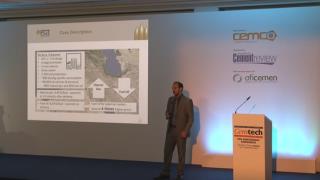
6 January 2017
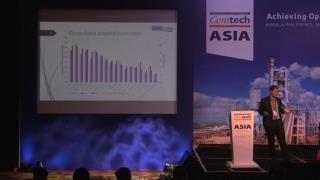
18 August 2016
18 August 2016
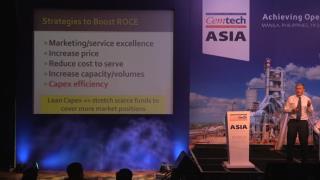
18 August 2016
18 August 2016
17 August 2016
17 August 2016
17 August 2016
16 August 2016
16 August 2016
16 August 2016
12 August 2016
12 August 2016
12 August 2016
11 August 2016
11 August 2016
11 August 2016
10 August 2016
10 August 2016
10 August 2016
8 August 2016
8 August 2016
8 August 2016
6 May 2016
6 May 2016
6 May 2016
6 May 2016
6 May 2016
6 May 2016
6 May 2016
6 May 2016
6 May 2016
6 May 2016
6 May 2016
6 May 2016
6 May 2016
6 May 2016
6 May 2016
6 May 2016
6 May 2016
6 May 2016
6 May 2016
6 May 2016
6 May 2016
25 April 2016
25 April 2016
11 March 2016
11 March 2016
11 March 2016
11 March 2016
11 March 2016
11 March 2016
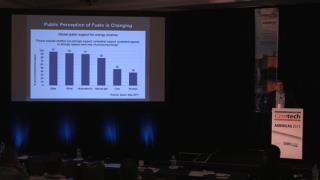
11 March 2016
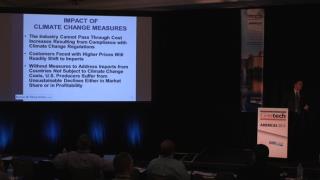
11 March 2016
11 March 2016
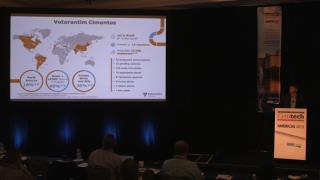
11 March 2016
11 March 2016
11 March 2016
11 March 2016
11 March 2016
11 March 2016
11 March 2016
11 March 2016
11 March 2016
11 March 2016
11 March 2016
21 December 2015
15 December 2015
15 December 2015
15 December 2015
15 December 2015
15 December 2015
15 December 2015
15 December 2015
15 December 2015
15 December 2015
15 December 2015
15 December 2015
15 December 2015
2 December 2015
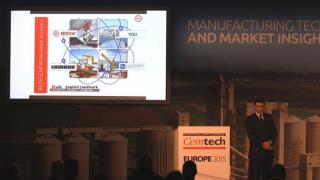
2 December 2015
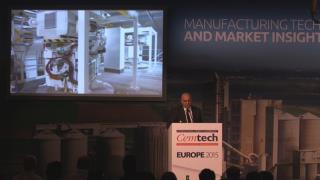
2 December 2015
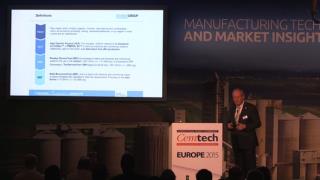
2 December 2015
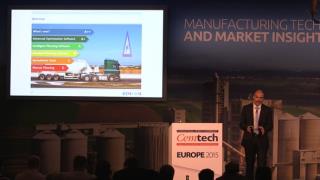
2 December 2015
2 December 2015
2 December 2015
2 December 2015
2 December 2015
2 December 2015
2 December 2015
2 December 2015
21 August 2015
21 August 2015
21 August 2015
21 August 2015
21 August 2015
21 August 2015
21 August 2015
21 August 2015
21 August 2015
21 August 2015
21 August 2015
21 August 2015
21 August 2015
21 August 2015
21 August 2015
21 August 2015
21 August 2015
21 August 2015
21 August 2015
21 August 2015
20 August 2015
20 August 2015
18 August 2015
18 August 2015
18 August 2015
18 August 2015

30 June 2015
29 June 2015
29 June 2015
29 June 2015
29 June 2015
29 June 2015
29 June 2015
29 June 2015
29 June 2015
29 June 2015
29 June 2015
4 June 2015
4 June 2015
2 June 2015
2 June 2015
2 June 2015
2 June 2015
29 May 2015
29 May 2015
28 May 2015
28 May 2015
28 May 2015
18 February 2015
17 February 2015
13 February 2015
13 February 2015
Try searching for another title.