
2 September 2026
This transcript was generated automatically and may contain errors.
Hello and welcome to the Cemtech webinar. It's it's February, and we are on our second webinar of the year. thanks for joining us. I'll let you all log in over the next couple of minutes. But in the meantime here's a little snapshot of what we've got coming up for the rest of the year. after the grinding session today, we'll be moving on to alternative fuels, then digitalization, energy efficiency, power processing, and much more in the second half of the year, as you can see. So do come back to follow up on the discussions. But today we'll be looking at grinding. many, many people have logged in. hopefully we've got a lot of subscribers out there.
But if you're not a subscriber to International Cement Review, then please do take a moment to to look at this slide. our magazines publish every month. we are also online through snet. please log onto snet.com, subscribe to view our package. monthly magazine, daily news, lots of other good things on the website and your free cement plant operations handbook. the standard industry reference for cement producers. it's been going, it's now in its seventh edition. well worth a look that comes free with a subscription or you can choose our cement Plant environmental handbook, which is a published about a year and a half ago.
It really is a fantastic compendium of articles covering everything from quarry operations to grinding paro process, digital plant, and even carbon capture. if you are looking at markets and need to understand cement consumption trends if you're moving into new markets or need more intelligence for your ACT activities. This is the, the the Global Cement report, really the our flagship publication. And we profile about 170, 180 countries worldwide. all cement plants in the world's Geo, geo located on our maps and a, a really handy online delivery system for the data. So this this is the product for you. It's out now recently published with forecasts for the rest of the year.
do take a look after this webinar. Quick word about what's coming up for our live events, our in-person events will be in Dubai on the 18th to 21st of February, and we'll be seeing many of you there. It's it's a really exciting event. Nearly 250 people are registered. so it's our annual, annual regional event for the Middle East and Africa. online, you'll see the program. We've got panel sessions, we've got presentations. There's an exhibition plant or so much for you there. Do try and come, if you are in the region, there's still time to register. if you can't make that later on, we'll be in Asia.
we'll be in Jakarta in June bringing much, much more information discussions regional analysis, and lots of exciting exploration into the topic of decarbonization in the Asian context. So a couple of in-person events there for you to check out more information online. so to today's webinar a very popular theme. I mean, it really is. We've, I, I think there are over 1100 registered for this meeting, and it just shows just how central this is to all that's going on in the cement industry now with cement types and specifications in constant innovation.
we'll be looking at the importance of selecting the right grinding equipment tailored to your requirements and understanding the role played by a additives and lubricants to help improve grinding efficiency and mill performance. we've got a great selection of experts with us to help us understand these different aspects. we have lubrication engineers from the USA, Christian Pfeiffer from Germany fos rock from the UK about, I think our speakers in Malaysia today. but to start off with, with, we're gonna, we're gonna hear from Roland Martini representing Brda Pfeiffer from Germany.
many of you will of course know Brda Pfeiffer as the leading one of the leading vertical roll mill specialists for the cement industry. and Roland is the area sales manager for North Africa and Middle East regions. he began his career at Guru de Pfeiffer in 1995 as a commissioning engineer, having graduated from the University of Applied Sciences in Allen and Germany. In 1998, he moved into the role of project manager for an order execution and sales role before taking on his current position as area manager for the North African and Middle East regions. please Roland, share your slides. I think you're on mute now, so you can you can turn your, your microphone on.
Ron's very experienced speaker. He's been to many Cemtech. he's spoken also before. You may remember here on the Cemtech webinars. And while we wait for his slides to load he'll be speaking on efficient grinding with the smallest CO2 footprint. That's great. Roland, I can see your, your slides now. over to you for your presentation. Good afternoon, ladies and gentlemen, and welcome to this webinar also from Computer five here in Germany. I will talk about the efficient grinding, combined with the smallest CO2 footprint possible for this. Our vertical roller mills, the MVR mills are state of the art grinding, technology efficient, grinding, sustainable, and with digital solutions.
And we always had the aim to increase the production efficiency and also to reduce the consumption of natural resources. And this has led to many groundbreaking innovations and resulting in the state of the art MVR vertical roller mill. We focus our research and development activities towards this aim, and of course, we call operate. We collaborate with our partners in the industry and with our clients in cement, cement industry, in building materials industries worldwide. Some topics which are highlighted in this presentation, increased power density. This sounds somehow scientific.
It means The performance of a vertical mill is not just defined by the table diameter, it's defined by the whole package table diameter, the rollers, the hydraulic pressure, and the projected area of the rollers onto the table while the table is turning. And here we have optimized the sizing of our mills, so that in competition competition, we face bigger mills competing with our smaller compact efficient roller mills. And always this leads to discussions. Clients see the table diameter, but the table diameter, as I mentioned, is not the only performance criteria of a vertical roller mill. This results in a reduction of weight of the mills. We offer smaller mills for same performance.
Of course, this also results in a smaller footprint of the mill, and not only the mill. If the mill is smaller, the whole grinding plant, the whole installation is smaller. This is also sustainable, consumes less space, less steel or concrete for the building, less conveying equipment and, and, and all the plant is optimized for performing at the smallest footprint, reduced water requirement. We have a dynamic water injection in our mills, which injects water only if needed and as much as needed. Optimum gypsum processing G four C. This is our unit for gypsum consigning in cement mills.
It means we separate the gypsum activation from the grinding process, so you don't need to heat up all the mill, all the grinding circuit to the temperature required for the activation of the gypsum, but trust a small separate grinding unit and the product, the ground and activated gypsum be injected into the middle classifier. We can grind materials with the highest possible superstitious cementitious material content. So the aim nowadays is to reduce the clinker content in cement. Our mills are capable to handle also such cement types with low clinker content and high superstitious material content, reduce pressure drop.
We have optimized all the grinding, so the, the mill itself, the gas flow into the mill inside the mill to create a much lower pressure drop than vertical mills had in the past. And this gives us an advantage in power consumption, not at the mill itself, but on the fan. The mill fan has to handle a lower pressure drop, and the saving on the mil fan power consumption is in the range of one to two kilowatt hours per ton, which is a big value wings for improved classifier. We have created wings to be installed inside de classifier wheel, which support the drive of the classifier, reduce the power consumption at the drive of the classifier.
Also, furthermore, reduce the pressure drop in the classifier with same product quality, refined nozzling coverage. Of course, the nozzling of a vertical mill is partly covered in order to distribute the gas flow inside the mill to optimum. And we have optimized this also by a CFD analysis. Optimization of the classifier itself means the classifier is adjusted to fit to the MVR roller mill. For in the past we had the MPS mills, and now with the MVO mills, we have optimized the classifier to fit to this optimize ducting system, ducting for the whole grinding plant, of course, optimized by CFT analyzers.
Our mills are well in operation for ultra fine grinding for very high plane in with a smooth operation. Of course, our services are optimized. We have procedures for services and audits, which support our clients support also by digital products. Our GP link system for the connection wire internet cloud to get evaluations about process, and then by installation of our GP process system to optimize the process for higher production with lower power consumption. I already has mentioned the enlargement of the hot gas inlet. This means lower pressure drop in this area of the mill. Of course, we are also active in clay activation with partners to substitute clinker in the cement production.
And nowadays, of course, we use artificial intelligence to optimize declining process with results. Some would not expect, some human would not think about to set such parameters. But artificial intelligence supports this and improves the performance of grinding plants. Of course, we are active in this since a long time. And here are some examples. We have the highest power density. This I, I have mentioned mill size, optimized in most cases smaller mills than the competition. And we save natural resources. We reduce the energy requirement of a grinding plant by up to 40%. This is compared to traditional tube mill grinding plants, but also in comparison to other vertical roller mills.
I have mentioned the optimized gas flow with a lower pressure loss. Here you see a additional schematic for a grinding plant with pressure at the fiddle fan inlet of about 63 65 millibar minus. And with the optimized design, we reduce this by about 10 millibar, 10 to 12. And for cement grinding, you face a typical saving of 0.7 to 1.3 kilowatt hours per ton. Let's look at the raw material grinding where we have a higher pressure drop with minus 90 minus 100 millibar at defend in lead with the initial or traditional design.
And with the optimized design, we come down to minus 75 millibar at defend in lead, which means the power consumption of the milli fan is reduced by 15 to 25%, and this means 1.5 to two kilowatt hours per ton saving at Theen compared to the traditional roller mill design. And I could say the more you grind, the more you're safe. And let's see, a typical vertical roller mill size of, let's say 600 tons power, you are already at the range of 800,000 euros per year savings, considering electricity price of 10 euro cent per kilowatt hour perton. Or if you have a very huge roller mill, nine tons, then you exceed the 1 million euro savings per year.
And of course, with the biggest mills, you can save even 2 million euros. But this is the minority of the installations we operate. Chronic plants or or clients operate plants with a clinker content of less than 30%. And this is proven in regular operation. This is now is a standard for our mills. So no need to have the high clinker content in this event. If you have the superstitious materials come to fiber, we have the mills Artificial intelligence in combination with our GP Pro system. We optimize the process, we record the parameters, and with the help of the artificial intelligence, we get results.
And field results have shown 16% less specific power consumption in the mill drive and the plant in southern Germany. And another plant in Sweden, 17% less specific for exempt, and also a reduction of 20 per seat, 25% of fuel consumption at hot gas generator with parameters suggested by the artificial artificial intelligence after recording parameters over a certain period. And of course, this is not based on some theoretical data. It's based on the existing operating data, and this is at the end, CO2 reduction.
So I have mentioned this separate grinding and consigning of the gypsum In cement grinding, you control the dehy dehydration of your gypsum in a small unit, which of course is much easier con to control than the whole grinding process, the te the temperature and the whole grinding process. You adapt chips and phases to your clinker quality, which may vary, especially if you have a grinding unit where you get clinker from different sources. You can change also between different and sources and qualities. You control the setting time, the water consumption, the mixing behavior, and the storage properties of your cement.
And you reduce your CO2 footprint because you heat up only this small additional grinding system to the temperature required to optimize your chips and fires. And this you can install with mills grinding Sam one with a 95% Clinger and 5% chips or some limestone content. Al also for additive cements, of course, this have a significant saving of thermal energy because you only need to heat for heating up the small system, the G four C unit. As a summary, we have the high efficiency of the vertical roller mill or MVR mill. Compared to other systems, you can produce cement with highest possible subsidies, materials, and high finances.
We have optimized the pressure drop in the vertical roller mill in the whole grinding system. We use the artificial intelligence and the GP link for process optimization and optimization of the CO2 footprint. Of course, we have hot gas generators available for use of of burning non fossil fuels, holds pallets, wood pallets, and other materials, use of artificial intelligence for the process optimization. And in total, the reduced thermal energy with the dynamic water spray. The chief, the end due to the smaller size of the plant also reduced surfaces, which may already add heat and thus also reduce the heat losses.
So if you are looking for sustainable grinding with a low CO2 footprint, you are on the frontier with our products come to fiber. And this is the end of my presentation. Thank you very much, Roland. very good timing as well. Appreciate that. The the, the big trend now is is is obviously as you've highlighted, clinker reduction. I'm really interested to to know a bit about what kind of materials you are seeing now being ground in, in, in your, in the mills that you, you have installed around the world. Are you seeing a, a proliferation, a, a great increase in in the types of alternative materials s scs and this kind of thing that people are trying to, to grind to make lower carbon cement?
Yeah, of course. Already since years many clients use psa. Many clients use different types of slack plus furnace, slack and other types of slack like limestone up to a certain content really different materials. And as I mentioned, there are cements produced with only 30% clinker content. And now with the also called sign clay, it, this comes the next step in another reduction of the klinger content or maybe already maybe in future slinger content. And still you get a good cement. have you have you tested any calcine clays? Have you, have you, have you experimented with that or had any experience with it?
I, myself not, but we have done tests in the laboratory, and as far as I know, also the first plants are under installation to produce such types of cement. Sure. there's a question here about inter grinding or separate grinding. is your mill technology able to optimize the PSD for different materials by inter grinding, or is grinding materials separately necessary for optimal cementitious properties? can you, can you describe yeah. Need To, it's like if it a big topic. Yeah. There's a, there are clients who prefer the inter grinding and other clients prefer the separate grinding.
separate grinding may be a good solution if you have a really high number of different cement types, which you can mix to the proper quality. If you have, let's say, 4, 5, 6 types of cement, and with the very short switching time from one type to the other in a vertical roller mill, you can handle this also with inter grinding because the switching from one type to another in the mill is done in a very short time. And the PSD is determined by the volume flow through the classifier and the classifier speed. So this also can be optimized in this way for the different types of cement. Very good. a, a a another unusual question asking if it's possible to have a vertical rot mill at lab scale.
I know that you have them in your pilot. I don't think it's something perhaps that you sell. Some clients ask this. we have mills and lab scale with 0.4 meter table diameter in our laboratory. but those mills are unique mm-Hmm. and we do not sell them because the unit price of such a mill would be so high because it's handmade. These are handmade mills mm-Hmm. And we cannot produce them like our standard mills, starting from, let's say, 63 centimeters table diameter for the MPS or 80 centimeters. for the MVR mill this is we do not offer this to sell lab scale mills. Sure. just a, a couple of people are interested in the G four C.
one, one is asking for a flow sheet, but that's perhaps something that you can you can share at a, as a later point. yeah. have you any do you have any field experiences that you can share with with us now? there is a G four foresee unit installed in a grinding plant in Australia. Right. And this is an operation since I think nearly 10 years now, in this plant. They do separate grinding. They produce on one hand the SAM one mm-Hmm. Where they use the G four C unit to optimize the dehydration of the gypsum. And they're separately grinded plus furnace slack, both to a fineness of 5,000, 6,000 plane. and there, this chief OC unit is in operation. It works well.
They can run the grinding circuit, the vertical roller mill filter, and for on a low temperature and just grind the gypsum in a separate hammer mill with a separate hot gas generator to a te outlet temperature of about 160 degrees maximum to adapt the gypsum to the needs of the cement. This is the best reference for this, and Okay. I can try to find the flow sheet and show it later on. Sure. Okay. Well, that's that's great. Well, thank you very much, Roland, for your presentation. really interesting. There are, there are quite a few questions for you in the q and a that we don't have time to go into now. But you'll see asking at you everything about the mills.
so please, please do take a look there. Yes, I do The questions. Then you can ask Roland in the, in the q and a. thank you, Roland. Welcome. Thank you. Okay. So we're gonna move on. our second speaker is ELA Tien head of technology, cement additives at Phos Rock ela. If you'd like to share your slides. she joined FOS Rock in 2015 and is currently head of technology in the company's cement additives business. Her responsibilities include product development, optimizing formulations, and driving continuous improvement initiatives to enhance the effectiveness of cement additives to meet evolving industry requirements before joining Phos Rock.
So Halo claimed in valuable experience as a chemist in cement industry, Saba in Malaysia where she developed her knowledge in the cement field, overseeing and managing all aspects of quality control and assurance within the cement manufacturing process. so very pleased to be able to welcome you now to the webinar Sola over to you for your presentation. Thank you, Thomas. So, hello good afternoon everyone. My name is Sola Tien. So today I will be presenting on the topic of cement additives as an effective decarbonation tool. So before I start, let's go to briefly the content of my presentation.
I will give you a brief introduction of our company fo stroke, and then the overview of what cement additives are. And then I'll present you the traditional uses of cement additives. And then we go further to understand that the details and how the benefits of cement additives can be maximized to help the cement plants with their issues. And finally, by combining all these initiatives, we can see how cement additive works, works as as an effective decarbonation tool. Okay. So I believe most of you have heard about fos. We are the world leader in manufacturing tailored construction chemicals for any type of construction projects.
So besides cement additives, we also offer a wide range of product including admixtures waterproofing, adhesive sealants, and many other construction chemicals. So Fock now has offices and manufacturing location in over 20 countries across Europe in the Middle East and also the Asia. So currently for shop we employ around 30,000 employees worldwide. Okay, as a brief introduction, so what is cement additives? It's known as a chemical that is added into the cement during manufacturing process. So it is used either to improve or to modify the key properties of the cement.
in frock our additives, they are divided into three categories, and they're the basic grinding aids, which mainly constant to improve the meal efficiency, to achieve certain finance or particle size. They can also improve the power powder fluidity, the flowability and to prevent agglomeration clumping during the grinding process. The second one would be the performance enhancer. So these are designed to improve the final quality of the cement when we use grinding aids in the grinding process. So it will also give you some intentional influence on the key performance properties such as the comprehensive strength. We also have something that we call function and additive.
So these are the products that they're targeted as specific properties such as the A and German range, where it introduces microscopic bubbles the air bubbles into the concrete to enhance free store resistant, and for the durability of the concrete. Now we look into the traditional uses of the semen additives in the different stages of semen manufacturing process. And each of this will be accompanied by a real life case study. so you can see how semen additives bring improvement in the process that subsequently translated it into a CO2 reduction. okay, now the raw meal preparation. So we all know that the raw meal preparation is a process.
it's a very crucial process to in the production of the clinical because it significantly influenced the quality and the characteristic of the final product. So it involves combining raw materials such as limestone clay, silica, iron ore, and it create a homogeneous mixture, which is known as the raw milk. So, which is then will be fed into the kiln for combustion process. Then it will go through a series of chemical and physical transformation. So study shows that the vulnerability of the raw mix is always related to its finest, and in particular of the course courts and the Cal site.
So based on the according to fl Smith, the, the reduction of 2% in course Cal site or 1% is in course courts will decrease the clinical free line by 1% at 1400 degrees Celsius, assuming that all parameter remain the same. So why is it important to reduce the fines? So this is because course particles may have slow reduction compared to the final one. So if the reaction is not complete, it may lead to under burning which will lead to a quality issues later on in this clinical quality. So this is why, and the raw meal we need to grind the raw meal. It needs to be grind finely enough to ensure good combin ability, but without over grinding it.
So because if we over grind, not only we waste the energy, we release more CO2 in the environment, and also we reduce the production capacity. So as cement plants are modernized now, the raw, raw mill that once had the capacity to grind the raw mill, they may struggle to meet the demands of the killing to maintain the, this type of finest. So if a raw meal is not capable to do that, so it will have a significant impact on the production efficiency cost and also the cement quality. Okay. Let's take a look at this first case study here. So this plant trial was conducted in one of the cement plant in the southern Caucasus region.
So this raw meal was a central discharge meal with the design capacity of a hundred ton per hour. So due to the inconsistent fit the meal was only able to run average 80 ton per hour during the baseline measurement. And you can see here is it has frequent stoppage. So we introduced Cemex 360 rm, and after application, you can see here the feed stabilizes, there's no stoppage and was able to reach average output of 87 ton per hour and picking at 90 ton per hour and residue was reduced from 12% to about 10%. 90 in is 90 micron residue.
So the use of Cmex G 60 RM here is not only improving the stability and also the mill output in the, it also help in the reduction of the electrical consumption, which will equates to reduction of CO2 generation. Now we move on into the solid field preparation. Actually, it applies the same with the solid field. The burning process in the kiln is also influenced by the finance of the field use. So in this case it's the coal and the pet cook. So simple rule of thumb is used here. It states that the 90 micron meter residue should be around half of the wall tile content of the fine coal, and less than 5% for the petcock.
But due to the cost of coal cement land tend to shift into using more petcock now since it's a shipper. But the issue is pet cook is not that easy to grind. So meals that originally designed for coal grinding is now being used to grind pet cook, but the result in the result in is the cement plant is struggle, is struggling to meet the needs because pet cook is hard to grind and it's hard to achieve the finest that it wants. So, but with the help of seven additives, this could be achievable. Okay, the following two example from the plant trials in India show how fo rock's additive has successfully helped the semen plant to solve the issue when they change from coal to Petco.
So in example, one, so CX three 50 CL was applied using fl fl Smith atop coal meal, which was originally designed around 70 ton per hour. So during the baseline testing, the meal was only able to run at 48 ton per hour, but managed to increase to 57 after application of the cement additives. And the example two the same additive was also applied using a close circuit two chamber ball mill with the design capacity of 40 ton per hour. So during the baseline testing the meal was only able to operate at the 37 ton per hour, but after application of the cement additives, it pick up and stabilize and reaching for the ton per hour, and also by maintaining the able to maintain the resid. Okay.
Moving on to the, sorry. So in both of the example that I mentioned, we can say that Phos similarities was able to demonstrate the ability to improve the male output while maintaining the target residue. So the, in the clinker reduction part, I believe this is quite a common topic in the cement industry, where reducing the clinker in their cement is a key strategy to minimize the carbon footprint. So OPC typically contains 90%, 95% of clinker and the other 5% being gypsum, which in this composition, we can reduce the clinker by replacing clinker with some other El Alterna materials, such as a puzzle lines, the limestone fly ash and slack, or some other industrial byproduct.
So of course, with the replacement of clinker with other materials, it comes with a downside which impacts the cement quality, such as the cement development, the strength development, and maybe other key properties such as the setting time and also the workability. But we must remember the re reducing the clinical factor. It has both environmental and also economic impact, which mean less CO2 emission and also saving costs from using chipper alternative material. Here are two examples related to clinker factor reduction in both plant trial were conducted in cement plan in Turkey.
So in example, one, the cement plant wanted to replace 5% of clinker with limestone, but want to maintain the compressive strength at the same time. So with the application of CSI 1, 2, 4, 4, the plan was able to maintain the strength and increase lightly on the throughput. So with this, the plan was able to save about 300, 360 KUSD per year. okay. Example number two. same with the, the example one. So the, the, the plan wanted to reduce another 5% of clinker from 70 to 65 percent of clinker and, and replace it with limestone. So we introduced PAF product and it able to help the plant to increase their output from 1 32, 1 50 ton per hour. If you can see here, the strength is also maintained.
Okay, next is the usage of cement additives in a concrete mix. So we all know that majority of the cement goes into producing ready mix concrete. So in this application we can say the workability is a crucial to, to ensure the concrete can be easily mixed transported place and finish without segregation or excessive bleeding. So with cement additives, we use it to optimize the cement particles distribution, so to improve the workability of the concrete produce. Okay. In this case study the cement plant targeted to increase their meal output, and at the same time to improve their work. The concrete workability for our SAM 1 42 0.5 cement.
However, they have issues with the cement strength when they reduce the cement finance to achieve a lower what the cement ratio. So for sure introduce another product PAF. with the application of this product, the plan was able to increase the throughput from 2 0 5 to 2 4 6 9 per hour. And the result shows it improved the strength and also able to reduce the water demand by 0.5%. So with the cement additive the cement plant not only profit from about 640 KUSD per year, but they also gain new customer due to, to the improve workability of the concrete. Okay.
Now, with all that case study presented, so besides reducing the clinical factor, it clearly highlighted that the energy saving is coming from improving the raw meal grinding efficiency. So when grinding edge reduce the energy required for grinding, it leads to lowering the electricity consumption. So if you look into the whole system, we can see there's more improvement and saving opportunity that the seamen additive can offer. So one of the key factor influencing the thermal efficiency of the clinical production is the vulnerability of the raw milk.
If you take in more holistic view and look at the impact of grading aids have on the raw meal particle size distribution, the vulnerability can be improved and reduce fuel consumption at an equivalent of free lime content. So subsequently, this will lead into significant carbon reduction in the process. So what is raw meal? vulnerability? Basically, it is a readiness of raw meal component react in the kiln where they are heated into at a very high temperature resulting in the formation of the clinker. So usually it is measured by the amount of un reacted CAO what, or what they call it as a free line.
So if the kiln has problem with the vulnerability, it may lead to problems such as high free lime, and then it can produce dusty or larger clinker and then it lower the cement strength. So it will lead to a granity issue and lead to another issue with the high fuel consumption. So because of the clinker burning system is a bit complex. I will not go into the mechanism in detail, but it's good to know that the transformation requires mechanical and thermal and electrical energy.
So the reason the reaction is, is direct, the reaction rate is low, and therefore the need of high temperature and the raw meal with the right size in particular of the course Cal site, and the course calls as mentioned in the earlier slide. Okay. The graph here is to show you the effect of a particular size on free line content at the various temperature. So it just show you the that the final, the particle sizes, the lesser the free line content is. Therefore, it is important to ensure that the particle size is monitored and controlled in order to optimize the burning process. So let's take a look at the plant tire result.
So the focus of this plant trial was to reduce the amount of course Cal site and the course caught in the raw milk. So, and while maintaining the other parameters as concern as possible. So with the modified CAX 360 rm, so we come up with the Phos Rock 360 RM, so it managed to improve the meal output by 5%. So this is around 73 average, 73 ton per hour, and this is around 83 ton per hour. And the QN sample were, were also tested in the lab, and there's no significant impact on the chemical composition was observed on the particle size. We can see the significant changes on the, the course particle of the call site Af with the application of FOS 360.
It tremendously reduced the course particle. So even in the XRD analysis, you can see that the intensity of the call site is reduced course. We cannot quantify the cost side, but at least we can see the reduction in the intensity. Okay? So as a result of the course cost side reduction in the system, the burn ability index shows an improvement when using Cmax 360 rm. And in comparison of the free line content with and without the use of cex 360 rm, the temperature used to achieve a free line below 2% is at 1,400 gcel with application of for shock 360 rm versus the one that without, we need to use, we need to go up to 1,450 degrees Celsius.
So, which mean in a simply in a simple layman term, the plan do not have to go, do not have to burn so much to go or to go to a higher temperature to achieve the target line. Again, this is most probably due to the reduction of course, car site in the mill. So the mi the finer the particle size, the easier it will be for the burning process. Additionally, from the trial data, the heat of clinical formation was reduced from 426 kilo calorie per kg reduced to 400 kilo calorie per kg, which e which equates to 6% of reduction in the coal consumption.
if we evaluate if we evaluate the clinical production like one mil ton per year of clinical production 6% reduction, 6% reduction in in heat of clinical formation can be translated into a significant amount of CO2 reduction, which emitted from the combustion process. So by calculation, with the help of FOS 360 rm the plan, the cement plan has a potential net saving for about 590 KUSD per year. Now, if we bring together all that we have, I have presented earlier on the traditional uses of cement additives and the energy saving that it offers, we can understand that the potential impact on the CO2 reduction as a whole.
So we can use this as an example, Assuming cement production is fixed at 1.3 million ton, but the clinker and the romi production is reduced to reflect the lower clinker factor which is resulted by using the cement additives, and let's say when using the cement additives the grading efficiency improve, and the reduction in specific energy consumption is considered to be 10%. We can see it reflects the saving of the kilowatt per ton in each of the grinding process here. Okay? And that is what traditional views on the cement additives could offer, which is focusing more in the form of power saving or the cost of clinical and the raw romy reduction.
However, if we go into a step further, we translate this energy saving here into the CO2 reduction, we could actually see a bigger saving potential. So if we look at this table, so let's, let's take we assume the average of a CO2 emission for the production electrical energy is 0.3 kg of CO2 per kilowatt. So we take this as an example, example the mill, the ROI electrical energy. So the CO2 emission is about 12,000 ton of CO2 per year. So with the application of cement additives, it can reduce down to 10,390 ton per year. So this equates to 1,610 of CO2 saving per year. So this saving is only come from the raw mill grinding.
So if we consolidate all the saving potential here, so it will total up to 34,061 ton of CO2 per year. So, which is quite a significant number for the cement plant itself. Right? So as a conclusion to my presentation today, we can confirm that the use of cement additives across various stages of cement manufacturing process can confirmed it's proven to have a significant impact on the CO2 emission. So with the continuous use of the cement additives in the cement production, it is possible to reduce CO2 emission by around four to 5%.
And it is important to note that these saving are over and above the financial saving that I usually attribute to cement additives such as the electrical energy and also the cost of a clinical production. But given that the price of CO2 credit is has hit 100 euro per ton this year, annual saving of over 30,000 ton of CO2 per, which we have calculated in the previous light, not only help the plant to reduce the carbon footprint, it could also help the, to save them around 3 million euros in CO2 credits. Okay. with that, I end my presentation. I hope you found this presentation insightful. Thank you. Once again, Thank you very much. That was a fascinating presentation.
You've gone back to lots of core principles in cement manufacturing. you've shown the benefits across the manufacturing process, but it's very interesting to have this perspective because often additives are talked about in terms of cement additives when grinding clinker. but you've gone into the, into the right, into the raw mill stage of the preparation of clinker production. And and like you say, it has, it has enormous benefits. helping the grind ability at that, at the raw mill stage then feeds through all the, the whole of the process. Yeah. you get, you get savings in fuel or energy costs. and then obviously that's all translated ultimately into CO2 savings and you Exactly. Yeah.
You've really, you've, you've showed that really clearly. so thank you. there's a few questions. a lot of them are, are relating to price, but let's start with one that's asking do cement additives. does the dosage and production rate go hand in hand higher dosage? Does that mean higher production output, I guess? Yeah, please. It doesn't reflect on the dosage. It also depends on the, on your meal capacity and also the meal performance. Mm-Hmm. So it doesn't go hand hand. We can we can adjust the dosage to get the optimum output that can. Okay, sure. a few questions relating to the composition.
What, what is the mineral composition of the grinding aids and is there any effect on the mills, The grinding composition? Yeah, so the composition of the grinding aid, what is the grinding aid made of? and are there, are there any effects that it has on the mill? Of course, the ingredients we use a lot of gr grinding aids. we use a lot of our alcohol and mind in our recipe and, sorry, what was the question again? Yeah, so yeah, what, what is the composition of the grinding aid? What is it made of? Okay.
Of course, we cannot disclose the composition, the real composition, but generally in made of, in made out of a range of chemicals that contribute to the grinding efficiency and also chemical that can improve the hydration reaction of the cement. Okay. So there's some IP protection there another question. Well, the other, the other thing is the, is the question around costs. how, how can you give people a sense of the price of these of these additives? You've, you've shown the benefits. Yeah, but what about the, the cost? The cost? We can cater, like I said, we are tailored we are, we are expert in tailored construction chemical.
So we will design the formulation according to your requirement Mm-Hmm. And also your budget. Okay, there we go. There's a slightly a mysterious answer, but yeah, I think the, the key is to get in touch with you and find out what, what the what the problem is, what can be solved with your additives, and and then come to an agreement there on pricing. there are some more questions. lots of people have obviously been interested in what you've said. So do go to the q and a and answer those those questions. But for now, thank you very much for your excellent presentation. Thank you. Thank you, Thomas. Very good. so that was great. we're gonna go now to our third speaker.
really pleased to be able to welcome Anna Gonzalez who's a process engineer with Christian Pfeiffer in Germany. Anna began her career as a chemical engineering intern at CRH before moving across into process engineering and quality to control for CRH in Brazil. she continued her process engineering experience with sup primo Cecil Cemento in Brazil before joining Christian FIFA in January, 2022. in her current role, Anna is responsible for equipment design, cold and hot commissioning mill audits, and the development of technical reports. So she's ideally suited to be presenting here today. over to you. Anna, please put up your slides.
and while she's doing that, I will say that all these presentations will be available with the recording. we'll be sending out the email after this this session probably arriving in your inbox tomorrow. And there we go. Switch separator now. So over to you, Anna. Yeah, thank you very much Thomas for the introduction and I'm very happy to be part of the webinar today. Good afternoon from Germany to everybody watching us worldwide. And yes, I'm here to talk about why you should switch your separator now to face the Challenges of modern cements. So let's start talking about the current global trends.
So worldwide, what do we see is that the concrete market is increasingly demanding, bring cements and higher strengths to increase and to decrease and optimize the amount of cement in the concrete mix. Then you have bring cement production with high addition of alternative materials, supplementary cementitious materials that use less clinker and then requires grinding to achieve the strength targets. And finally, to achieve those target results. This quality results, the current design of old plans built 20, 30, 40 years ago they are not suitable for achieving this fineness with a stable operation and high pro productivity levels.
This means that very quickly your old separators become a bottleneck to the new process requirements. And why, why is that? So let's talk a little bit about how does the separator work. So the separator basically consists on the dynamics between the air and the particles where the velocity of the air is pulling the particles to one direction and they face the cage, the spinning cage, which is then creating a resistance in the opposite direction. So which force will win and make the particles drag to one direction or the other will depend on the particle size and weight. So based on that, what are the main things for achieving a good cut size, a sharp separation and a high performance?
First, we have a high centrifugal forces. So this means that to be able to pull outwards finer particles, our cage must be, must provide a higher force. So, or as an example, to achieve 5,500 square centimeters pergram of a Blaine in cement, you need a centrifugal force higher than 115 times the gravity force. So this is one of the main things. The second is to optimize the material distribution. So you need an even material distribution around the whole separate or area to interact with the air in an even way and get a sharp cut size at finer ranges. This is very critical also for your process. And then we go for the adjustment of fluoride.
So what happens when we are producing finer cements is that we are working now with higher circulation factors. When we try to optimize the milk performance and reach higher productivity, this means that we are putting into the separator a higher load of material. So for separators that were previously designed for lower or cosar protocols, they are easily overloaded. So we must pay attention to working with a maximum of 1.8 kilograms per actual cubic meter at the inlet of the separator. And finally, we have to deal with agglomerates when we are grinding finer.
So the energies inside the mill contribute for the formation of these lumps of fine particles, which agglomerate, and then they are seen by the separator as a coarse particle. So in order to avoid that, one thing we can do is to use grinding aid. However a high efficiency state-of-the-art equipment, is also designed to be able to break those particle agglomerates without relying on the use of grinding it. So this is why we are now presenting to you our Christian fiber state-of-the-art, high efficiency separator, the cut car range.
And with this separator, we are helping plants worldwide to overcome their bottlenecks and achieve lower energy consumptions, a much better product quality and higher production rates. So in a quick comparison now with a first generation separator, which you can see has a very narrow range of finals to be achieved by the product. The Cuttica is not only providing a high finals range, it is reaching 2% residue at 15 micrometers, which is much finer than you would have in a old process with a first generation separator. So, and how do we do that? How we achieve that is first of all by making an optimization of the design of the equipment by using computational fluid dynamics.
So you can see in the cross section, for example, of the Spiro casing that you have a very homogeneous flow or flow velocities throughout the external cage and also in the separation zone. And this is what we are looking for, that we have a very homogeneous forces around the whole separator area. When we are looking now here at the separator zone in this internal area and unrolling it, you can see as well a very homogeneous flow. Then together with an optimal material distribution, we get the perfect separation when we are talking about the particle size dis distribution of our product.
When comparing, for example, to a second generation separator, we can see that we have a steeper particle size dis distribution, which is coming as a direct result from sharper separations. And then this means first of all, that we are increasing the amount of material in the range that contributes positively to the strength development. At the same time, we are reducing the amount of particles in the super fines range, which is not only not contributing to the strength development, but it's also in increasing the water demand and it's also creating some overrun grind into the mill.
So we are avoiding that into our process and we are also reducing the amount of course particles in the range above 14 micrometers, which are also not contributing for the strength development. So this is sounds really good and it is, and we have been a little bit of teary, but now let's see what it can actually do. So we do like to face some challenges and put the equipment to proof. And one example is a very challenging project performed in Europe for a complete new grinding circuit, working with very high final estimates, both with and without alternative materials. And then as a first example, you will have a high strength composite cement with a type stem two 42.5.
and we can see that we were expecting 4,800 in Blaine and we definitely achieved it during the commissioning and at a much lower specific power consumption than we had previously calculated. So very good results. When we look at the trunk curve, it's also looking really good for a very high fineness. We are at a bypass of lower than 10% and we also have low imperfection, high sharpness, so very good separation overall and we do not stop there. We're also making a second product is high early strength cement, cement em one at 5,600 Blaine, which was the first goal. And we have achieved during commissioning 5,700 Blaine.
And then with the optimization of the product quality requirements later on, the operation stabilized at 5,500 Blaine also at a good specific power consumption. So we are not only advertising it, we are proving that we can do it. And now let's look at the bigger picture. So we also need, after we separate in the, in the main equipment, we also need to separate the particles from the air in order to transport the material and put it into the silos. And this can be done in two ways. One is with cyclones. so the material comes and it's separated by dynas as well. The particles are pushed downwards and the air is then blowing upwards after the separation and recirculated back into the separator.
Now the other possibility is the future application where it's basically the same thing. The material with the air is going through the future being separated in the fu bags, the material goes down and the air also goes back into the circuit where it can. Now this is the main difference between the two circuits. On this case we can actually input some fresh air and discard a little bit of the recirculation air. And this is bringing us some advantages as I would talk in the next slide. Overall, the, there is a small difference when it comes to grinding finer product when we are talking about the cyclones because there is always a little bit of inefficiency in the separation.
So you will have some material recirculating into the s spiral housing as well. And but it's a very compact design that can easily adjust to some already existing structures. But when we're talking about the future, we are recirculating completely clean material, which is good for the process. And we have to talk about another challenge of pine grinding, which is hoping with heat. And then when we are grinding pina, we are increasing our material temperature 2.6 to three degrees per kilowatt hour, perton considering no water injection. But at the same time when we're talking about green cements, we are also talking about an increase in the moisture that is being input into the system.
Though we can deal with material of 10% or higher moisture content, of course, sometimes both things come together into a balance and you get a good new outlet temperature, but sometimes not. And then this is why the future application brings us a high efficiency and flexibility when coping with grinding heat. Where if you need, if we need to cool down, we can reach easily a delta temperature of 35 degrees or higher by increasing the amount of fresh air into the system. And then we are cooling down the material in the separator and the code reject go back into the mill and help controlling the temperature.
Now if we need the contrary, we can also keep the temperature in by not using fresh air and increasing the recirculation. Then we are keeping the temperature of the reject and the hot reject are doing the opposite work and then helping increasing the temperature inside the mill. And of course, we are never wasting energy if we are recirculating only partially. We can still use the warmed up recirculation gases that are not in the separator circuit into the mill inlet as some extra heat source. So let's talk a little bit about numbers to see what is actually going on when we do this.
So for a normal operation a little bit of limestone, gypsum clinker, let's say 125 tons per hour, 3,500 Blaine and 1.44 inlet moisture on ambient conditions, no water injection. If we are completely recirculating our gases and using hot clinker, we'll reach very high temperatures up to 150 degrees. But if we are completely using fresh air, we can decrease to 110. And this is a 42 degree delta. Now, if we're dealing, for example, with cold clinker, which is not good to the process when we are already on higher levels of moisture, if we are re circulating a high amount of air into the separator. We are also reaching good temperatures, 109, 110 at the Mule Outlet.
But if we are only using fresh air, which is the case for some separator circuits, we'll not be able to reach the final the mule outlet temperatures above a hundred, 105 degrees without some extra help of maybe a hot gas generator or something similar that will then create more cost for the plant. But here, then we can see that we can reach 20 degrees 28 degrees, higher temperatures only by circulating. And then how can we even fine tune this operation? So here's another example with even more higher in moisture material. Now we put some slack in. So this means we are working with some higher ground abilities. We are looking for a little bit higher blade 4,500.
And what's happening here is that, so let's break it down into a few cases. When we are at hot, hot clinker, we can see that, okay, because we are also grinding finer and we are creating more heat inside the, the mill, we are reaching a fairly good temperature. But in the lower range of the desired temperatures, we can however fine tune this process to achieve a little bit higher temperature by c recirculating 25%, for example. And when we are talking about cold clinker, which is then very bad when we are on zero recirculation, we are only reaching 83 degrees. But if we are working with 75%, we are back again into our optimum temperature range.
And then what happens when we are working with higher moisture, so 13% moisture, for example, in the fresh feed, we are nearly at 3%, but we are still able to reach good temperatures in the meal outlet by using the recirculation and only by 10% difference here. So it's a very important tool, and it can even avoid the using of water injection or hot guests completely.
And so those are a couple of reasons why you should really make the switch exchange Your separator and Christian Pfeiffer can provide support from start to forever because we are assessing your plan by doing audit feasibility studies, and creating the budget, including the budgets, the guarantees, preparing proposals taking care of all the engineering and procurement for the planned equipment, supporting on the assembly and construction work, and making the supervision and the commissioning of the plant, ensuring that you will, you will reach all the guarantees. And afterwards, we are providing 360 degrees service support for everything that is needed.
So let's show a little bit some success cases. So first we have a change from a first generation to a, and here we can see in a percentage wise, we had a 4,100 blamed before with very high product residues during commissioning the blame was kept and a 10% increase was reached, but we could see that the product was very fine, and then the strength development was much higher than needed for that product. So after a little bit of optimization, we were then able to achieve a 20% increase in production by making a coser material still finer than the original material, but reaching the same required strength.
Now, a second example is by keeping the same fineness of a little bit coser product, 3000 250, 3,300 Blaine, we were able to achieve a 21% improvement in production, while at the same time decreasing the specific power consumption on nearly 18%, 17% for the whole grinding circuit. And all of this with a very good TRO curve as well, a low bypass, low imperfection, high sharpness, everything that we want. And finally, we have also a conversion of a second generation separator to a critical, like separator.
So what we did was to improve the inlet, improve the cage, and also modify the, the fan in order to achieve with the second generator generation separator design, a similar effect to the kika performance. And we were able to achieve for a 4,200 blame product, an 18.5% increase in production, and also 11% reduction in the power consumption of the mill motor, again, with a very good Trump curve. So going from 30% bypass, and we can also see that the sharpness is not so good to a much lower bypass and overall, a much improved TRO curve. So those are only a few of the examples, but we have made several separator upgrades through the world. So you can see a little bit, oh, I'm sorry.
Yeah, of course, we were also providing a refurb, refurbished separator and a fan with a long service life and a high product quality. But then you can see now a few of the countries where we have performed separator upgrades in the last 15 years showing that we are then yeah, highly experienced, and we've a proven improvement of your processes. So yeah, we have worked a lot throughout Europe, Asia, Americas, and Africa, Australia, anywhere you think we have been there. So, so this is it. I hope, yeah, this was informative to you. And take a look at your processes, take a look at your bottlenecks, talk to us. We can definitely support with everything you need. Yep. Thank you very much.
And thank you, Anna. That was a, a really an expert presentation. really really detailed and lots of good case studies showing the, you know, the advantages in, in, in output and power savings from moving to second generation separators. And a couple of questions. one, one that's come to mind is just the making the switch to, to this kind of separator. What, what impact is there in terms of footprint, actually the engineering side of it and down the line in terms of the, you know, the filtration systems, fan power, this kind of thing. are there other considerations in that respect?
Yeah, so we can look when we're talking about environmental and carbon footprint, there are several different aspects we can look at. So the first and most important of all, of course, is how it gets much easier to improve your alternative materials, to increase your alternative materials in the cement when you are using this state-of-the-art technologies, because yeah, you are separating better and achieving those high fineness much better. And this is directly impacting on the final cement carbon footprint. And now, when we are talking about energy consumption, this is also optimizing the, the energy consumption of the grinding circuit as a whole. So for two reasons.
So when we are talking about specific power consumption you are increasing your production. So you are decreasing the correlation between the energy spent by tone of product. So this means that to produce the same amount of material, you have to work less hours, and by working less hours, you are using less energy. So this is one aspect. And the other is really that the circuit the fan size, the separator operation, it is consuming lower energy as well. So you are both saving energy overall in your total circuit circuit, but also saving energy when you're talking about specific power consumption. So, Okay.
in terms of installing the separator does it require more space than traditional old generation separators? What are the challenges of retrofitting? Yeah, so the separator itself compared to the same equipment older equipments, it's usually smaller. However you need a lot of times you need like I showed before, this cyclones or the future together with the separator, and those components might take some extra space. So the future application is the one usually taking more space. so, which requires a little bit more challenge to retrofit into some existing structures.
However, it has a lot of advantages as I showed before, but the cyclones, they are more compact and the, they allow also for a more flexible arrangement. So it's much easier to, to put into an existing structure. We also have some designs specifically made to fit some very narrow spaces also for the separator. So this is something that our engineering team can easily handle. Yeah. and there was a, there was one question just to clarify, can, can these separators be used in conjunction with Vertica roller roller mills, or is it just for ball mills? No in this case, they are those separators. They are specifically designed for operation with closed circuit ball mills.
And what happens with the vertical mill is that the separators are usually inside the structure integrated. Yeah, yeah, integrated. We also have solutions for that to improve the performance of the separation of a vertical mill. But yeah, we are focused on, on the, and this is our main expertise. Well, thank you very much. really interesting presentation. everyone will receive the slides later to, to consult in more detail, but for now Anna, thank you very much for your presentation. Thank you. Great. So we've had some really interesting presentations, lots of savings through mechanical upgrades additives different systems vertical boiler mills. It's really useful stuff.
and we're gonna go on now to hear a bit about lubrication and, and maintenance. so I'd like to welcome Preston Rubbo, director of Lubrication Reliability Solutions at Lubrication Engineers. Preston has worked for well, having worked for nine years at Spirit, a systems in manufacturing, maintenance and facilities management. He began his career at Lubrication Engineers in 2014 as a technical advisor for moving into his current role in 2019.
As director of Lubrication Reliability Solutions, press works with large multi-location build businesses to offer comprehensive portfolio of reliability products and services that complement lubricants, including lubrication, reliability assessments, products recommendations, training, presentations, and program implementations. So, Preston, if you'd like to share your slides we can start your presentation. Great. Alright. Can you see that, Thomas? Okay. I think that's loading. We give it a moment or two. I can't see it yet. you'd like to try again? I'm not sure why that hasn't loaded. Okay. We, I think we're, we're coming. Yes, we're there. Okay. So I can see your first slide. Great.
That's great. Alright, well, thank you. Thanks for that introduction. so as Thomas mentioned, we're gonna be talking through lubrication best practices and how that helps drive sustainability. my goal for today's talk is to create a high level thought process around how lubrication best practices within the maintenance organization help achieve sustainability targets. Let's get started. So, lubrication and total costs rule of thumb, lubricants represent between one and 3% of overall maintenance budget. However, the impact of the improper lubrication could be massive. So there are many disadvantages in inefficient lubricants all of which have directly correlated to increased maintenance costs.
A few of these could look like short drain intervals. The the oil is actually oxidizing too quickly. You have to drain it to keep good lubricity in the asset. it could be unplanned stoppages and downtime due to this oil failing. premature equipment breakdown is possible, and of all that drives to loss of productivity. Lubrication is essential to the element to the total cost of ownership for the asset over the entire life of the asset. So it's imperative to get it right from the start. Benefits of sustainable lubrication, the, the goal is to use less lubricant, produce less waste making sure that you have good lubricant in the asset at all times.
reducing the friction will reduce energy usage. so a premium lubricant lends itself very well to reducing energy as I'll get into here in a minute. And overall, looking at the entire lubrication program with less waste and, and less amperage draw, we have less environmental impact. At the fundamental level, lubricant's rule is simply to reduce friction. And when friction is reduced, we see a lot less energy consumed. So something as simple as changing your oil to a higher performance lubricant with today's additives could really lend itself very well to reducing energy consumption on assets across the network.
We also see energy savings as when looking at the amount of fuel burned, so fuel economy in equipment such as trucks and loaders and, and fleet equipment. Then also when we are able to see the amperage savings and in less consumption of amperage, we can in increase the production output of equipment. So again, very simply, just changing the lubricant to something more suitable for the harsh environment that the cement industry sees. We're able to increase output just through changing oil.
We also see energy savings through heat dissipation, and of course the electrical assumption is, is reduced across the, so we typically see electrical reduction on equipment such as compressors or blowers to 15 to 20% reduction. on average, 5% on gear boxes in hydraulic systems. So really when we're looking at how we can increase efficiency the lubricant lend itself to that. And then also, you know, we have to consider what that savings would look like to offset the cost of new lubricant. So, you know, on average a 5% reduction across entire site would result in significant savings of operation costs. So we do that through extended drains.
You know, we talked about less lubricant using less lubricant. We wanna extend the drain past its calendar day, past drain date using disciplines like oil analysis or thermography. We're looking at what hotspots are being created and how it's oxidizing the oil. so we start with looking at a premium lubricant and the formulation of that premium lubricant can affect the overall lifespan of the lubricant and the asset. is it allowing wear, is there wear being generated that we need to filter out, or is there fluid friction that's causing excessive heat, causing more oxidation, or is there excessive foaming or, or lack of water separation?
These are all properties that help increase the performance of a lubricant and help the machines run more efficiently. So how do we do extended drain intervals? This is something that's, it's very methodical and we're one, wanna make sure that we're doing it with the analytical view. So we first choose the high performance lubricant that lends itself to utmost protection in the machinery. We wanna keep it clean and dry, so filtration vacuum dehydration if there's water desk and breathers, if there's water moisture present in the environment. But the most critical part of it is performing all analysis.
So we're, we're sampling in a routine basis, maybe quarterly or, or annually, just so we can understand what the lubricant or the lifeblood of the machine is doing in the asset that will help paint a picture of how to schedule downtime for draining of the oil or filtration of the oil, and help really just extend the life overall. Okay. So looking at the lubrication program in the maintenance organization, we really help define the maintenance strategy five Rs of lubrication.
So we're looking for the right product, making sure that it's formulated and speced out correctly for the application the right place, making sure the grease is going in the right place on the bearing or the, the, the product is going into the right end of the application the right amount. Again, greasing is, is critical to understand how much grease is actually needed in bearings or not over greasing or under greasing the right time. Again, under greasing, over greasing is, is one of the biggest downtime drivers of bearing live. And of course you have to have the right attitude. So are the loop technicians being trained? Are they, are they the right type of person for the champion?
The project to oversee a world class lubrication program? By implementing this, the circle of, of products and, and technology here we wanna look at improved fluid cleanliness to reduce downtime. More reliable equipment will be a result of this longer fluid life fewer maintenance hours and reduces of component replacement or repair expenses. So again, tools such as desk and breathers, you know, adapter kits to seal equipment to really limit the amount of contamination that gets into an asset. You know, if, if oil analysis dictates that there, there is a high particle count, there's tools such as a filtration car with a kidney loop filtration to be able to clean the fluid.
You know, all of this really helps extend that total cost of ownership or lower the total cost of ownership, as I mentioned earlier. But this is, this is the basic strategy that my team continues to use to grow in our marketplace. You know, we're, we're very different in that we wanna help extend the life of the lubricant to use less lubricant and increase the overall efficiency of the machines. Okay, so with all that said, lubricant reliability. You know, even if you have the best lubricant in your machine and it's, it's a premium lubricant and has all the greatest additives, it cannot overcome poor maintenance practices.
So contamination from storage and handling or, or improper top offs of machines allowing, you know, cement dust or, or fly ash or different contamination sources to get into the lubricant significantly reduces the life of the lubricant itself and also of the machine. There's also maintenance problems such as poor equipment alignment under lubrication, over lubrication as I mentioned earlier. lubricant mixing is, is actually a, a big topic. not all lubricants are created the same. so there's different chemistry packages and different lubricants that don't always play well together.
You know, we could see things like foaming in, in oils, foaming or loss of UL ability, its ability to separate from water is, is a big telltale sign that there's been lubricant mixing improper selection, making sure that the fluid meets the OEM recommendation or exceeds it. Making sure we have the right additive package for a gearbox would be a, you know, extreme pressure type additive to understand that the shock loading and load is covered by the lubricant. The picture on the right was a vertical mill. we found that there was lubricant mixing occurring here.
There was excessive foaming that had saturated the area through oil analysis, it, it was proven that there was two or three different lubricants in this asset. This is a lu skid for a large vertical mill. So understanding that through analysis helped kind of direct us of the corrective action needed and get the problem resolved. Alright, automation of lubrication tasks. we're big believers in automating where it makes sense. You know, this really helps buy back time to increase the maintenance efficiency across the plant. Installing systems like this are, are relatively easy and cost effective to do with the right amount of lubricant being dispensed every time the machine cycles.
So before these systems are installed, there's a rigorous engineering process to understand how much lubricant is actually needed in the asset so we can help set the timers and dispense rates to meet that requirement. Through doing this, we're going to increase efficiency of the machine by reducing friction and also allow the technicians to do something more more focused to drive reliability. All right, A few scenarios that I have lined out here for open gear. So when we look at using a higher performance lubricant this is a case study from South America that we've done in the past year or so, we looked at, or there was more than a 50% reduction of lubricant volume consumed.
So again, strictly from changing lubricant from an older technology to a new technology of today's lubricant additive packages, we were able to do reduce 50% of the usage. that spray cycle was shortened from, actually, it was extended, I'm sorry, from four minutes to 18 minutes using lubrication engineers pirate shield, open gear lubricant, and we saw a 5% reduction of kilowatt hour per ton consumed. Another scenario for open gear lubrication is where we reduce lubricant consumption by 90%. So 30 barrels to three barrels per year.
This significantly reduce cleanup efforts in the disposal requirements of the used lubricants, and then it completely eliminated gear noise while keeping gear temperatures low, right? This is a significant reduction, right? So looking at the downstream savings there and, and the overall cost savings of the lubricant alone is substantial. So I, I encourage you to ask questions. You know, have there been calculations ran on how much lubricant is required for your gear set? Or have studies been held or, or conducted at your plant for, you know, how you're lubricating the open gears? Is there a spray system? Is it a bath system? You know, does your spray system work correctly?
and then also, you know, how has your team researched the technology in today's additive packages and lubricants to help drive efficiency at, you know, we've heard a lot about carbon footprint and carbon reduction today. you know, with the challenges that the industry is facing today, I wanted to look at the world program and how it not only affects the individual plant, but the entire network of production facilities. it's when taking this approach, it's a substantial impact to to be made here.
amperage reduction on equipment across the site, as I've covered reduced waste, soil downstream, reduced drum disposal, and minimize transportation of goods all come into effect when looking at how we can reduce the carbon footprint using a world class lubrication program. The impact of that program, of course, is to increase equipment life and reliability reduce maintenance costs reduce exposure to safety risks. So again, back to the automation of greasing. Let let equipment do the greasing and, and take the grease gun outta technician's hands to, to reduce that safety and increase efficiency.
looking at overall, we wanna reduce the carbon footprint through better lubrication practices and force increased profitability through reduced lubricant spend and increased efficiency of machines. Right? That is it. thank you for allowing me to share lubrication best practices. You know, our, our goal is to have our customers win and achieve their sustainability goals. So I'm confident by co implementing what I covered today, you'll be well on your way. Preston, thank you very much for that. really useful presentation.
lots of interesting tips and there's a lot that can be done to, to save costs, improve the the maintenance processes particularly automation that seems to be one of the obvious routes to take to improve the reliability and consistency. you, you mentioned that overt lubrication and un lubrication is one of the big, big issues. is that something that's kind of solved through automation? typically, You know, it, it really is. as I mentioned, when we're designing systems, we take into account the, the bearing recommendations, the runtime, the, the environmental impacts of those bearings. And that system is set to dispense to be at the optical amount of lubricant every time it cycles. Yeah.
the open gear lubrication example, that sounds amazing. Going from a, what is it, 30 barrels to three barrels? there, you know, how, how was that done? What, there was a few questions, you know, what, what kind of lubricant were you using? how did you make that kind of that, that kind of change? Sure. So I can say that it was an asphaltic based lubricant originally. so as asphaltic age in the system, it becomes harder, harder to spray losing efficiency.
So you have, you have to cycle the equipment of the spray system more often to get proper coverage of the gear in conversion to a power shield product that, that we offer we clean that system with a solvent to make sure that it's pumping correctly and that the, the right amount is being displaced through the spray nozzles. And then you know, that full conversion really lends itself to, to reduction through the cycle count. Okay. Well, I won't ask you to name the plant. It sounds like their maintenance program was, wasn't working very well before you, before you got there. yeah. Great. Yeah. Okay. So, well, great, great presentation and really thank you to all our speakers.
it's been a, a, a really good session. I think everyone's really enjoyed it. great buy-in today. So thank you very much to everyone we are to brda, Pfeiffer, phos Rock, Christian Pfeiffer, and Lubrication Engineers. keep in touch we'll be sending out the slides and recording as soon as we can after the, the meeting. So you will be able to check over what you've heard and ask any questions directly by email to any of the presenters. So that's it. That's it for today. I'm gonna just mention once again the next symtech conference will be in Asia after, after our middle East event next week, of course. come and join us if you're in the region.
or even if you're not in the region, this is a conference for, for everyone. we'll have very large exhibition full of experts and a chance to meet face-to-face. So put that in your diary. thanks again. that's the end of this webinar. We'll be back in a month's time. Thank you very much.
Video library
Browse 410 conference presentations, webinars, interviews and technical films from the modern CemNet video archive.
410 videos
2 September 2026

1 July 2026

1 July 2026

30 June 2026

30 June 2026

30 June 2026

30 June 2026

30 June 2026

30 June 2026

30 June 2026

30 June 2026

3 June 2026

13 May 2026
9 April 2026

1 April 2026

4 March 2026

27 February 2026

27 February 2026

27 February 2026

27 February 2026

27 February 2026

27 February 2026

17 February 2026

11 February 2026

7 January 2026

3 December 2025

5 November 2025

16 October 2025

8 October 2025

3 September 2025

2 July 2025

4 June 2025

7 May 2025

2 April 2025

18 March 2025

18 March 2025

5 March 2025
3 March 2025

5 February 2025

8 January 2025

4 December 2024

13 November 2024

6 November 2024

9 October 2024

4 September 2024

3 July 2024
10 June 2024

5 June 2024

8 May 2024

23 April 2024

23 April 2024

23 April 2024

23 April 2024

23 April 2024

22 April 2024

22 April 2024

16 April 2024

16 April 2024
11 April 2024

3 April 2024

11 March 2024

6 March 2024

7 February 2024

10 January 2024

10 January 2024
10 January 2024

6 December 2023

1 November 2023

4 October 2023
15 July 2023

15 July 2023

15 July 2023

15 July 2023

13 July 2023

24 March 2023
14 July 2022
13 July 2022
12 July 2022
12 July 2022
12 July 2022
12 July 2022
12 July 2022
12 July 2022
12 July 2022
12 July 2022
12 July 2022
12 July 2022
12 July 2022
12 July 2022
12 July 2022
12 July 2022
12 July 2022
11 July 2022
11 July 2022
11 July 2022
11 July 2022
11 July 2022
11 July 2022
11 July 2022
11 July 2022
11 July 2022
11 July 2022
11 July 2022
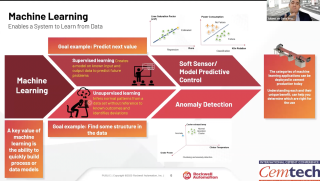
11 July 2022
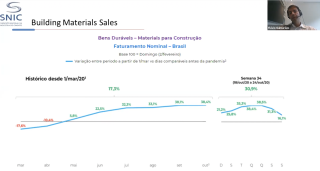
11 July 2022
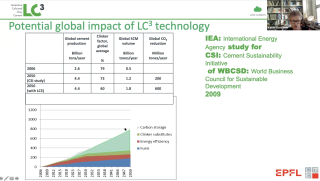
11 July 2022
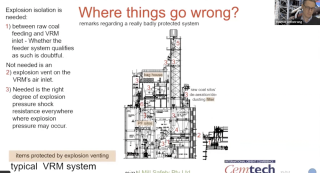
11 July 2022
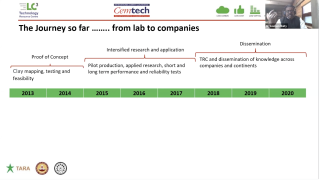
11 July 2022
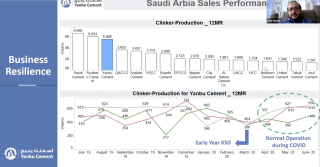
11 July 2022
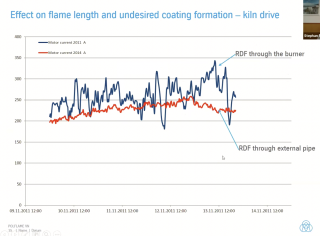
11 July 2022
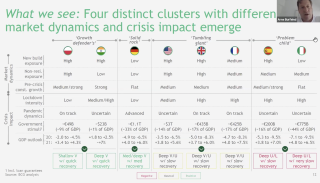
11 July 2022
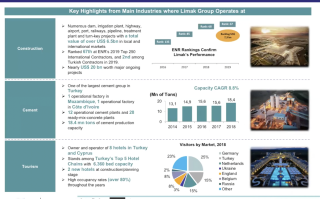
11 July 2022
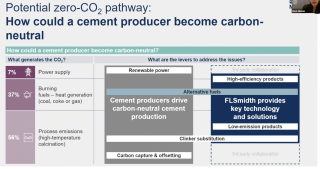
11 July 2022
11 July 2022
11 July 2022
11 July 2022

6 July 2022
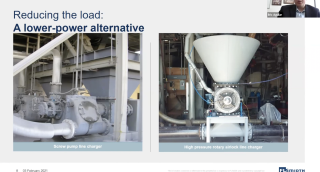
1 July 2022
1 July 2022

8 June 2022
12 February 2021
12 February 2021
12 February 2021
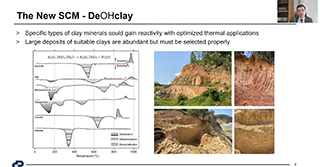
12 February 2021
12 February 2021

12 February 2021
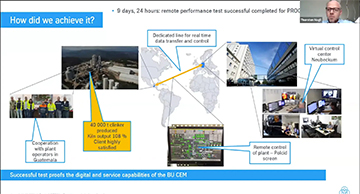
12 February 2021
12 February 2021
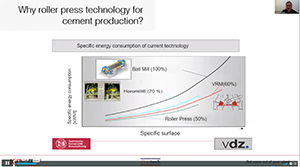
25 September 2020
25 September 2020
25 September 2020
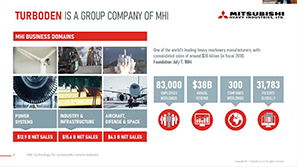
25 September 2020
23 September 2020
22 September 2020
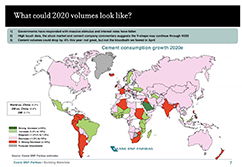
22 September 2020
21 September 2020
20 February 2020
10 February 2020
10 February 2020
10 February 2020
7 February 2020
27 January 2020
23 January 2020
23 January 2020
23 January 2020
23 January 2020
2 May 2019
30 April 2019
18 April 2019
18 April 2019
18 April 2019
12 April 2019
12 April 2019
11 April 2019
10 April 2019
10 April 2019
10 April 2019
9 April 2019
9 April 2019
4 February 2019
17 January 2019
31 July 2018
31 July 2018
31 July 2018
27 July 2018
27 July 2018
27 July 2018
27 July 2018
27 July 2018
27 July 2018
27 July 2018
27 July 2018
27 July 2018
27 July 2018
25 July 2018
25 July 2018
25 July 2018
24 July 2018
24 July 2018
24 July 2018
23 July 2018
23 July 2018
23 July 2018
20 July 2018
20 July 2018
20 July 2018
20 July 2018
20 July 2018
20 July 2018
20 July 2018
20 July 2018
20 July 2018
20 July 2018
20 July 2018
20 July 2018
20 July 2018
20 July 2018
20 July 2018
20 July 2018
20 July 2018
20 July 2018
20 July 2018
19 July 2018
19 July 2018
19 July 2018
19 July 2018
19 July 2018
23 March 2018
23 March 2018
23 March 2018
23 March 2018
23 March 2018
23 March 2018
23 March 2018
23 March 2018
23 March 2018
23 March 2018
23 March 2018
23 March 2018
23 March 2018
23 March 2018
23 March 2018
22 March 2018
26 October 2017
26 October 2017
26 October 2017
26 October 2017
14 August 2017
14 August 2017
14 August 2017
14 August 2017
14 August 2017
14 August 2017
14 August 2017
14 August 2017
14 August 2017
14 August 2017
14 August 2017
14 August 2017
14 August 2017
14 August 2017
18 July 2017
18 July 2017
18 July 2017
16 June 2017
16 June 2017
16 June 2017
16 June 2017
16 June 2017
14 February 2017
14 February 2017
14 February 2017
14 February 2017
14 February 2017
14 February 2017
14 February 2017
14 February 2017
14 February 2017
14 February 2017
13 February 2017
13 February 2017
13 February 2017
19 January 2017
19 January 2017
17 January 2017
17 January 2017
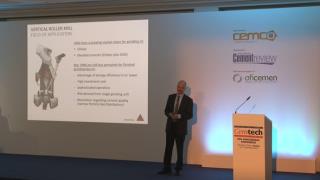
17 January 2017
6 January 2017
18 August 2016
18 August 2016
18 August 2016
18 August 2016
17 August 2016
17 August 2016
17 August 2016
16 August 2016
16 August 2016
16 August 2016
12 August 2016
12 August 2016
12 August 2016
11 August 2016
11 August 2016
11 August 2016
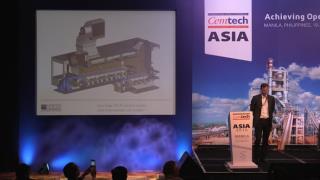
10 August 2016
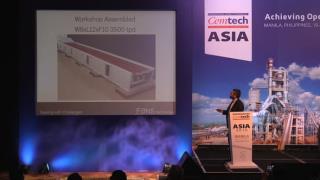
10 August 2016
10 August 2016
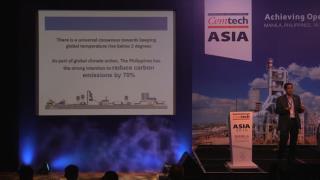
8 August 2016
8 August 2016
8 August 2016
6 May 2016
6 May 2016
6 May 2016
6 May 2016
6 May 2016
6 May 2016
6 May 2016
6 May 2016
6 May 2016
6 May 2016
6 May 2016
6 May 2016
6 May 2016
6 May 2016
6 May 2016
6 May 2016
6 May 2016
6 May 2016
6 May 2016
6 May 2016
6 May 2016
25 April 2016
25 April 2016
11 March 2016
11 March 2016
11 March 2016
11 March 2016
11 March 2016
11 March 2016
11 March 2016
11 March 2016
11 March 2016
11 March 2016
11 March 2016
11 March 2016
11 March 2016
11 March 2016
11 March 2016
11 March 2016
11 March 2016
11 March 2016
11 March 2016
11 March 2016
21 December 2015
15 December 2015
15 December 2015
15 December 2015
15 December 2015
15 December 2015
15 December 2015
15 December 2015
15 December 2015
15 December 2015
15 December 2015
15 December 2015
15 December 2015
2 December 2015
2 December 2015
2 December 2015
2 December 2015
2 December 2015
2 December 2015
2 December 2015
2 December 2015
2 December 2015
2 December 2015
2 December 2015
2 December 2015
21 August 2015
21 August 2015
21 August 2015
21 August 2015
21 August 2015
21 August 2015
21 August 2015
21 August 2015
21 August 2015
21 August 2015
21 August 2015
21 August 2015
21 August 2015
21 August 2015
21 August 2015
21 August 2015
21 August 2015
21 August 2015
21 August 2015
21 August 2015
20 August 2015
20 August 2015
18 August 2015
18 August 2015
18 August 2015
18 August 2015

30 June 2015
29 June 2015
29 June 2015
29 June 2015
29 June 2015
29 June 2015
29 June 2015
29 June 2015
29 June 2015
29 June 2015
29 June 2015
4 June 2015
4 June 2015
2 June 2015
2 June 2015
2 June 2015
2 June 2015
29 May 2015
29 May 2015
28 May 2015
28 May 2015
28 May 2015
18 February 2015
17 February 2015
13 February 2015
13 February 2015
Try searching for another title.